Exercises for Seniors: The Complete Guide by Goal (Balance, Strength, Heart, Flexibility)
Published October 2, 2026
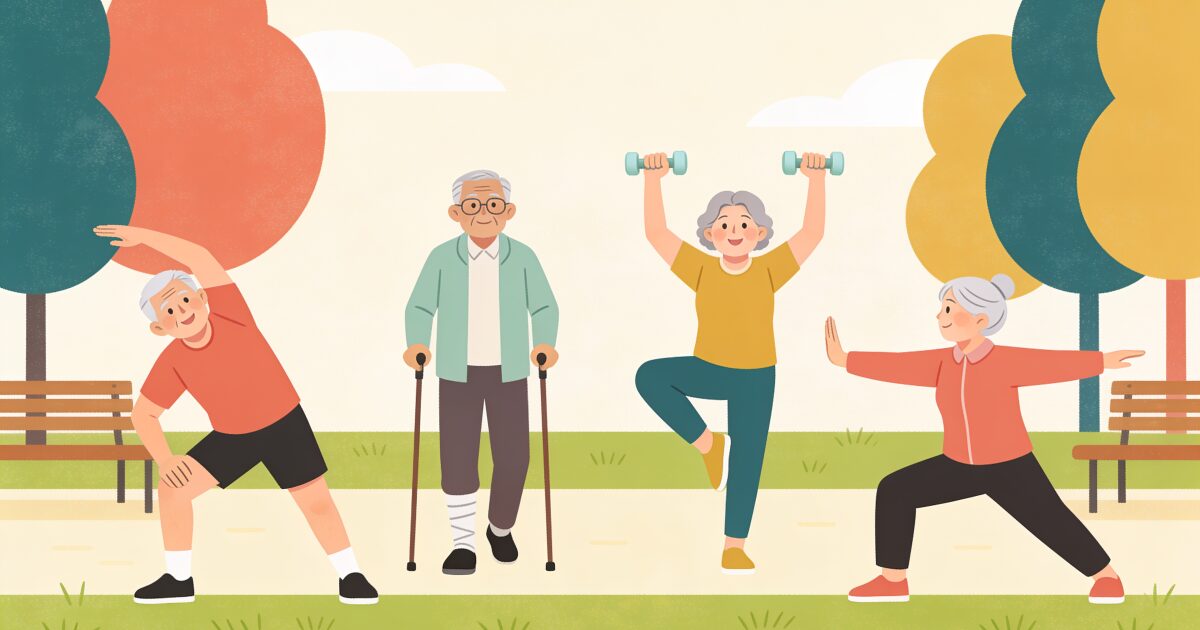
There is a quiet assumption that exercise is something you do less of as you get older. The evidence points the other way. After sixty, muscle and balance fade faster if they are not used, and the things that keep you independent, standing from a chair, climbing stairs, carrying shopping, catching yourself when you trip, all depend on them.
Living alone doesn't mean being unprotected. Simple daily check-ins that save lives.
Try free for 3 daysThe good news is that older bodies respond well to exercise, at any age, from any starting point. The gains are often bigger and faster for someone starting at seventy-five than for someone who has been active all along.
The harder question is which exercise. Search for "exercises for seniors" and you will find hundreds of routines with no sense of which one is for you. This guide organises our exercise posts by goal, so you can start with the one that matters most to you and build out from there.
What a good week of movement looks like
Health bodies around the world give similar advice for older adults, and it is simpler than it sounds.
- Something aerobic most days. Walking, swimming, cycling, dancing, or anything else that warms you up and raises your breathing a little.
- Strength work twice a week. Working the major muscle groups, legs, hips, back, chest, shoulders and arms, against some resistance: bands, light weights, or your own body weight.
- Balance work often. Several times a week, and daily if you can, especially if you have had a fall or feel unsteady.
- Flexibility every day. A few minutes of stretching or gentle yoga, ideally when your muscles are warm.
Precise minute targets are commonly recommended, but if you are far from them today, do not let that put you off. Any increase from where you are now brings benefits, and consistency matters far more than hitting a number.
Two safety points apply to everything below. Check with your doctor before starting if you have a heart condition, recent surgery, severe osteoporosis, or unexplained dizziness. And stop any exercise that causes sharp pain, chest discomfort, or light-headedness. Mild muscle ache the next day is normal. Pain during the movement is not.
If you want steadier balance
Balance is the goal that matters most for staying independent, because a fall is the event most likely to end independent living. It is also the most trainable. Balance is a skill, and it improves with practice like any other.
Our balance exercises for seniors walk through the classic drills: heel-to-toe walking, single-leg stands, side steps and weight shifts, all done with a chair or counter in reach. If you prefer something that feels less like drills and more like a practice, tai chi for seniors trains the same steady weight-shifting in a slow, flowing sequence, and it is one of the most studied exercises for fall prevention. Little and often works best for balance, so aim for a few minutes most days rather than one long session a week.
If you want to be stronger
Strength is what turns intention into action: getting out of a low chair, lifting a grandchild, opening a stiff jar. Muscle is lost steadily with age unless you ask it to work, and it comes back at any age when you do.
Start with resistance exercises for seniors, which uses bands and light weights to work the whole body twice a week. Add leg exercises for seniors if standing up and stairs are the struggle, because the thighs and hips carry most of everyday life. And do not skip the middle: core exercises for seniors covers the deep trunk muscles that hold you upright and steady, most of them done seated or lying down.
If your joints hurt
Sore knees, stiff hips and arthritic hands make many people stop moving altogether, which tends to make the stiffness worse. The answer is usually to change how you move rather than whether you move.
Chair exercises for seniors builds strength with your weight fully supported, and chair yoga for seniors adds gentle held stretches and breathing from the same chair. If you have access to a pool, water aerobics for seniors is the kindest workout there is for painful joints, because the water carries most of your weight while resisting every movement. For a broader menu, low-impact exercises for seniors covers the options that build fitness without pounding.
3-day free trial • Cancel anytime
Daily check-ins that save lives
Join thousands who never worry about being alone
If you want more energy and a healthier heart
Aerobic exercise, the kind that raises your breathing and warms you up, is what protects your heart, steadies blood pressure and blood sugar, and lifts your mood and energy. It also helps you sleep.
For most people the answer is walking for seniors: free, sociable if you want it to be, and the exercise people are most likely to still be doing a year later. If you want variety, aerobic exercises for seniors covers cycling, dancing, seated cardio and more. And if joints limit you, water aerobics gives the heart a proper workout without the impact.
If you want to stay flexible
Flexibility is what makes the other goals comfortable. A supple back turns to check traffic. Open hips take longer strides. Loose shoulders reach the top shelf.
Our stretching exercises for seniors is the place to start: a short daily routine covering every major muscle group. If you would like the stretching to come with breathing and a calmer mind, gentle yoga for seniors is a soft introduction, chair yoga for seniors keeps everything seated, and yoga for seniors covers standing and floor poses for when you feel ready for more.
If you are just starting or coming back from illness
If you have been inactive for a long time, or you are recovering from surgery, a hospital stay or a bout of illness, the priority is to rebuild gently and not to hurt yourself in week one.
Begin with chair exercises for seniors, where every movement is seated and you can do as little or as much as feels right. When you are ready to be on your feet, walking for seniors shows you how to start with ten minutes and build from there. Low-impact exercises for seniors fills in the gaps once you have a little stamina back. Give yourself several weeks at each stage. Coming back slowly is what makes coming back last.
Which exercises for which goal
| Goal | Start with | Also try | How often |
|---|---|---|---|
| Steadier balance | Balance exercises | Tai chi, leg exercises | A few minutes most days |
| More strength | Resistance exercises | Leg exercises, core exercises | Twice a week, rest days between |
| Sore joints | Chair exercises | Chair yoga, water aerobics, low-impact | Most days, gently |
| Heart and energy | Walking | Aerobic exercises, water aerobics | Most days, building up gradually |
| Staying flexible | Stretching exercises | Gentle yoga, chair yoga, yoga | Daily, when muscles are warm |
| Just starting or recovering | Chair exercises | Walking, low-impact exercises | Short sessions, most days |
Most people end up mixing two or three rows. A typical week might be a walk most mornings, a resistance session on two of them, balance drills while the kettle boils, and a stretch before bed.
Exercising safely when you live alone
Exercise is one of the best things you can do to lower your risk of a fall or a health crisis. It does not remove the risk, and when you live alone, the danger of any accident is not the accident itself but the hours afterwards if nobody knows.
A few habits make a real difference.
- Tell someone your routine. If you walk every morning at nine, a friend or neighbour who knows that will notice when you do not appear.
- Keep a phone within reach. In your pocket while you exercise at home, not on the kitchen counter, and charged before a walk.
- Do floor work near a sturdy chair. If you stretch or do core work on the floor, position a solid chair beside you so you have something to hold when getting back up.
- Warm up, and stop early if something feels wrong. Dizziness, chest tightness or sudden pain are reasons to sit down and call someone, not to push through.
- Have a daily check-in. A single daily confirmation that you are okay means that if anything does happen, someone finds out that day rather than days later.
That last point is the one people tend to overlook, because it is not really about exercise at all. It is about making sure your growing independence rests on a safety net.
Fitter, steadier, and never truly on your own
Every routine in this guide makes you more capable: stronger legs, steadier balance, a healthier heart, a suppler back. That capability is what keeps you living the way you want to.
But no amount of fitness means someone will notice if you have a fall or are taken ill at home. A daily check-in fills that gap. Each day you get a simple prompt, by app, text message, or a short automated phone call, and you confirm you are okay with a tap or a reply. If you do not, the people you have chosen are alerted so someone can look in on you.
See how a daily check-in works, and build your week of movement on top of it.
Get the free Living Alone Safety Checklist
The home setup, daily habits, and emergency info that keep people living alone safe, in one email you can act on this week.
Please complete the verification above.
Check your inbox
Your safety checklist is on the way to .
Frequently asked questions
TRUSTED BY THOUSANDS OF FAMILIES
Never Wonder "Are They Okay?" Again
Daily check-ins with automatic alerts to your loved ones if you ever need help.
"I was skeptical at first, but after my neighbor was found 3 days after a fall, I signed up immediately. Now my daughter knows I'm okay every single day."
— Margaret R., 72, living independently
Related Articles
Chair Yoga for Seniors: 10 Seated Poses for Flexibility, Balance, and Calm
You do not need to get down to the floor to enjoy yoga. These 10 seated poses bring the stretch, ste...
Walking for Seniors: How Far, How Often, and How to Stay Safe Walking Alone
Walking is the exercise most older adults actually keep doing. Here is how to start, how far and how...
Hearing Aids for Seniors: OTC vs Prescription, Real Costs, and How to Choose
Over-the-counter or prescription? Behind the ear or nearly invisible? Here is a plain guide to heari...
Best Walkers for Seniors in 2026: Rollators, Standard Walkers, Upright Walkers, and How to Choose
A walker that fits the person and the way they move keeps them walking for years longer. Here is a p...