Leg Exercises for Seniors: 8 Moves for Strength and Steadiness
Published July 22, 2026
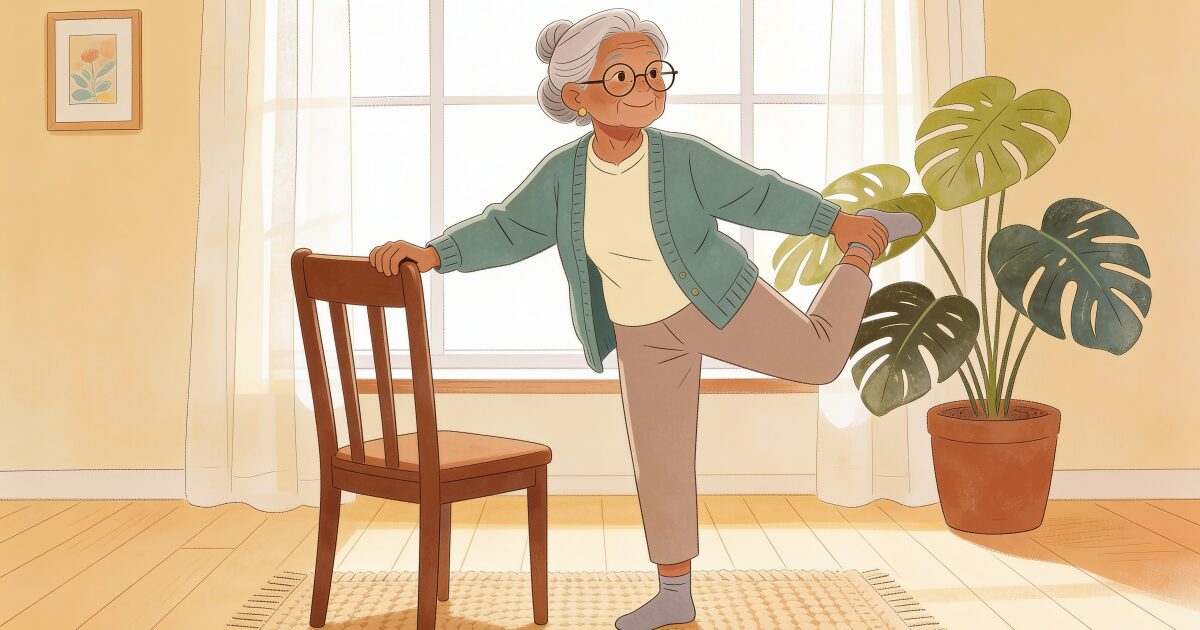
Your legs are the engine of your independence. Every time you stand up, walk to the kitchen, climb the stairs, or catch your balance after a stumble, your legs do the work. Yet leg muscle is often the first strength we lose as we age, and that quiet loss is what makes everyday movement feel harder over time.
The call that never comes is the scariest. AssureOkay ensures someone always knows.
Try free for 3 daysThe encouraging news is that leg strength responds quickly to gentle exercise, even in your seventies, eighties, and beyond. You do not need a gym or heavy weights. A sturdy chair and a little space are enough to keep the muscles that keep you standing, steady, and safe. Here are eight beginner-friendly leg moves to get you started.
Why leg strength matters as we age
- Easier standing up. Rising from a chair, the bed, or the toilet all depend on leg strength, and it is one of the first things to become difficult without it.
- Confident stair climbing. Strong thighs and calves make stairs safer and less tiring.
- Better balance. Steady legs are your foundation, and stronger ones help you recover from a wobble before it becomes a fall.
- More stamina for walking, so you can get out and about without tiring quickly.
- Greater independence, because so much of daily life rests, quite literally, on your legs.
Before you begin
- Check with your doctor first if you have knee, hip, or heart problems, or have had recent surgery.
- Keep a sturdy chair or counter nearby for support on every standing move.
- Wear flat, supportive shoes on a non-slip floor.
- Move slowly and with control, especially on the way down. Lowering slowly is where much of the strength is built.
- Breathe. Breathe out as you exert effort, in as you relax, and never hold your breath.
- Stop if you feel sharp pain or dizziness. Muscle fatigue is fine; pain is not.
1. Chair stand
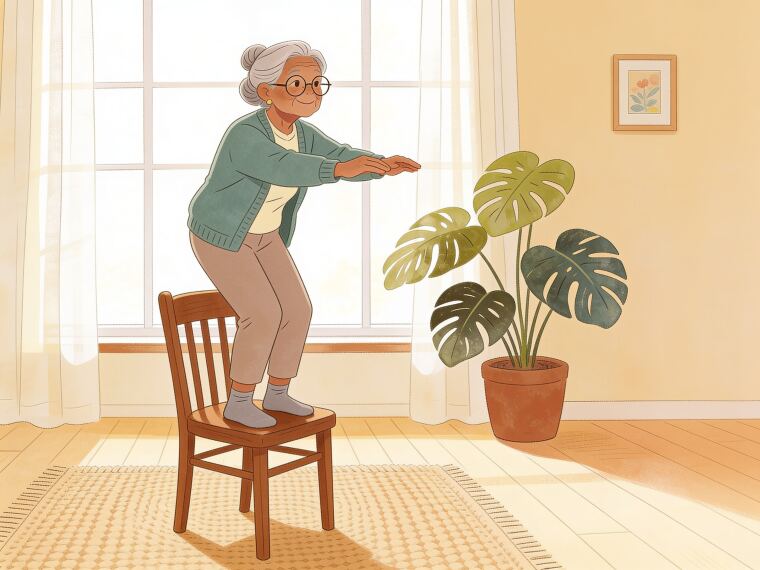
The single most useful move for legs. Sit towards the front of a sturdy chair, feet flat. Lean slightly forward and stand up using your legs, not your hands, then lower yourself back down with control. This builds the exact strength you use dozens of times a day. Start with 8 and build up.
2. Seated leg extension
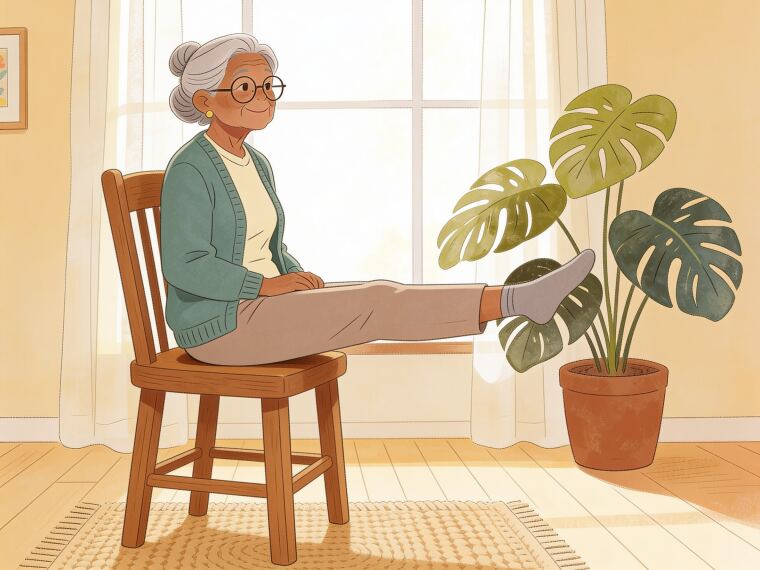
Sit tall and slowly straighten one leg out in front of you until it is roughly level with your hip, hold for a second, then lower it. This strengthens the thigh muscles that support your knees and help you climb stairs. Do 10 on each leg.
3. Seated marching
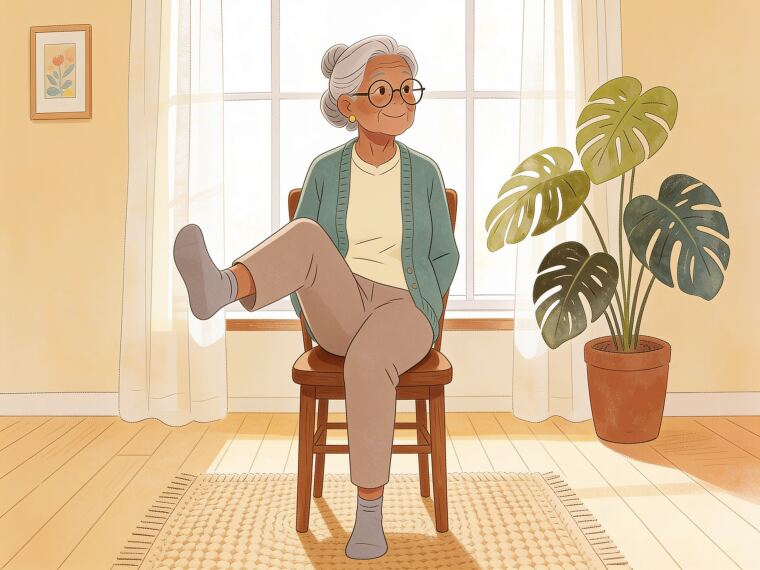
Sitting tall, lift one knee up towards your chest, lower it, then lift the other, as if marching while seated. Keep your back straight and the movement smooth. This works the hip and thigh muscles gently. Do 10 on each side.
4. Standing calf raise
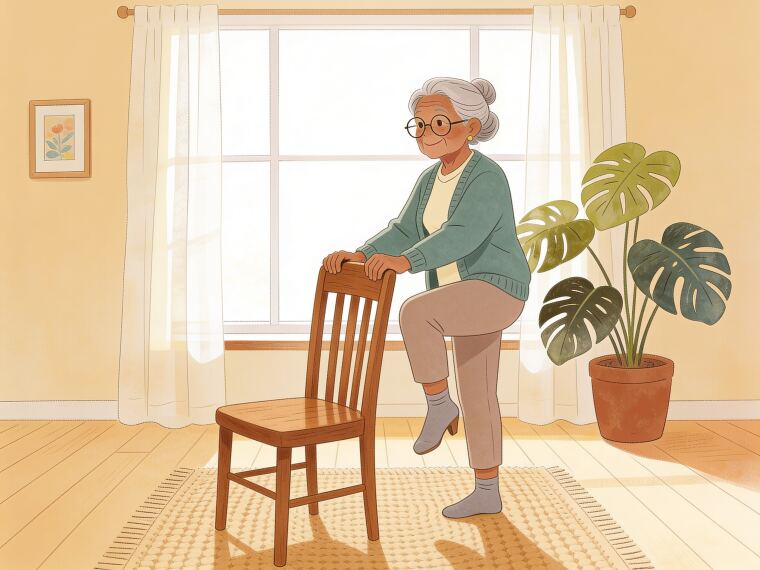
Hold the back of a sturdy chair. Rise up onto the balls of your feet, hold briefly, then lower your heels back down with control. Strong calves are surprisingly important for steady walking and balance. Do 12 to 15.
5. Standing knee curl
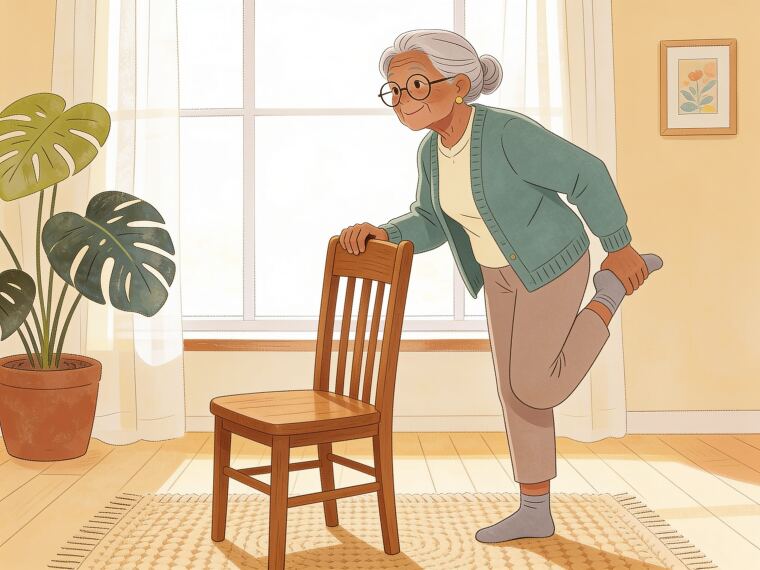
Holding the chair, slowly bend one knee to bring your heel up behind you towards your bottom, then lower it. This strengthens the back of the thigh, the muscles that partner with the front for balanced legs. Do 10 on each side.
3-day free trial • Cancel anytime
Daily check-ins that save lives
Join thousands who never worry about being alone
6. Standing side leg lift
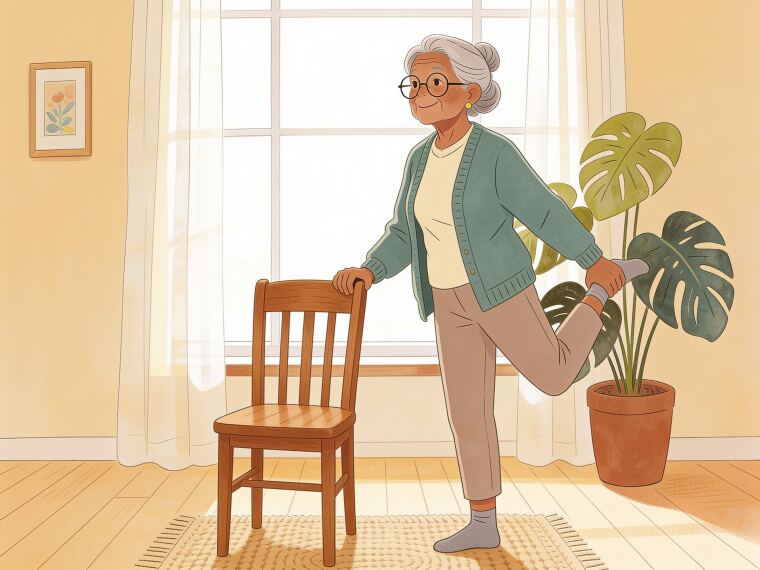
Holding the chair and keeping your body upright, slowly lift one leg out to the side a small way, then lower it with control. Don't lean; keep the movement small and clean. This strengthens the outer hip muscles that keep you steady. Do 10 on each side.
7. Standing hip extension
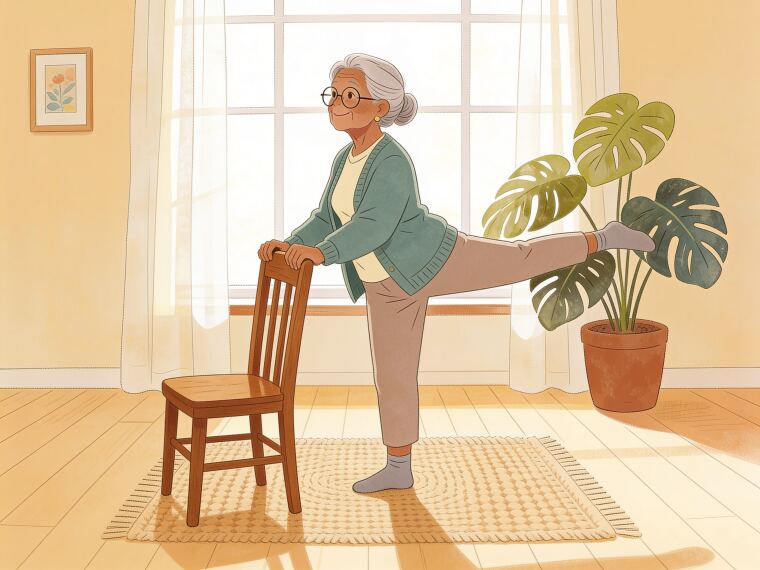
Holding the chair, slowly move one leg straight back behind you a short way, keeping it straight and your body upright, then return. This works the buttock and back-of-leg muscles that power walking and standing tall. Do 10 on each side.
8. Mini squat
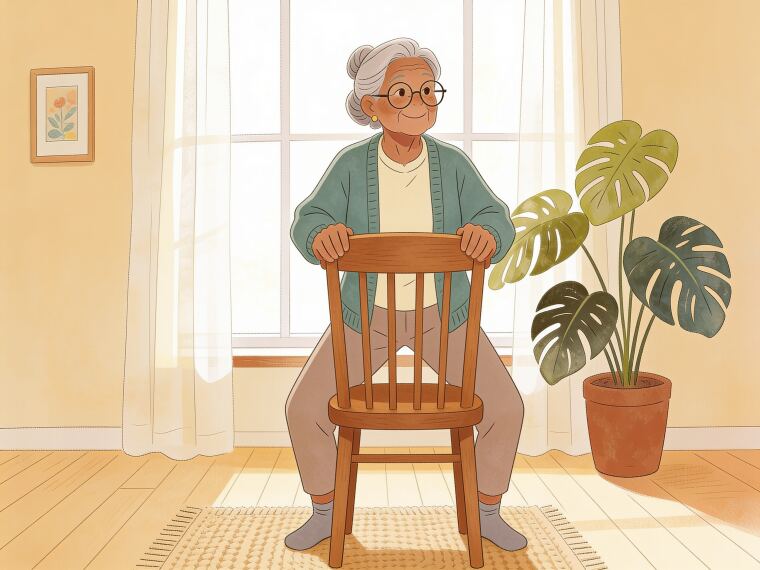
Stand behind a chair, holding it lightly, feet about shoulder-width apart. Bend your knees to lower yourself a small way, as if beginning to sit, keeping your knees behind your toes, then rise back up. Go only as low as feels comfortable. This is a gentle, powerful move for the whole leg. Do 8 to 10.
Building it into a routine
You do not need to do all eight every time. Pick four or five, do one set of each, and repeat the circuit if you feel up to it. Over a few weeks, add a second set. Ten minutes, two or three times a week, will make standing and stairs noticeably easier within a month or two. To round out your week, pair these with some balance exercises for seniors for steadiness and a few resistance exercises to build overall strength.
A note on staying safe when you live alone
Strong legs are one of the best ways to stay steady on your feet and lower your risk of a fall. But no amount of exercise removes that risk entirely, and a fall is far more dangerous when there is no one nearby to notice.
If you live on your own, it is worth pairing your routine with a simple safety net: a daily check-in that quietly confirms you are okay each day and alerts someone you trust if you ever do not respond. See how a daily check-in works so that a quiet day never becomes a silent one.
Strong legs keep you independent. A check-in makes sure help can reach you quickly if you ever need it.
Get the free Living Alone Safety Checklist
The home setup, daily habits, and emergency info that keep people living alone safe, in one email you can act on this week.
Please complete the verification above.
Check your inbox
Your safety checklist is on the way to .
Frequently asked questions
RATED 5.0 ON THE APP STORE
Never Wonder "Are They Okay?" Again
Daily check-ins with automatic alerts to your loved ones if you ever need help.
"I was skeptical at first, but after my neighbor was found 3 days after a fall, I signed up immediately. Now my daughter knows I'm okay every single day."
— Margaret R., 72, living independently
Related Articles
Exercises for Seniors: The Complete Guide by Goal (Balance, Strength, Heart, Flexibility)
The best exercise for an older adult depends on what you want from it. This guide sorts our exercise...
Transportation for Seniors: Every Option When Driving Gets Harder (Rides, Paratransit, Volunteers, and More)
When driving stops being the answer, the question becomes how a parent gets to the doctor, the shops...
Walking for Seniors: How Far, How Often, and How to Stay Safe Walking Alone
Walking is the exercise most older adults actually keep doing. Here is how to start, how far and how...
Hearing Aids for Seniors: OTC vs Prescription, Real Costs, and How to Choose
Over-the-counter or prescription? Behind the ear or nearly invisible? Here is a plain guide to heari...