Balance Exercises for Seniors: 7 Simple Moves to Help Prevent Falls
Published July 1, 2026
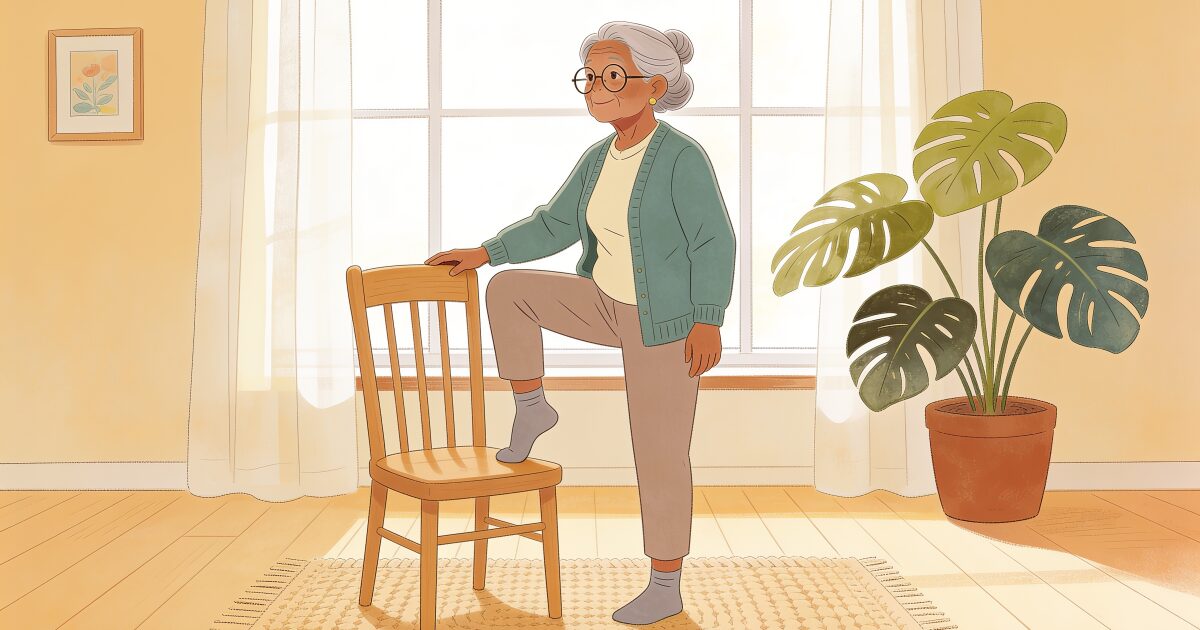
A fall can change everything. It's one of the biggest reasons older adults lose their independence, yet falls are not an inevitable part of getting older. Much of your balance comes down to muscle strength and practised reflexes, and both respond remarkably well to a little regular training.
Worried about someone living alone? Daily check-ins with automatic alerts.
Try free for 3 daysThese seven exercises are designed to be done safely at home. The golden rule throughout: always have something sturdy within reach to hold on to.
Before you begin
- Always practise near a solid support, a kitchen counter, a heavy table, or a sturdy chair.
- Clear the area of rugs, cables, and clutter.
- Wear flat, supportive shoes or go barefoot, never socks on a slippery floor.
- Build up gradually. Start with light support and reduce it only as you feel steadier.
- If you feel dizzy, sit down and rest.
1. Standing with support
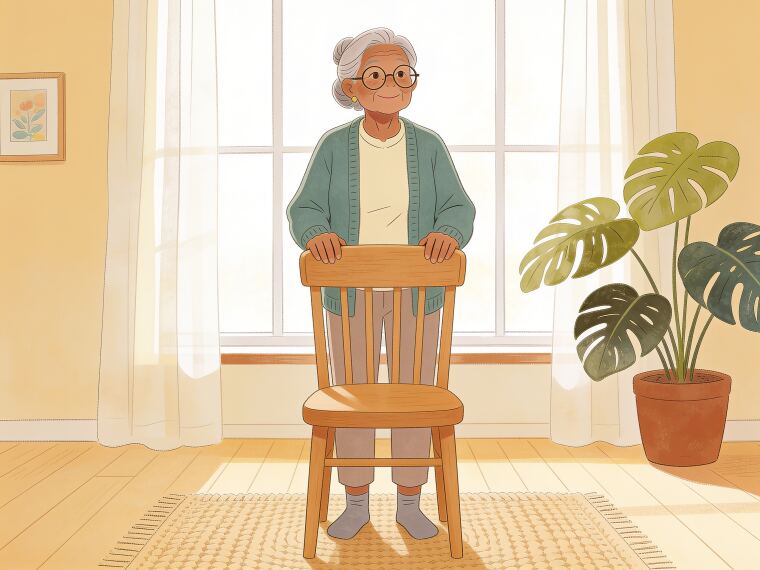
Begin simply. Stand tall behind a chair, holding the back lightly, feet hip-width apart. Practise distributing your weight evenly and standing with good posture for a minute. This is your foundation.
2. Heel raises
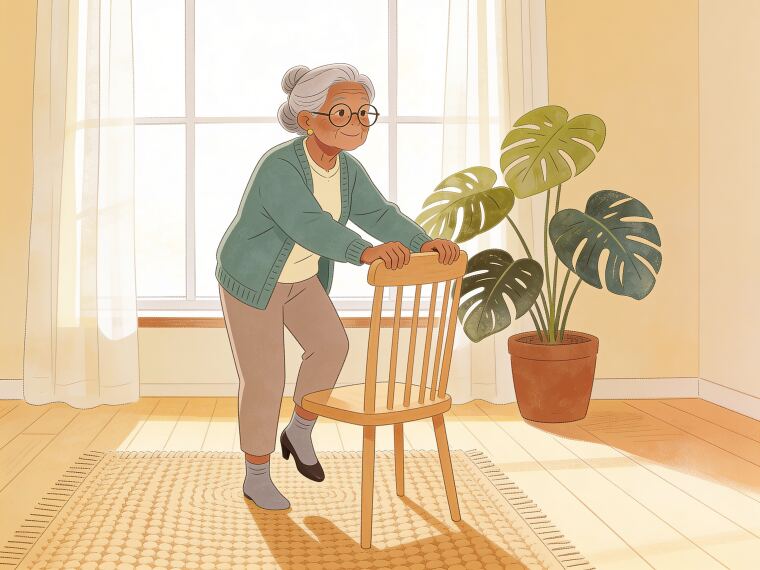
Holding your support, slowly rise up onto the balls of your feet, hold for a second or two, then lower with control. Do 10 to 15. This strengthens the calves and ankles, which do much of the quiet work of keeping you upright.
3. Standing marches
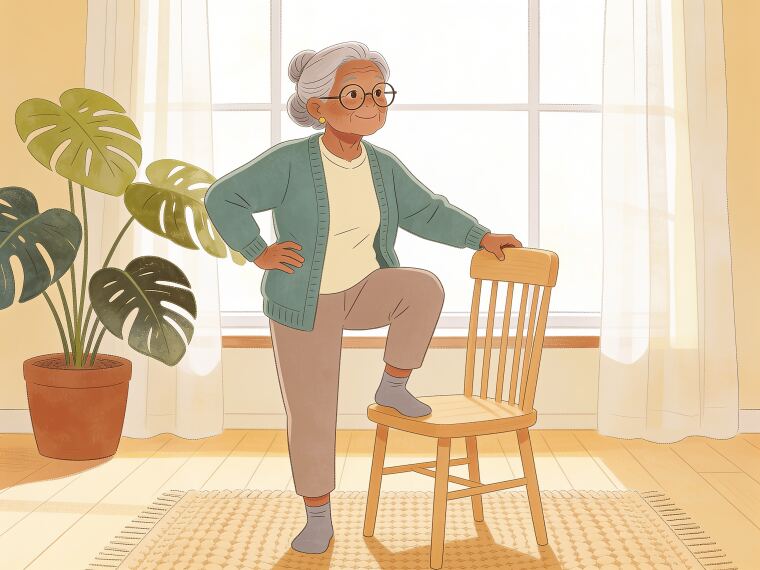
Holding your support, lift one knee up towards hip height, lower it, then lift the other. Do 10 on each side. This trains your body to stay steady while standing on one leg, the moment when most balance is lost.
4. Heel-to-toe stand
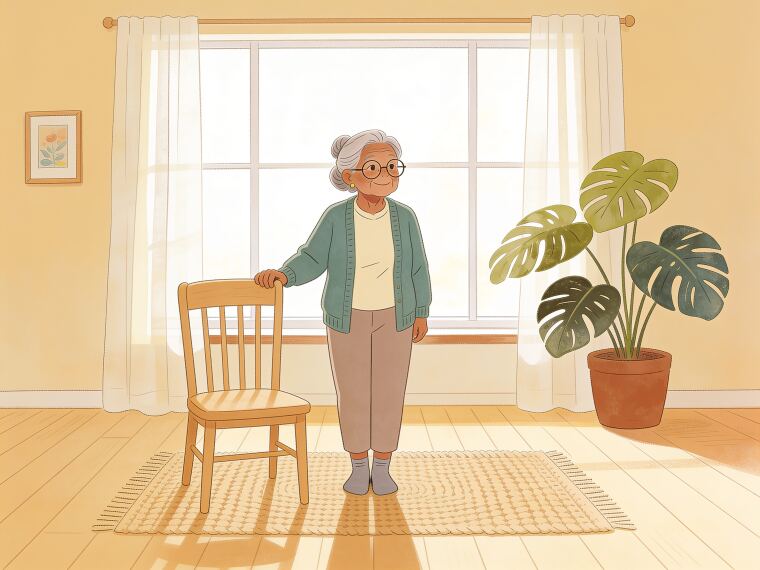
Holding your support, place one foot directly in front of the other so they form a straight line, heel touching toe. Hold steady for 10 seconds, then swap which foot is in front. This narrows your base and challenges your balance gently.
3-day free trial • Cancel anytime
Daily check-ins that save lives
Join thousands who never worry about being alone
5. Single-leg stand
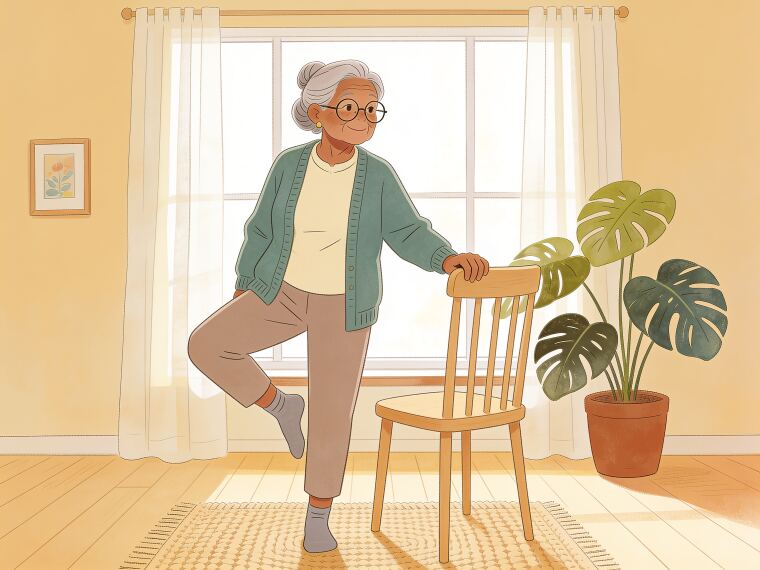
Holding your support, lift one foot slightly off the floor and balance on the other leg for 10 seconds, then swap. As you improve, hold on with just one fingertip, then briefly with none. Build up slowly and never rush this one.
6. Side leg raises
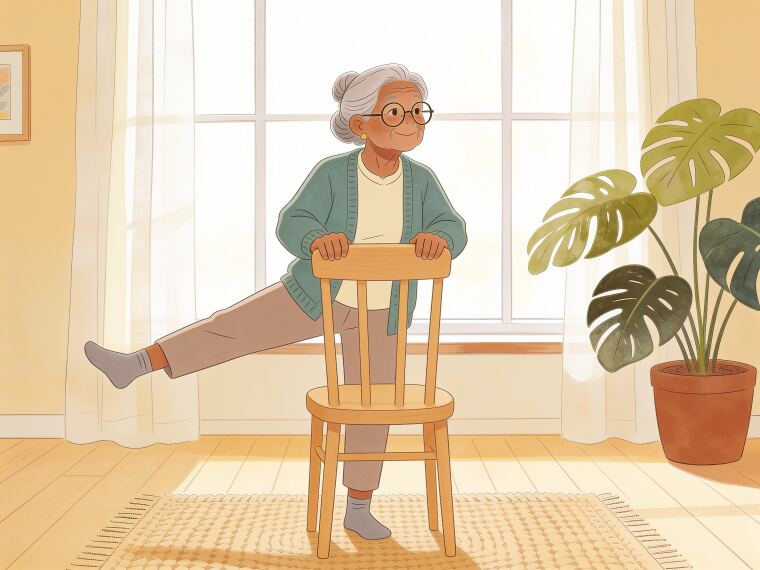
Holding your support, keep your back and leg straight as you lift one leg out to the side a little way, then lower. Do 10 each side. This strengthens the hip muscles that stabilise you when you walk and turn.
7. Heel-to-toe walking
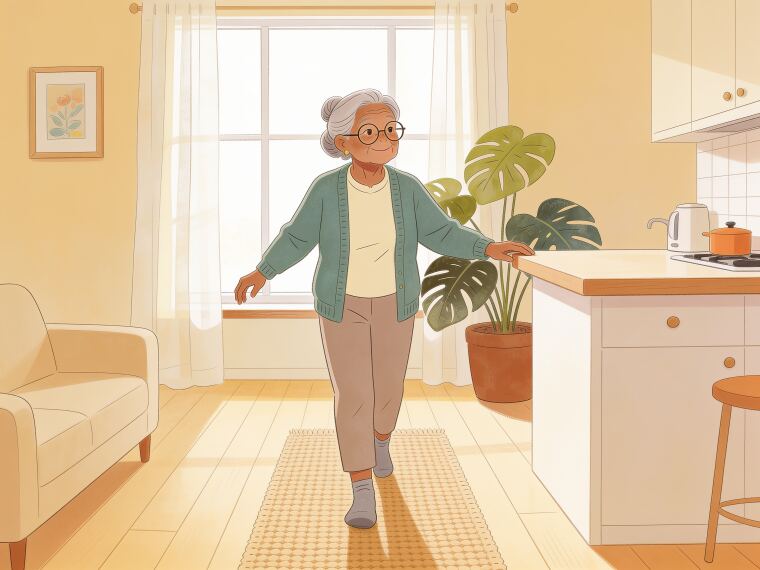
When you feel ready, walk slowly in a straight line placing the heel of one foot just in front of the toes of the other, like walking a tightrope. Stay close to a counter you can reach out and touch. Take 10 steps, rest, and repeat.
Turning practice into confidence
Balance improves with repetition more than effort, so frequent short sessions beat occasional long ones. Tuck these into moments you already have: heel raises at the kitchen counter, a single-leg stand while brushing your teeth, heel-to-toe walking down the hallway. Within a few weeks most people notice they feel steadier and more confident, especially on stairs and uneven ground. Balance works best hand in hand with strength, so pair these with our resistance exercises for seniors; if standing ever feels unsafe, begin with chair exercises.
A note on staying safe when you live alone
Better balance dramatically lowers your risk of a fall, and that's worth a great deal. But no exercise removes the risk completely, and the real danger of a fall is lying there unable to get help, especially if you live by yourself.
That's why it's worth pairing balance training with a simple safety net: a daily check-in that confirms you're okay each day and alerts someone you trust if you ever don't respond. See how a daily check-in works so that if a fall ever does happen, help is on its way quickly rather than hours later.
Practising your balance keeps you on your feet. A check-in makes sure someone always knows if you're not.
Get the free Living Alone Safety Checklist
The home setup, daily habits, and emergency info that keep people living alone safe, in one email you can act on this week.
Please complete the verification above.
Check your inbox
Your safety checklist is on the way to .
Frequently asked questions
TRUSTED BY THOUSANDS OF FAMILIES
Never Wonder "Are They Okay?" Again
Daily check-ins with automatic alerts to your loved ones if you ever need help.
"I was skeptical at first, but after my neighbor was found 3 days after a fall, I signed up immediately. Now my daughter knows I'm okay every single day."
— Margaret R., 72, living independently
Related Articles
Chair Yoga for Seniors: 10 Seated Poses for Flexibility, Balance, and Calm
You do not need to get down to the floor to enjoy yoga. These 10 seated poses bring the stretch, ste...
Hearing Aids for Seniors: OTC vs Prescription, Real Costs, and How to Choose
Over-the-counter or prescription? Behind the ear or nearly invisible? Here is a plain guide to heari...
Best Walkers for Seniors in 2026: Rollators, Standard Walkers, Upright Walkers, and How to Choose
A walker that fits the person and the way they move keeps them walking for years longer. Here is a p...
Leg Exercises for Seniors: 8 Moves for Strength and Steadiness
Your legs carry you through every day. These 8 gentle exercises help older adults keep the leg stren...