Stretching Exercises for Seniors: A Gentle Routine to Stay Flexible
Published July 26, 2026
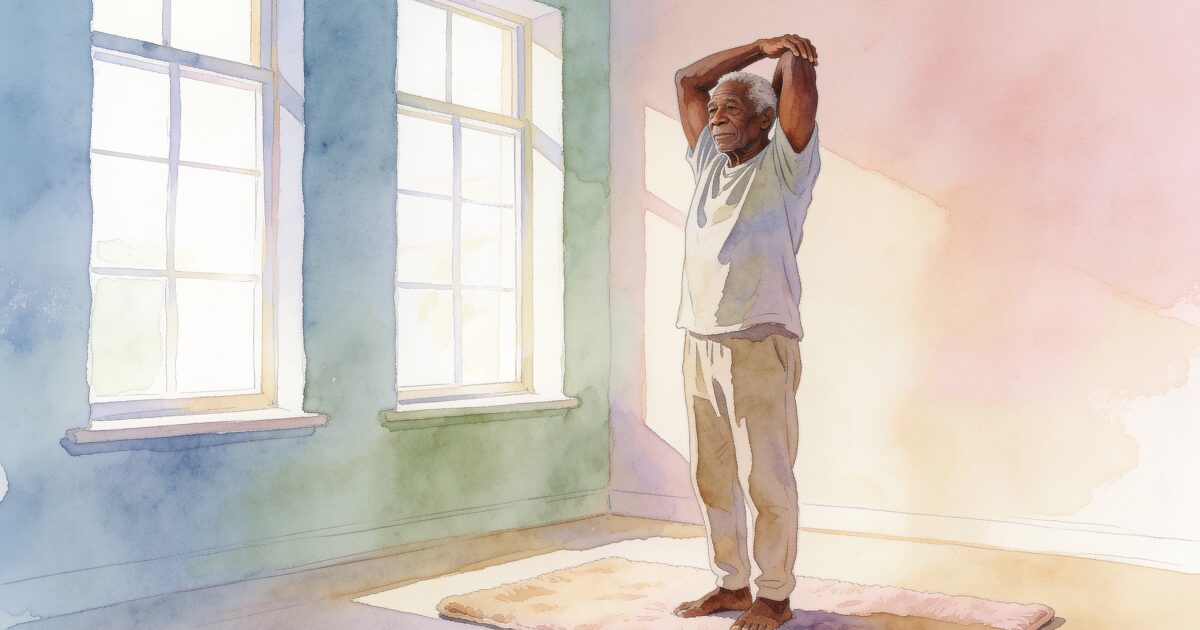
Flexibility is one of those things you rarely notice until it starts to slip. One day the top shelf feels a little further away, doing up a back zip takes a moment longer, and looking over your shoulder in the car needs a bigger turn of the whole body. None of it is dramatic, which is exactly why it creeps up quietly.
Falls happen. Help doesn't have to wait. Automatic alerts when check-ins are missed.
Try free for 3 daysThe good news is that flexibility responds to gentle, regular attention at any age. You do not need to be bendy, and you do not need a mat on the floor. A few minutes of easy stretching each day, standing at a counter or seated on a sturdy chair, keeps your body moving the way daily life asks it to.
Why flexibility fades, and why it matters
As we get older, muscles naturally lose a little length and elasticity, joints produce less lubricating fluid, and connective tissue becomes a touch stiffer. Long hours of sitting speed all of this up, because muscles adapt to the positions they spend the most time in. That gradual stiffening matters more than it sounds:
- Reaching and dressing get harder. Tight shoulders and a stiff upper back make overhead cupboards, coats, and back buttons a struggle.
- Balance suffers. Stiff ankles and hips make it harder to adjust your footing quickly, which is one reason flexibility work pairs so well with balance exercises for seniors.
- Walking changes. Tight hip flexors and calves shorten your stride and can nudge you into a shuffling walk.
- Aches build up. Muscles held short and tight are more prone to everyday twinges, especially in the neck, shoulders, and lower back.
Stretching will not turn back the clock entirely, but it reliably keeps what you have and often wins back a comfortable range you thought was gone.
Ground rules before you stretch
Stretching is one of the gentlest forms of exercise there is, but a few simple rules keep it that way:
- Warm up first. Never stretch cold muscles. Two or three minutes of easy movement, such as marching on the spot, a short walk around the house, or a few chair exercises, is plenty.
- Never bounce. Ease into each stretch slowly and hold it still. Bouncing tightens the muscle rather than lengthening it.
- Stretch to mild tension, not pain. You are looking for a gentle pulling feeling that softens as you hold it. Pain means back off.
- Keep breathing. Breathe slowly and naturally throughout. Holding your breath makes everything tighter.
- Hold for around 15 to 30 seconds. Longer is not better if it means straining.
- Support yourself. Keep a counter, wall, or sturdy chair within reach for any standing stretch.
A gentle stretching routine to try
Work through these in order, or pick the ones your body asks for. The whole routine takes about ten minutes.
1. Neck side stretch
Sit or stand tall. Slowly tilt your right ear towards your right shoulder until you feel a gentle stretch along the left side of your neck. Keep both shoulders relaxed and heavy. Hold for a few slow breaths, return to centre, then repeat on the other side. Do two each way.
2. Shoulder rolls
Sitting or standing tall, slowly roll both shoulders up towards your ears, back, and down in a big unhurried circle. Do five or six circles backwards, then five or six forwards. This loosens the shoulders and upper back beautifully after time spent sitting.
3. Chest opener
Stand or sit tall and clasp your hands loosely behind your back, or simply reach both arms slightly behind you if clasping is uncomfortable. Gently draw your shoulders back and lift your chest until you feel a stretch across the front of your shoulders. Hold, breathing steadily, then release. This counteracts the rounded posture that creeps in with age.
4. Seated hamstring stretch
Sit towards the front of a sturdy chair. Straighten one leg out in front of you, heel on the floor, toes pointing up. Sit tall, then hinge gently forward from your hips (not your waist) until you feel a stretch along the back of the straight leg. Rest your hands on your other thigh for support. Hold, then swap legs. Supple hamstrings make bending, walking, and getting out of chairs easier.
3-day free trial • Cancel anytime
Daily check-ins that save lives
Join thousands who never worry about being alone
5. Calf stretch at a counter
Stand facing a kitchen counter with both hands resting on it. Step one foot back, keeping that heel on the floor and the leg straight, and bend your front knee slightly until you feel a stretch in the back calf. Hold, then swap sides. Flexible calves help you walk with a fuller, steadier stride.
6. Ankle circles
Sitting tall, lift one foot slightly off the floor and slowly circle the ankle five times one way, then five times the other. Repeat with the other foot. Mobile ankles are quiet heroes of good balance, helping you adjust to uneven ground.
7. Gentle spinal twist
Sit tall with your feet flat. Place your right hand on your left knee and your left hand on the chair beside you. Breathe in to lengthen your spine, then breathe out and rotate gently to the left, turning from your middle rather than yanking with your arms. Look softly over your shoulder. Hold for a few breaths, return to centre, and repeat on the other side. Keep this twist small and comfortable, especially if you have osteoporosis.
8. Hip flexor stretch using a chair
Stand behind a sturdy chair, holding the back for support. Step your right foot back into a small stride, keeping your body upright. Gently tuck your bottom under and press your right hip forward until you feel a mild stretch across the front of that hip. Hold, then swap sides. This one is gold for anyone who sits a lot, because tight hip flexors shorten your stride and pull on the lower back.
How often should you stretch?
Daily, ideally, and little and often beats occasional marathons every time. Five to ten minutes each day keeps joints noticeably freer than one long weekend session. Many people stretch after breakfast to shake off morning stiffness, or as a quiet wind-down before bed. Tying it to something you already do every day, like the kettle boiling, makes it stick.
If you enjoy this kind of mindful, unhurried movement, gentle yoga builds on exactly the same foundations, adding breathing and balance work to the stretching.
If standing is difficult
Every stretch above works from a sturdy chair. Most are already seated, and the calf and hip flexor stretches can be swapped for gentle seated versions: point and flex your toes for the calves, and sit tall towards the front edge of the chair with one leg stretched slightly behind you for the hips. Seated stretching gives you all the benefit with no worry about balance.
When to be careful
Stretching suits almost everyone, but check with your doctor or GP first if any of these apply:
- Osteoporosis. Avoid deep forward bends and strong spinal twists, and keep every movement in a comfortable, upright range.
- Recent surgery or injury. A hip or knee replacement, or any recent operation, needs your surgeon's or physiotherapist's guidance on which movements are safe and when.
- Dizziness or balance problems. Do the routine seated, and avoid dropping your head below your heart.
- Sharp pain, numbness, or tingling during any stretch. Stop, and mention it to your GP.
A note on staying safe when you live alone
Stretching keeps you supple enough to reach, dress, turn, and catch your balance, all of which make everyday life at home safer and easier. But flexibility, like every good habit, reduces risk rather than removing it, and a fall or sudden illness is far more serious when nobody is around to notice.
If you live on your own, it is worth pairing your daily stretch with an equally simple safety habit: a daily check-in that quietly confirms you are okay each day and alerts someone you trust if you ever do not respond. See how a daily check-in works so that a quiet day never becomes a silent one.
A few minutes of stretching keeps your body moving freely. A check-in makes sure someone would know quickly if you ever needed a hand.
Get the free Living Alone Safety Checklist
The home setup, daily habits, and emergency info that keep people living alone safe, in one email you can act on this week.
Please complete the verification above.
Check your inbox
Your safety checklist is on the way to .
Frequently asked questions
RATED 5.0 ON THE APP STORE
Never Wonder "Are They Okay?" Again
Daily check-ins with automatic alerts to your loved ones if you ever need help.
"I was skeptical at first, but after my neighbor was found 3 days after a fall, I signed up immediately. Now my daughter knows I'm okay every single day."
— Margaret R., 72, living independently
Related Articles
Exercises for Seniors: The Complete Guide by Goal (Balance, Strength, Heart, Flexibility)
The best exercise for an older adult depends on what you want from it. This guide sorts our exercise...
Walking for Seniors: How Far, How Often, and How to Stay Safe Walking Alone
Walking is the exercise most older adults actually keep doing. Here is how to start, how far and how...
Transportation for Seniors: Every Option When Driving Gets Harder (Rides, Paratransit, Volunteers, and More)
When driving stops being the answer, the question becomes how a parent gets to the doctor, the shops...
Hearing Aids for Seniors: OTC vs Prescription, Real Costs, and How to Choose
Over-the-counter or prescription? Behind the ear or nearly invisible? Here is a plain guide to heari...