Chair Exercises for Seniors: A Gentle Seated Workout
Published July 1, 2026
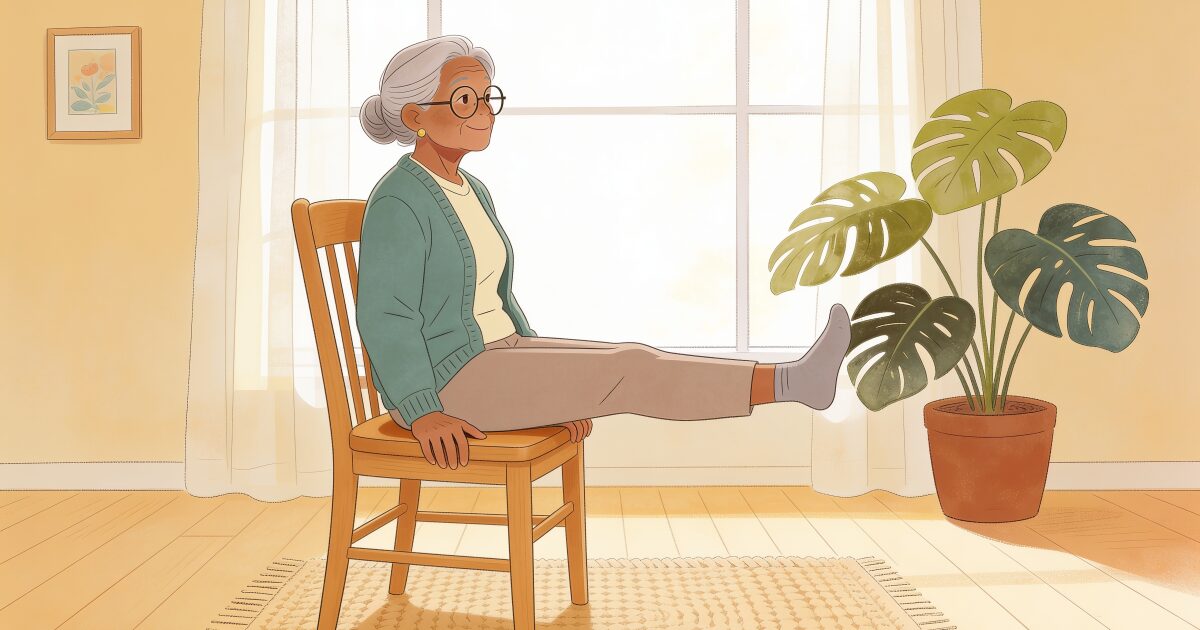
Not everyone feels safe doing exercises on their feet, and that's perfectly fine. A chair removes the worry of losing your balance and lets you focus entirely on moving your muscles and joints. Seated workouts are gentle, but make no mistake: done regularly, they build real strength, keep you mobile, and help you stay independent.
Know someone who lives alone? Give them (and yourself) peace of mind.
Try free for 3 daysThis routine works from head to toe. You can do the whole thing or pick a few moves, and you never have to leave your chair.
Before you begin
- Use a sturdy chair without wheels, ideally without armrests, placed on a non-slip surface.
- Sit tall, towards the front of the seat, with your feet flat on the floor.
- Move slowly and breathe. Quality matters more than speed.
- Stop if anything causes sharp pain or dizziness.
Start with a gentle warm-up: roll your shoulders, turn your head slowly side to side, and march your feet on the spot for a minute.
1. Seated marching
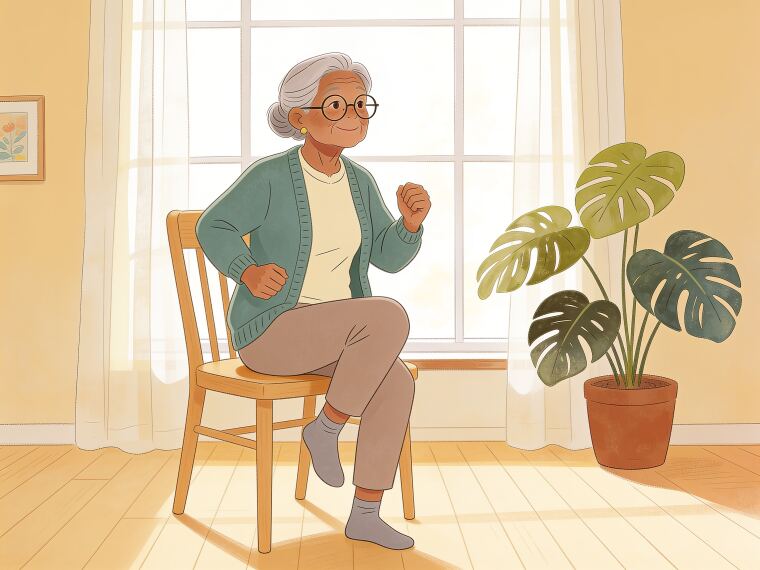
Sitting tall, lift one knee, lower it, then the other, as if marching. Swing your arms gently if you like. Keep going for 30 seconds to a minute to warm up the whole body and get your blood moving.
2. Ankle circles
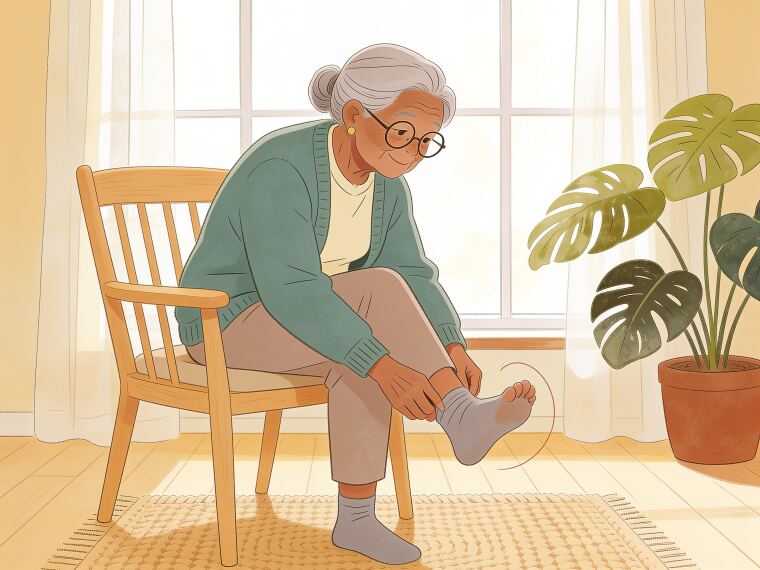
Lift one foot slightly off the floor and draw slow circles with your toes, ten one way and ten the other. Swap feet. This keeps the ankles supple, which matters a great deal for steady walking.
3. Seated leg extension
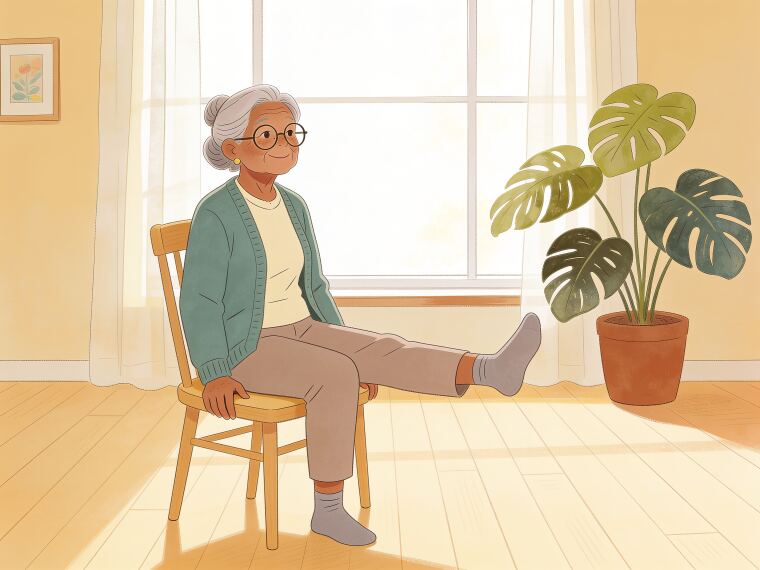
Straighten one leg out in front until it's roughly level with your hip, hold for a second, then lower with control. Do 10 on each leg. This strengthens the thigh muscles that power standing up and climbing stairs.
4. Seated knee lifts
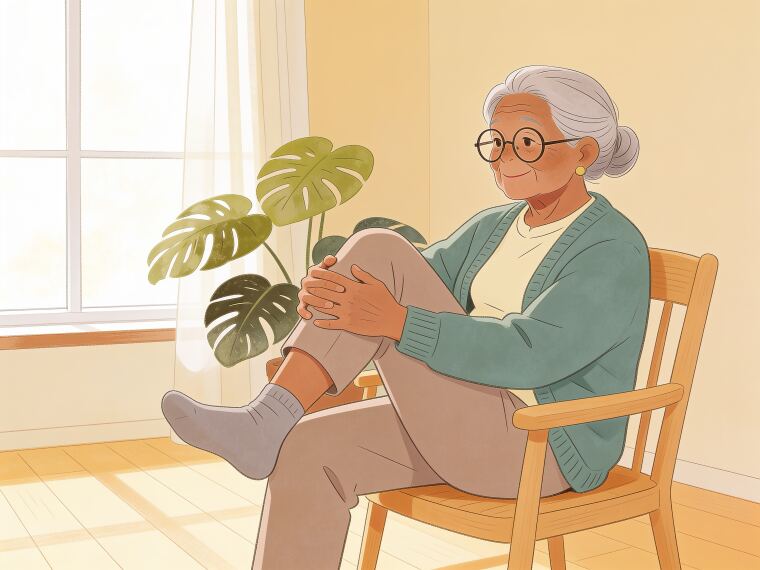
Lift one knee towards your chest as far as is comfortable, then lower. Alternate legs, 10 each. This works the hip flexors and lower core.
5. Arm raises
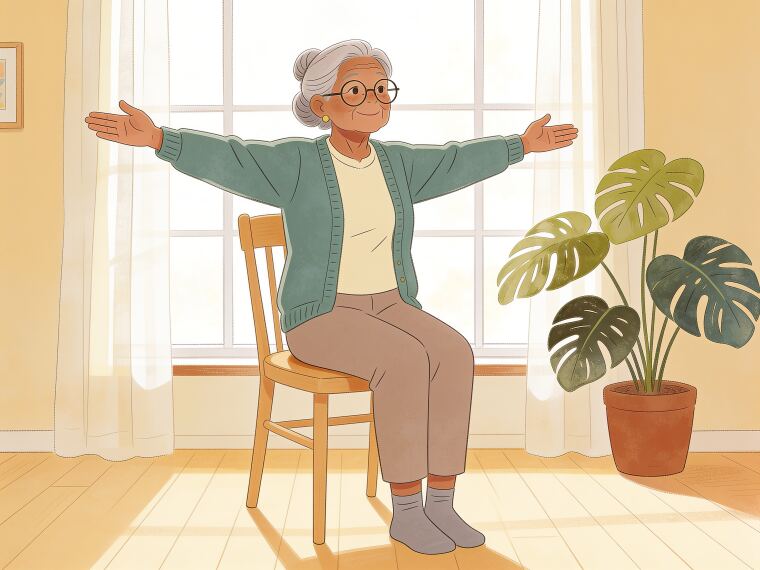
With or without a light weight in each hand, raise both arms out to the sides up to shoulder height, then lower slowly. Do 10. Keep the movement controlled rather than swinging.
3-day free trial • Cancel anytime
Daily check-ins that save lives
Join thousands who never worry about being alone
6. Seated shoulder press
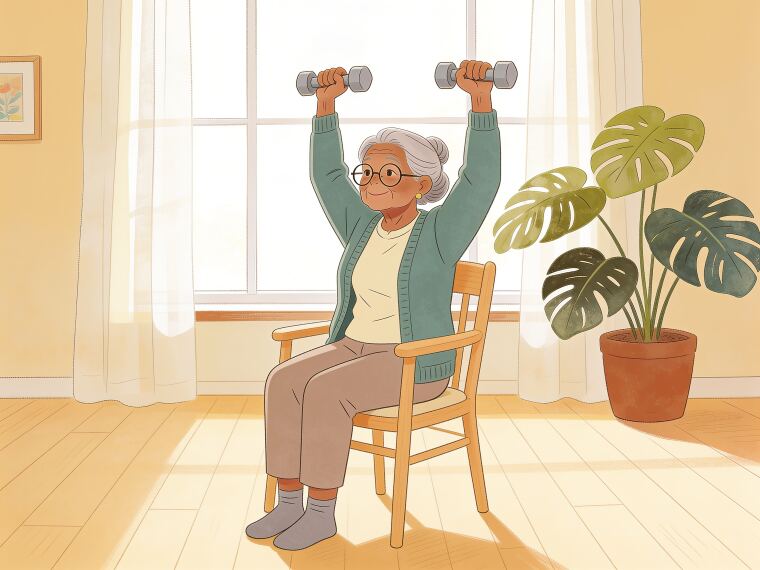
Hold a light weight in each hand at shoulder height, palms forward. Press both hands up overhead, then lower. Do 8 to 10. This keeps your shoulders strong for reaching to high shelves.
7. Seated twist
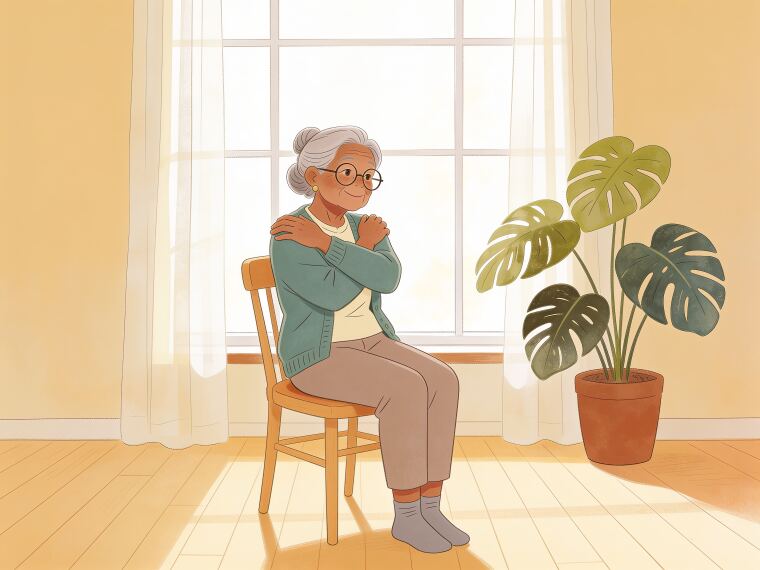
Place your hands lightly on opposite shoulders, or hold a cushion at chest height. Gently rotate your upper body to the left, return to centre, then to the right. Do 8 each way. This keeps your spine mobile.
8. Heel and toe raises
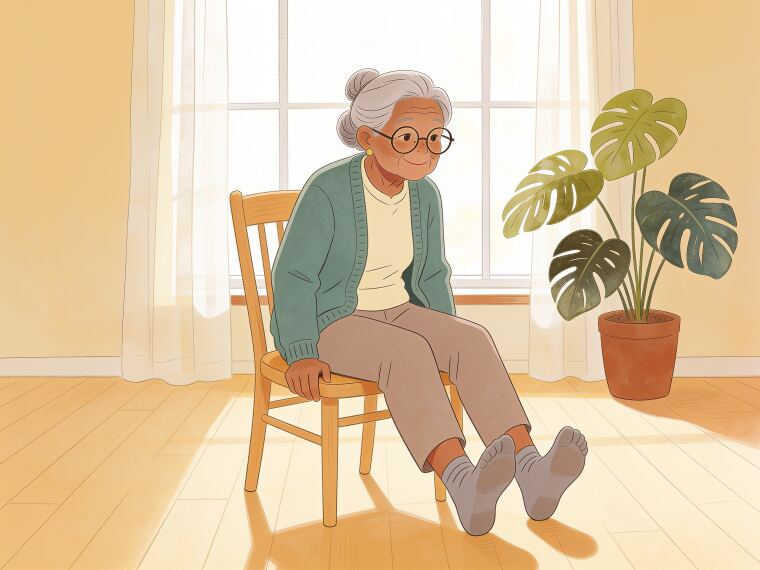
With feet flat, lift your heels keeping toes down, then lower and lift your toes keeping heels down. Alternate for 30 seconds. This strengthens the lower legs and improves circulation.
9. Seated side bend
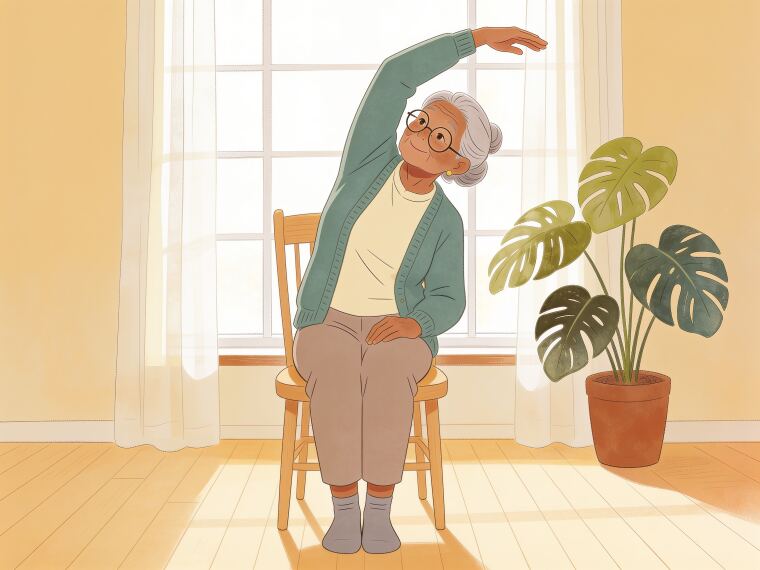
Sitting tall, reach one arm up and lean gently to the opposite side, feeling a stretch along your ribs, then return. Do 6 each way. A lovely move for keeping the torso flexible.
10. Seated cool-down stretch
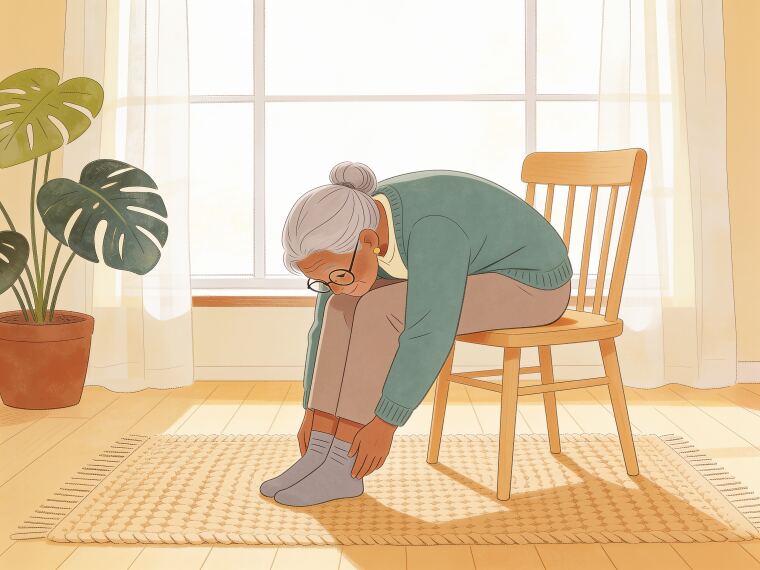
Finish by reaching both arms up on an inhale, then folding gently forward over your knees on an exhale, letting your arms and head hang loose. Rest there for a few breaths, then roll up slowly.
Making it a habit
The beauty of chair exercises is that they fit into ordinary life. Many people do a short routine during the adverts on television, or first thing while the kettle boils. Aim for most days of the week. As you grow stronger and steadier, you can add light weights, more repetitions, or progress to some standing moves while holding the chair for support. When you're ready for more, our balance exercises for seniors and resistance exercises are natural next steps, and our low-impact exercise guide helps you round out the week.
A note on staying safe when you live alone
Keeping your body moving is one of the best ways to stay steady, mobile, and independent. But strength and mobility lower the risk of an accident rather than removing it, and a fall or sudden illness is far more dangerous when no one is around to notice.
If you live on your own, it's worth pairing your routine with a simple safety net: a daily check-in that confirms you're okay each day and alerts someone you trust if you ever don't respond. See how a daily check-in works so that a quiet day never turns into a silent one.
Exercise keeps you capable. A check-in makes sure help can reach you quickly if you ever need it.
Get the free Living Alone Safety Checklist
The home setup, daily habits, and emergency info that keep people living alone safe, in one email you can act on this week.
Please complete the verification above.
Check your inbox
Your safety checklist is on the way to .
Frequently asked questions
TRUSTED BY THOUSANDS OF FAMILIES
Never Wonder "Are They Okay?" Again
Daily check-ins with automatic alerts to your loved ones if you ever need help.
"I was skeptical at first, but after my neighbor was found 3 days after a fall, I signed up immediately. Now my daughter knows I'm okay every single day."
— Margaret R., 72, living independently
Related Articles
Chair Yoga for Seniors: 10 Seated Poses for Flexibility, Balance, and Calm
You do not need to get down to the floor to enjoy yoga. These 10 seated poses bring the stretch, ste...
Hearing Aids for Seniors: OTC vs Prescription, Real Costs, and How to Choose
Over-the-counter or prescription? Behind the ear or nearly invisible? Here is a plain guide to heari...
Best Walkers for Seniors in 2026: Rollators, Standard Walkers, Upright Walkers, and How to Choose
A walker that fits the person and the way they move keeps them walking for years longer. Here is a p...
Stretching Exercises for Seniors: A Gentle Routine to Stay Flexible
Flexibility fades quietly with age, but a few minutes of gentle stretching each day keeps you reachi...