Resistance Exercises for Seniors: 8 Gentle Moves to Build Strength
Published July 1, 2026
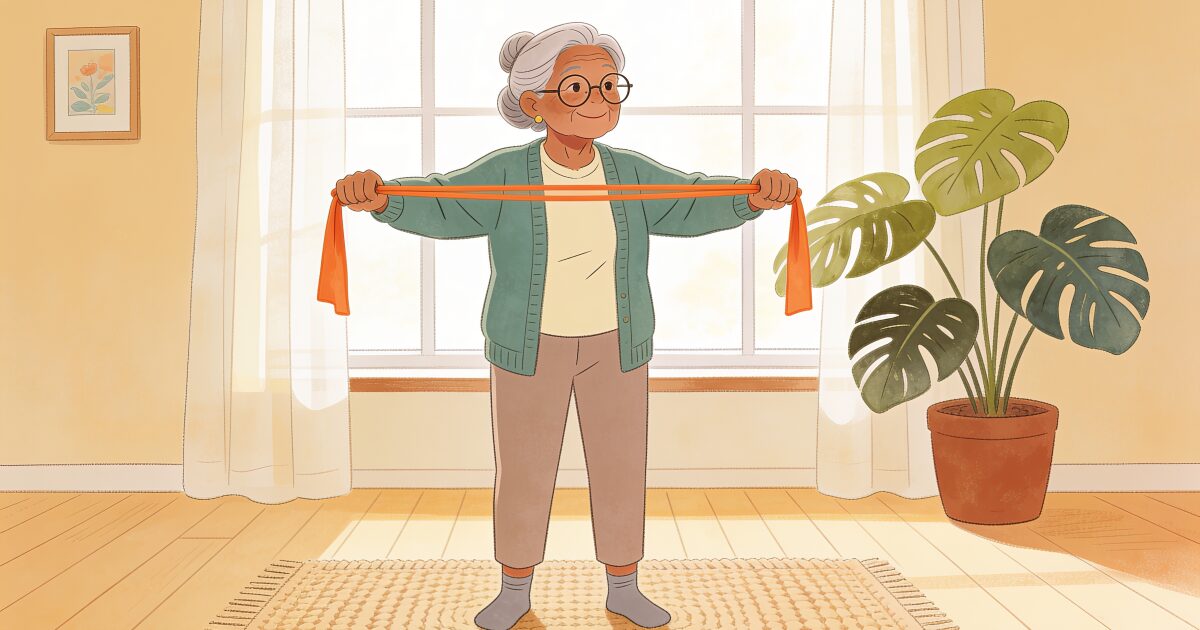
Strength training has an image problem. Many people picture a crowded gym and heavy barbells and decide it isn't for them, especially later in life. But the truth is the opposite: building and keeping muscle is one of the most important things you can do as you get older.
Don't let distance keep you from knowing they're safe. Daily check-ins, anywhere in the world.
Try free for 3 daysFrom around age 50, we naturally lose muscle each year unless we actively work to keep it. That lost strength is what makes everyday things, standing up from a chair, carrying shopping, climbing stairs, gradually harder. The good news is that resistance exercise reverses much of it, and you can do all of it gently, at home, with almost no equipment.
Here are eight beginner-friendly moves to get you started.
Before you begin
A few simple rules keep strength training safe and comfortable:
- Check with your doctor first if you have a heart condition, have had recent surgery, or have a problem affecting your joints or balance.
- Warm up for a few minutes first with some gentle marching on the spot and arm circles.
- Breathe. Never hold your breath. Breathe out as you exert effort, in as you relax.
- Start light. You should finish each set feeling worked, not exhausted. You can always add resistance later.
- Stop if you feel sharp pain, dizziness, or chest discomfort. A little muscle fatigue is normal; pain is not.
Aim for two to three sessions a week, with a rest day in between.
1. Seated row with a band
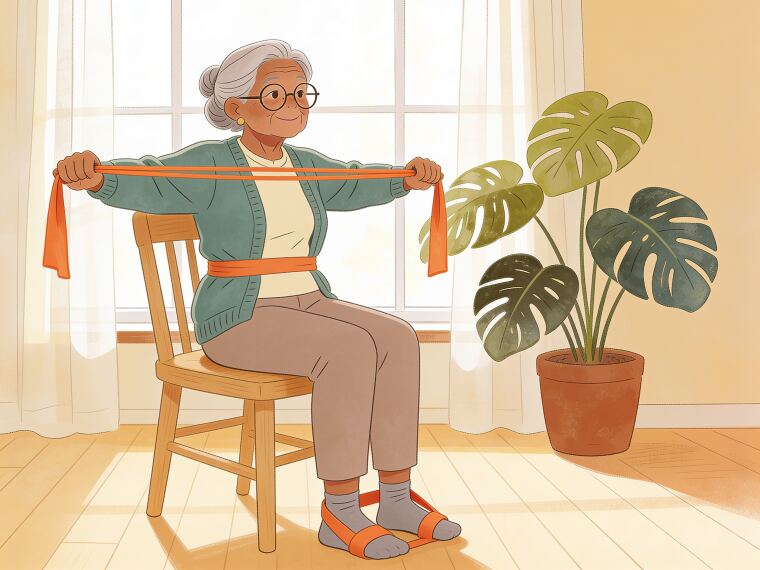
Sit tall in a chair, loop a resistance band around the soles of both feet and hold an end in each hand. Pull your elbows back towards your waist, squeezing your shoulder blades together, then slowly release. This strengthens the upper back and improves posture. Do 10 to 12 repetitions.
2. Chair stand
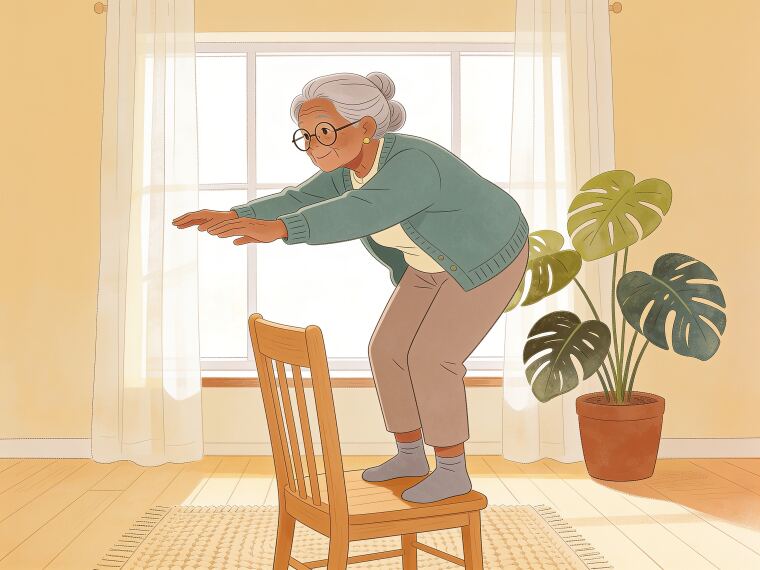
The single most useful exercise on this list. Sit towards the front of a sturdy chair, feet flat. Lean slightly forward and stand up using your legs, not your hands, then lower yourself back down with control. This builds the exact strength you use dozens of times a day. Start with 8 and build up.
3. Wall press-up
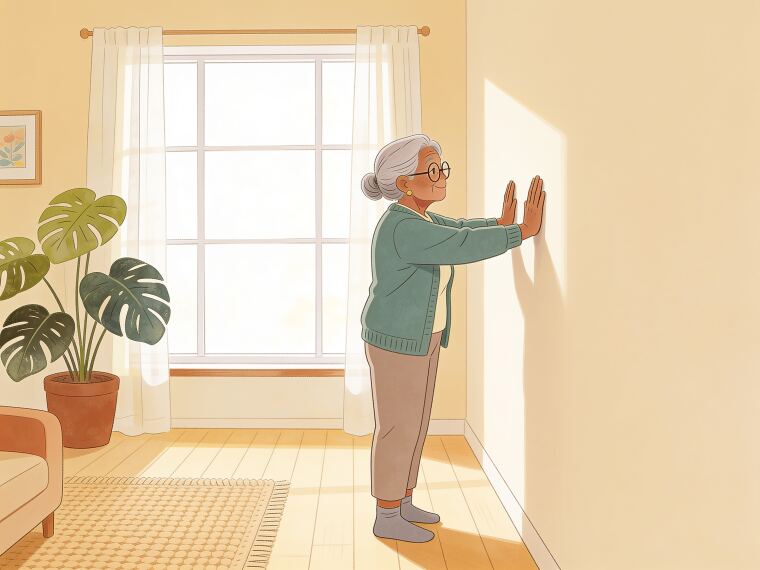
Stand an arm's length from a wall, palms flat against it at shoulder height. Bend your elbows to bring your chest towards the wall, then push back. It's a gentle version of a press-up that strengthens the chest, shoulders, and arms without any strain on the wrists or floor. Do 8 to 10.
3-day free trial • Cancel anytime
Daily check-ins that save lives
Join thousands who never worry about being alone
4. Band chest press
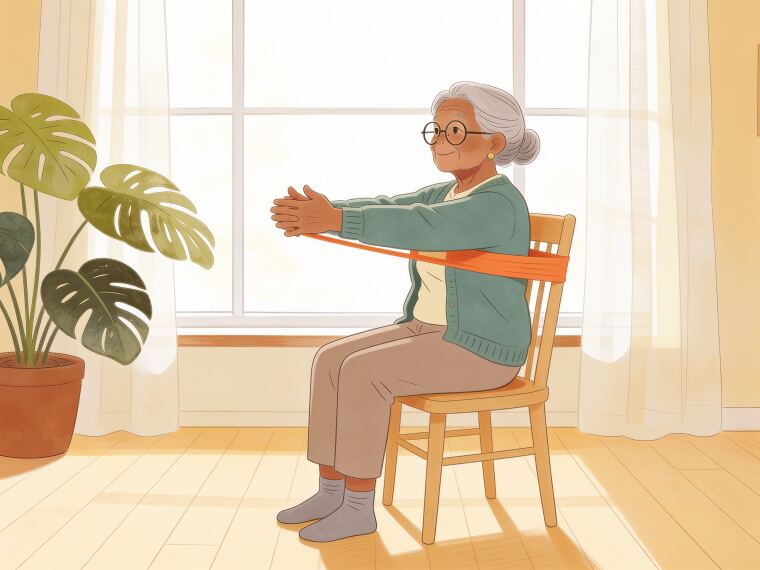
Wrap a resistance band around your upper back and hold an end in each hand at chest level. Press both hands forward until your arms are straight, then return slowly. Great for the chest and the backs of the arms. Do 10 to 12.
5. Seated leg extension
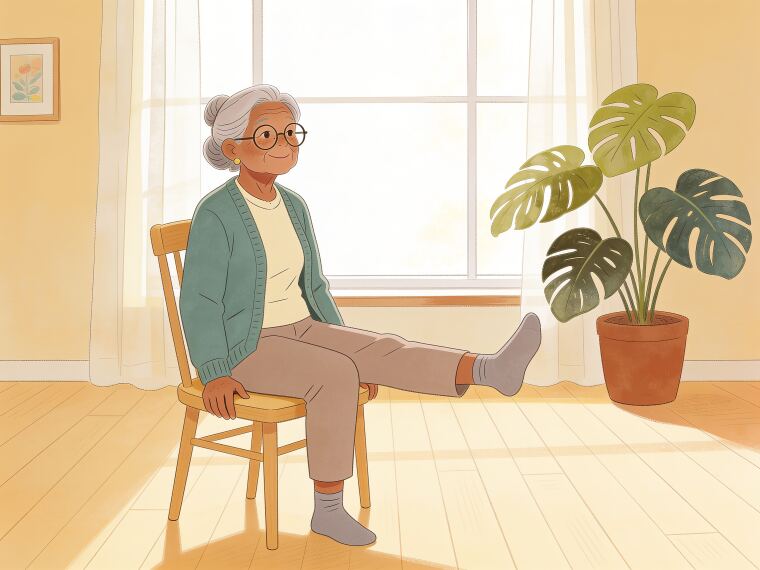
Sit tall and slowly straighten one leg out in front of you until it's roughly level with your hip, hold for a second, then lower. This strengthens the thigh muscles that support your knees and help you climb stairs. Do 10 on each leg.
6. Standing calf raise
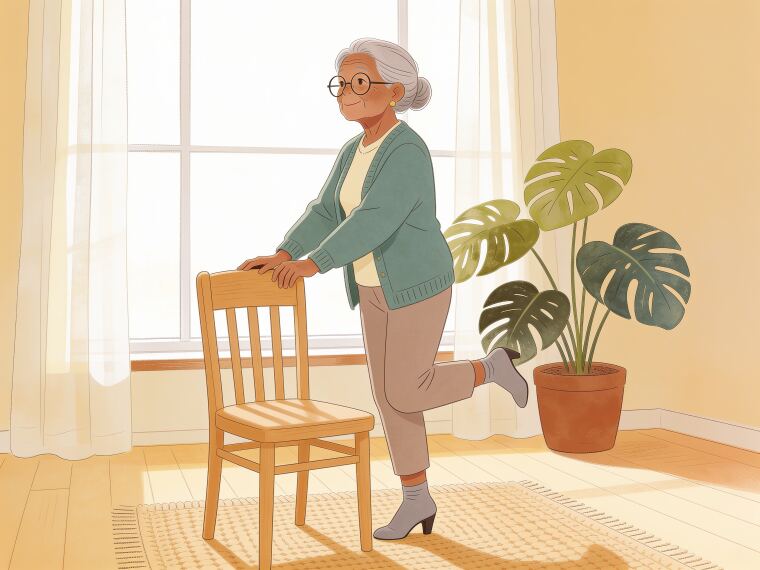
Hold the back of a sturdy chair for support. Rise up onto the balls of your feet, hold briefly, then lower your heels back down with control. Strong calves are surprisingly important for steady walking and balance. Do 12 to 15.
7. Band leg press
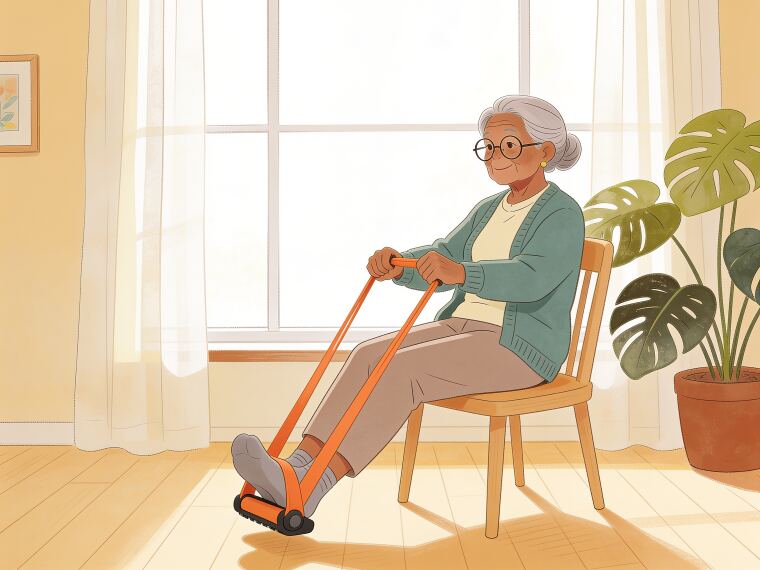
Sit in a chair, loop the band around one foot and hold the ends. Push that foot forward and down against the band's resistance, as if pressing a pedal, then return slowly. This works the whole leg. Do 10 on each side.
8. Bicep curl
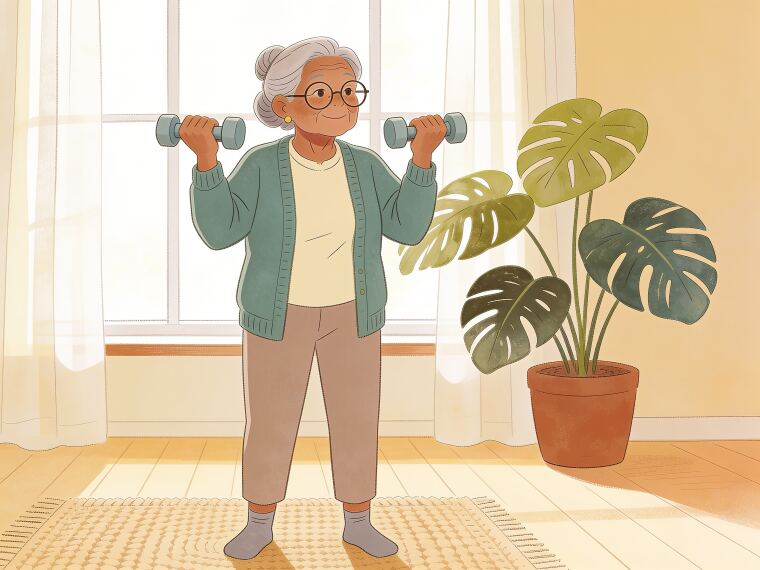
Hold a light weight (a dumbbell, a tin, or a water bottle) in each hand, arms at your sides. Bend your elbows to bring the weights towards your shoulders, then lower slowly. Keep your elbows tucked in. Do 10 to 12. This keeps your arms strong enough for lifting and carrying.
Building it into a routine
You don't need to do all eight every time. A good starting routine is to pick four or five, do one set of each, and repeat the circuit if you feel up to it. Over a few weeks, add a second set, then heavier resistance. Consistency matters far more than intensity. Ten minutes, three times a week, will make a noticeable difference within a month or two. To round out your week, add some balance exercises for seniors for steadiness and, on gentler days, a few chair exercises or other low-impact options.
A note on staying safe when you live alone
Building strength is one of the best things you can do to lower your risk of a fall, and to recover better if one ever happens. But no amount of exercise removes the risk entirely, and a fall is far more dangerous when there's no one nearby to notice.
If you live on your own, it's worth having a simple safety net alongside your exercise routine: a daily check-in that quietly confirms you're okay each day and alerts someone you trust if you ever don't respond. See how a daily check-in works so that a quiet day never becomes a silent one.
Strength keeps you independent. A check-in makes sure you're never truly alone if something goes wrong.
Get the free Living Alone Safety Checklist
The home setup, daily habits, and emergency info that keep people living alone safe, in one email you can act on this week.
Please complete the verification above.
Check your inbox
Your safety checklist is on the way to .
Frequently asked questions
TRUSTED BY THOUSANDS OF FAMILIES
Never Wonder "Are They Okay?" Again
Daily check-ins with automatic alerts to your loved ones if you ever need help.
"I was skeptical at first, but after my neighbor was found 3 days after a fall, I signed up immediately. Now my daughter knows I'm okay every single day."
— Margaret R., 72, living independently
Related Articles
Leg Exercises for Seniors: 8 Moves for Strength and Steadiness
Your legs carry you through every day. These 8 gentle exercises help older adults keep the leg stren...
Core Exercises for Seniors: 8 Gentle Moves for a Steadier You
Your core is the quiet centre of nearly every movement you make. These 8 gentle exercises help older...
Hearing Aids for Seniors: OTC vs Prescription, Real Costs, and How to Choose
Over-the-counter or prescription? Behind the ear or nearly invisible? Here is a plain guide to heari...
Best Walkers for Seniors in 2026: Rollators, Standard Walkers, Upright Walkers, and How to Choose
A walker that fits the person and the way they move keeps them walking for years longer. Here is a p...