Yoga for Seniors: Benefits, Best Styles, and How to Start
Published July 31, 2026
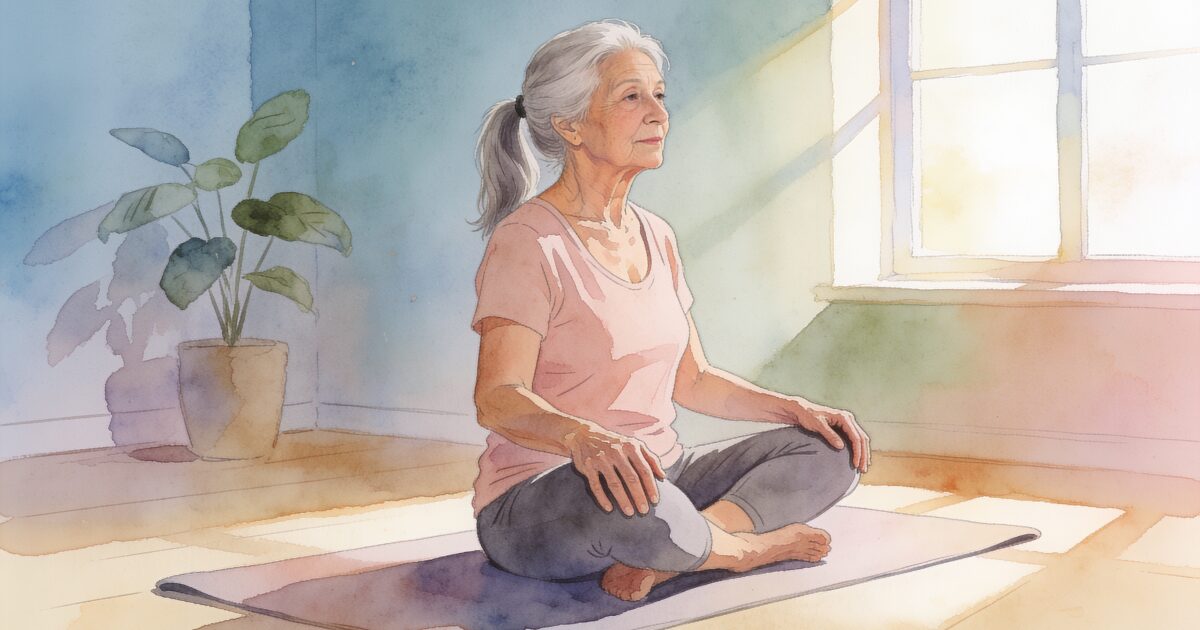
Ask people to picture yoga and most imagine someone young folding themselves in half on a mat. It is a shame, because that picture puts off exactly the people yoga suits best. At its heart, yoga is unhurried movement paired with steady breathing, and for older adults that combination is close to ideal: it builds flexibility, quiet strength, and balance, while calming the mind in a way few other exercises manage.
One missed check-in. Immediate family alert. That's the AssureOkay promise.
Try free for 3 daysThis guide looks at yoga for seniors as a whole: what it offers, which styles to choose (and which to skip at first), how to find the right class, and how to practise safely at home. If you would rather jump straight into moving, our gentle yoga for seniors routine gives you eight beginner poses ready to follow today.
What yoga offers older adults
The research on yoga in later life is encouraging, and the benefits people report are wonderfully practical:
- Flexibility. Regular practice gently lengthens tight hamstrings, hips, and shoulders, making reaching, dressing, and bending noticeably easier.
- Balance and fall prevention. Many poses train steady weight-shifting and body awareness, the same skills that keep you upright on an uneven pavement. Yoga sits naturally alongside balance exercises and tai chi in a fall-prevention routine.
- Gentle strength. Holding poses builds real strength in the legs, core, and back without weights or strain.
- Better sleep. The slow breathing and winding-down quality of yoga help many people fall asleep more easily and sleep more deeply.
- A calmer mind. The breathing is the quiet secret of yoga. Even a few minutes of slow, steady breath lowers stress in a way you can feel.
- Company. A weekly class brings friendly faces, gentle accountability, and a reason to leave the house. For many people this matters as much as the movement.
As with any exercise, keep expectations kind: yoga supports your health, it does not cure conditions, and it works best as one thread in an active week.
Which styles suit seniors best
Yoga comes in many flavours, and the name on the timetable matters. Roughly in order of gentleness:
- Chair yoga. Every pose is done seated or using a chair for support. Ideal if you have balance worries, tire easily, or cannot get up and down from the floor. It pairs beautifully with other chair exercises.
- Hatha. A broad, traditional style, usually slow-paced, holding simple poses with attention to breath. A beginner hatha class is a lovely, safe starting point.
- Restorative. Deeply relaxing. You settle into a few fully supported resting poses, held for several minutes with cushions and blankets. Wonderful for stress, sleep, and gentle recovery.
- Yin. Long, passive holds that work into the deeper connective tissue. Calming and quiet, though the long floor-based holds suit some bodies better than others.
- Gentle vinyasa. Vinyasa links poses into a flowing sequence. A specifically gentle or slow-flow class can suit active older beginners, but ordinary vinyasa classes often move quickly.
Best avoided at first: hot yoga (heated rooms raise the risk of dizziness and dehydration) and power or ashtanga yoga (fast, athletic, and hard on joints that are still learning the basics). Neither is where a new practice should begin.
Finding the right class
A good teacher transforms yoga from intimidating to delightful. A few things to look for:
3-day free trial • Cancel anytime
Daily check-ins that save lives
Join thousands who never worry about being alone
- Seek out senior-specific or beginner classes. Community centres, leisure centres, libraries, and some GP-linked wellbeing schemes often run gentle sessions aimed at older adults. Words like "gentle", "chair", "over-60s", or "beginners" on the timetable are good signs.
- Tell the teacher about your conditions. Arrive a few minutes early and mention arthritis, joint replacements, osteoporosis, blood pressure, dizziness, or anything else relevant. A good teacher will quietly offer you alternatives during class.
- Props are your friend. Blocks, straps, cushions, walls, and chairs exist to bring poses to your body, not the other way round. Using them is wise practice, not cheating.
- Judge a class by how you feel afterwards. You should leave feeling looser and calmer, not sore or defeated. If a class feels wrong, try another; teachers vary enormously.
Practising at home safely
A short home practice between classes, or instead of them, works well once you know a few basics:
- Clear a non-slip space and wear comfortable clothes. Bare feet or grippy socks beat smooth socks on hard floors.
- Keep a sturdy chair or wall within reach for every standing pose.
- Warm up gently first and never force a stretch. Mild tension that eases as you breathe is right; pain is not.
- Follow a routine made for older beginners, whether a video or a written guide like our gentle yoga sequence, rather than improvising advanced poses.
- Stop if you feel pain, dizziness, or breathlessness.
A taste of four foundational poses
To give you a feel for the practice, here are four foundations described in plain words. Move slowly and breathe throughout.
- Mountain pose. Stand tall with feet hip-width apart, weight even through both feet, shoulders relaxed, crown of the head reaching gently upward. Take five slow breaths. It looks like simply standing; it is actually a lesson in posture and grounding.
- Seated cat-cow. Sit on a chair, hands on your knees. Breathe in and gently arch your back, lifting your chest. Breathe out and round your spine, tucking your chin. Flow slowly between the two for six breaths. Lovely for a stiff back.
- Supported tree at a wall. Stand side-on to a wall with one hand resting on it. Shift your weight onto the nearer foot and rest the other toe lightly on the floor or against your ankle, knee turned gently outward. Breathe, then swap sides. A classic balance pose made safe.
- Legs-on-a-chair rest. Lie on your back on a bed or mat with your calves resting on the seat of a chair, knees bent at a right angle, arms soft by your sides. Rest and breathe for a few minutes. Deeply calming for the body and the lower back.
Adapting for arthritis, joint replacements, and osteoporosis
Yoga adapts to almost every body, but three situations deserve particular care:
- Arthritis. Gentle movement often eases stiffness, but respect flared-up days by keeping ranges small and skipping anything that provokes a joint. Warmth, slowness, and chair support all help.
- Joint replacements. After a hip or knee replacement, your surgeon will have given you movements to avoid (often deep hip bends or certain rotations). Wait until you are cleared to exercise, tell your teacher about the replacement, and keep within those limits permanently unless advised otherwise.
- Osteoporosis. Avoid deep forward folds and strong spinal twists, which load the spine in ways fragile bones dislike. Favour upright, supported poses and gentle back-strengthening work.
In all three cases, and whenever you have a heart condition, unmanaged blood pressure, glaucoma, or recent surgery, speak with your doctor or GP before starting. A quick conversation turns yoga from a worry into a confident habit.
A note on staying safe when you live alone
Yoga strengthens exactly the things that keep you safe and independent at home: balance, flexibility, body awareness, and a calm head. But even the steadiest practice cannot remove every risk, and a fall or sudden illness is far more serious when there is no one nearby to notice.
If you live on your own, consider pairing your practice with a simple safety net: a daily check-in that quietly confirms you are okay each day and alerts someone you trust if you ever do not respond. See how a daily check-in works so that a quiet day never becomes a silent one.
Yoga gives you peace of mind in your body. A daily check-in gives the same peace of mind to the people who love you.
Get the free Living Alone Safety Checklist
The home setup, daily habits, and emergency info that keep people living alone safe, in one email you can act on this week.
Please complete the verification above.
Check your inbox
Your safety checklist is on the way to .
Frequently asked questions
TRUSTED BY THOUSANDS OF FAMILIES
Never Wonder "Are They Okay?" Again
Daily check-ins with automatic alerts to your loved ones if you ever need help.
"I was skeptical at first, but after my neighbor was found 3 days after a fall, I signed up immediately. Now my daughter knows I'm okay every single day."
— Margaret R., 72, living independently
Related Articles
Vitamin B12 for Seniors: Why It Matters and How to Get Enough
B12 keeps your nerves, blood, and memory working well, yet older adults often absorb it poorly. Here...
UTI Symptoms in Elderly People: The Signs Families Often Miss
In older adults, a urinary tract infection doesn't always announce itself with burning or urgency. S...
Best Vitamins for Seniors: The Key Nutrients That Matter With Age
Our nutritional needs shift as we get older. Here are the key vitamins and minerals that matter most...
Gentle Yoga for Seniors: 8 Beginner Poses for Strength and Calm
Yoga at any age improves flexibility, balance, and peace of mind. These 8 gentle poses are designed...