Water Aerobics for Seniors: A Joint-Friendly Way to Stay Fit
Published July 25, 2026
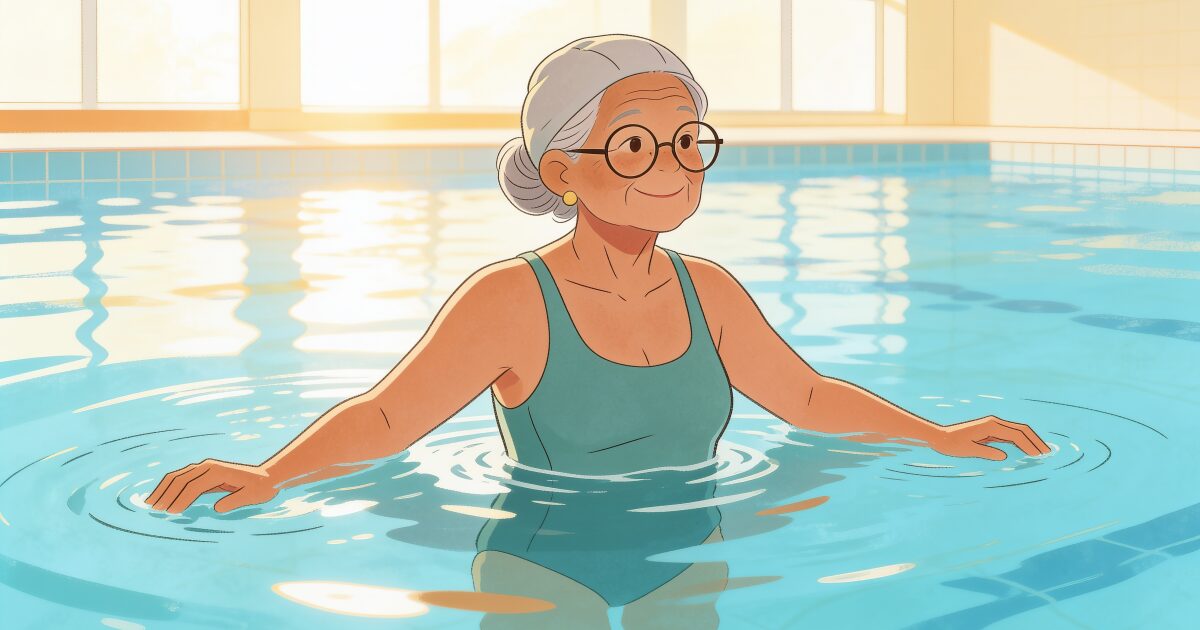
There is something wonderfully freeing about moving in water. The moment you step in, much of your weight lifts away, aching joints ease, and movements that feel stiff on land suddenly flow. That is exactly why water aerobics is one of the best forms of exercise for older adults, and why so many people who struggle with exercise on land come to love it.
One missed check-in. Immediate family alert. That's the AssureOkay promise.
Try free for 3 daysWater aerobics, sometimes called aqua aerobics or aquafit, is simply a workout done standing in a pool, usually to music and led by an instructor. You do not need to swim, and you do not need to be fit to begin. The water does much of the gentle work for you while quietly building your strength, heart health, and confidence.
Why exercising in water suits seniors so well
- Kind to the joints. Water supports up to 90 percent of your body weight, so there is almost no pressure on knees, hips, and backs. This makes it ideal for arthritis and joint pain.
- Almost no fall risk. Standing in supportive water, a fall is very hard to have, which removes one of the biggest worries about exercising in later life.
- Gentle, all-round resistance. Water pushes back against every movement, so you build strength naturally without any weights, and it works muscles evenly on both sides.
- Good for the heart. Moving steadily in water raises your heart rate and improves stamina, all while feeling easier than the same effort on land.
- Soothing and sociable. Warm water relaxes tired muscles, and classes are friendly, cheerful places where the company is as good for you as the exercise.
If you enjoy the idea of gentle cardio, water aerobics fits naturally alongside other aerobic exercises for seniors and sits within the wider family of low-impact exercises for seniors.
A few moves you'll come across
In a class the instructor guides everything, but here is a taste of the kind of gentle movements involved, done standing in chest-deep or waist-deep water.
Water walking
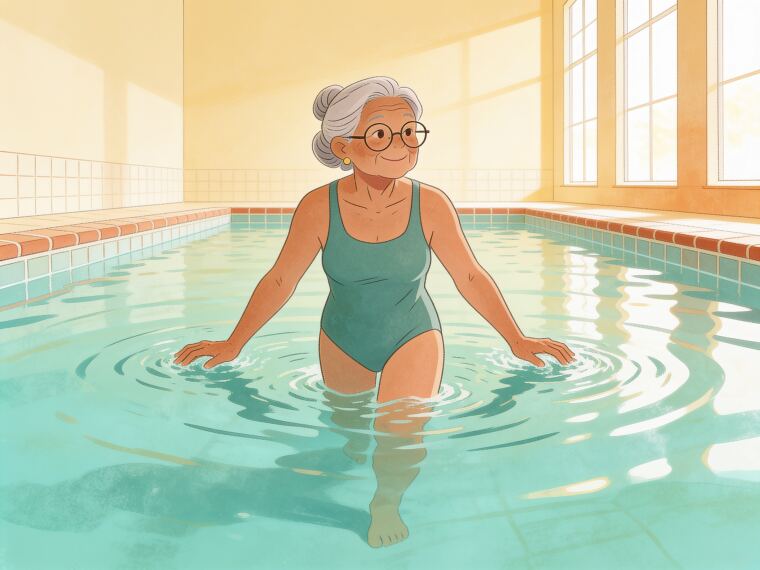
The simplest place to start. Walk forward and back across the pool, then side to side, pushing gently against the water. It works your legs and heart while the water keeps you steady and cushioned.
Marching and knee lifts
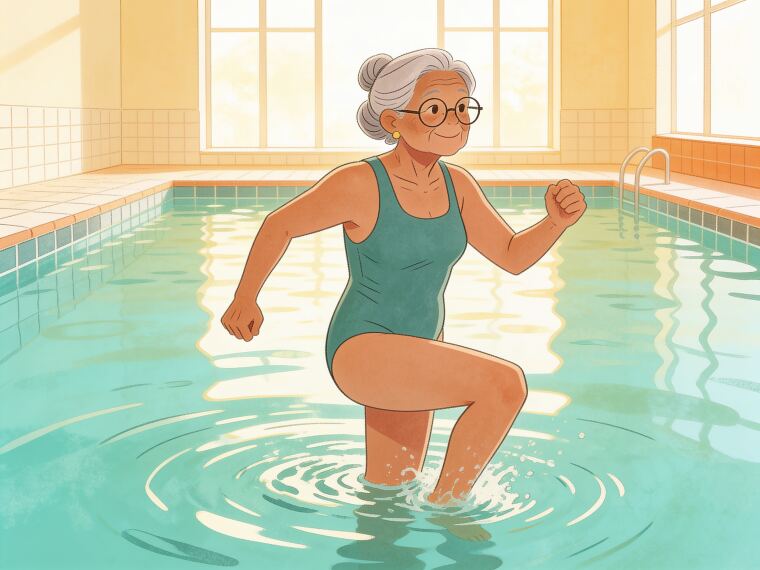
Stand tall and march on the spot, lifting your knees towards the surface, swinging your arms through the water. The resistance turns an easy movement into a proper workout for the hips and thighs.
3-day free trial • Cancel anytime
Daily check-ins that save lives
Join thousands who never worry about being alone
Leg swings
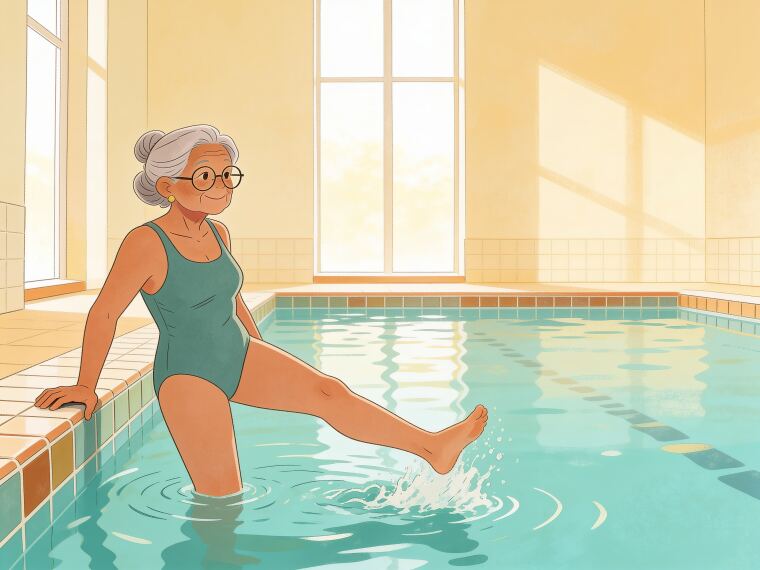
Hold the pool edge for support and slowly swing one leg forward and back, then out to the side and in, feeling the water resist each way. This builds leg strength and balance safely.
Arm sweeps
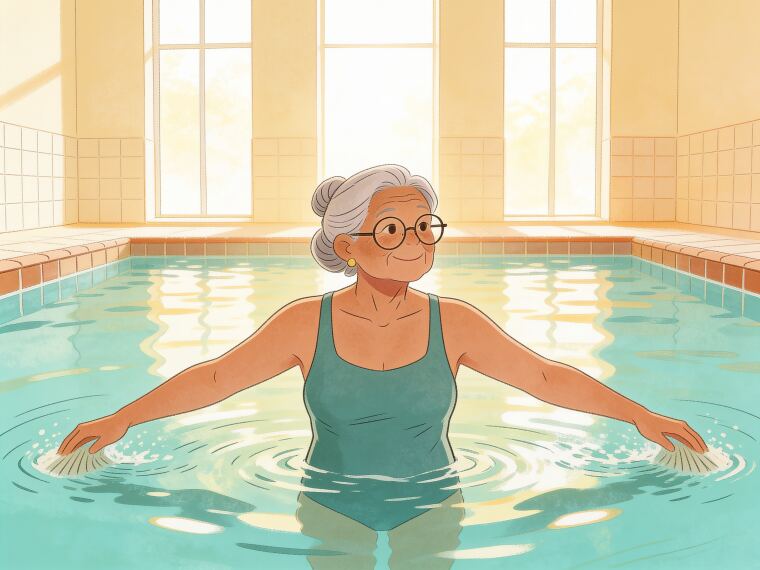
With your shoulders under the water, sweep your arms out to the sides and back in, or push them forward and pull them back. The water gives instant, gentle resistance that tones the arms, chest, and back.
Gentle bounces and jogging
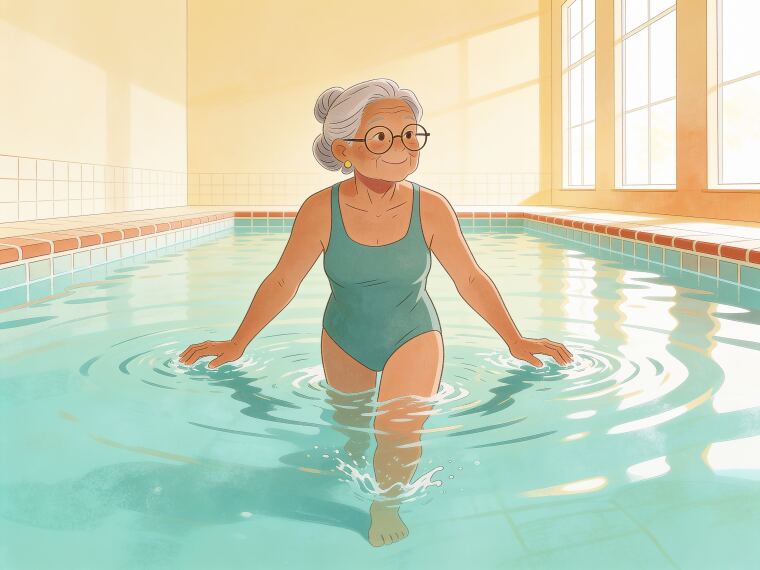
Because the water cushions your landing, you can bounce lightly or jog gently on the spot in a way that would be too jarring on land. It raises the heart rate with no impact on the joints.
How to get started
- Find a class made for you. Look for pools running senior, gentle, or "aqua" classes, ideally in warmer water. A class aimed at older adults will move at the right pace and welcome beginners.
- Arrive early the first time so you can meet the instructor, mention any health conditions, and get comfortable in the water before you begin.
- Wear a comfortable swimsuit and consider water shoes for grip on the pool floor.
- Start gently. Do what feels right and rest whenever you need to. You can always do more next time.
- Stay hydrated. It is easy to forget you are working hard in water, but you still lose fluid, so sip water before and after.
How to stay safe in the water
- Check with your doctor first if you have a heart condition, breathing problems, or any wound or infection.
- Use the steps or a handrail to get in and out, and take your time on the wet poolside, where slips can happen.
- Stay where you can stand, and let the instructor or lifeguard know if you feel unsteady or unwell.
- Listen to your body. Stop and rest if you feel dizzy, breathless, or any chest discomfort, and get out gently.
- Never swim or exercise in a pool with no lifeguard on duty, especially if you are on your own.
A note on staying safe when you live alone
Water aerobics is a gentle, joint-friendly way to stay strong and steady, and a lovely reason to get out and see people. But the poolside is only part of your day, and a fall, faint, or sudden illness at home is far more dangerous when there is no one nearby to notice.
If you live on your own, it is worth pairing an active life with a simple safety net: a daily check-in that quietly confirms you are okay each day and alerts someone you trust if you ever do not respond. See how a daily check-in works so that a quiet day never becomes a silent one.
The pool keeps you strong and connected. A check-in makes sure help can reach you quickly if you ever need it.
Get the free Living Alone Safety Checklist
The home setup, daily habits, and emergency info that keep people living alone safe, in one email you can act on this week.
Please complete the verification above.
Check your inbox
Your safety checklist is on the way to .
Frequently asked questions
TRUSTED BY THOUSANDS OF FAMILIES
Never Wonder "Are They Okay?" Again
Daily check-ins with automatic alerts to your loved ones if you ever need help.
"I was skeptical at first, but after my neighbor was found 3 days after a fall, I signed up immediately. Now my daughter knows I'm okay every single day."
— Margaret R., 72, living independently
Related Articles
Walking for Seniors: How Far, How Often, and How to Stay Safe Walking Alone
Walking is the exercise most older adults actually keep doing. Here is how to start, how far and how...
Transportation for Seniors: Every Option When Driving Gets Harder (Rides, Paratransit, Volunteers, and More)
When driving stops being the answer, the question becomes how a parent gets to the doctor, the shops...
Exercises for Seniors: The Complete Guide by Goal (Balance, Strength, Heart, Flexibility)
The best exercise for an older adult depends on what you want from it. This guide sorts our exercise...
Hearing Aids for Seniors: OTC vs Prescription, Real Costs, and How to Choose
Over-the-counter or prescription? Behind the ear or nearly invisible? Here is a plain guide to heari...