UTI Symptoms in Elderly People: The Signs Families Often Miss
Published August 17, 2026
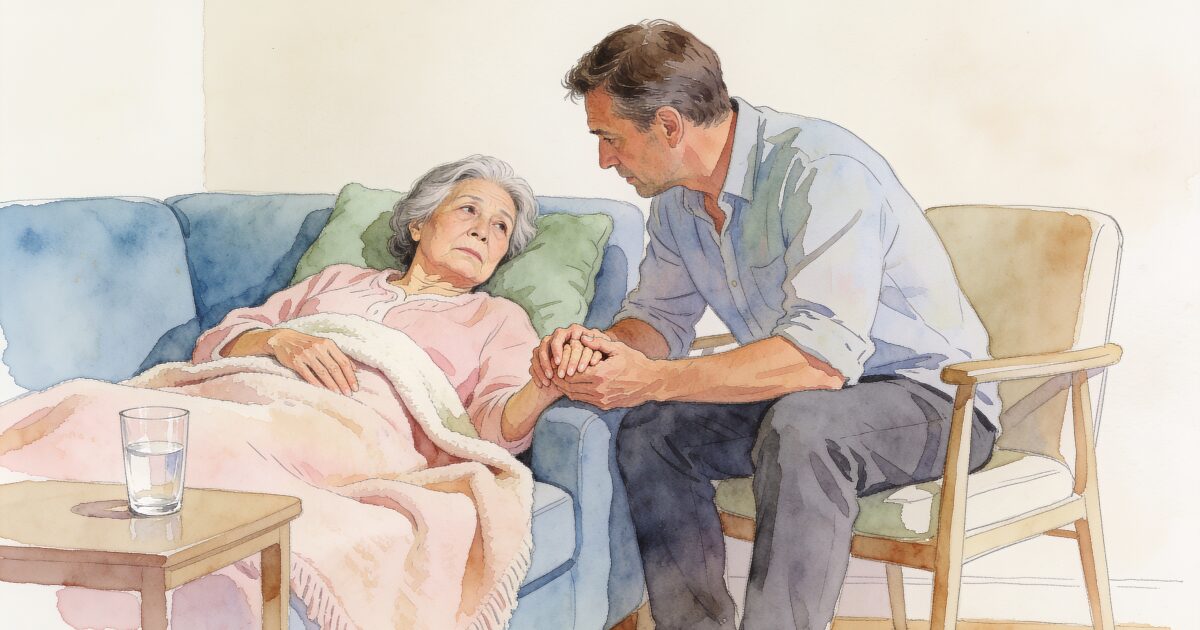
Urinary tract infections are among the most common infections in later life, and among the most commonly missed. In younger adults a UTI usually announces itself clearly: it stings, it nags, you know something is wrong. In an older person the same infection can arrive in disguise, showing up as confusion, a fall, or a vague sense that someone is just not themselves.
One missed check-in. Immediate family alert. That's the AssureOkay promise.
Try free for 3 daysThat disguise matters, because families and neighbours are often the first to notice something is off. Knowing what a UTI can look like in an older adult, and equally what it does not automatically mean, helps you act promptly without jumping to conclusions.
A quiet word before we start: this article is general information, not a diagnosis. If you are worried about yourself or someone you love, the right next step is always a conversation with a GP or doctor.
Why UTIs look different in older adults
A UTI is an infection anywhere along the urinary tract, most often the bladder. In older bodies, a few things change how it shows itself:
- The immune response is quieter. An older immune system may not mount the fever and strong local symptoms younger people get, so the infection can smoulder with vaguer signs.
- Sensation changes. Nerve changes and other conditions can dull the classic burning or urgency, so the usual alarm bells simply do not ring.
- The brain feels it first. In some older adults, infection and the inflammation that comes with it tip the brain into sudden confusion or delirium before any urinary symptom is obvious.
- Other conditions muddy the water. Existing continence problems, dementia, or mobility issues can hide new symptoms inside old ones.
The classic symptoms
Many older adults do get the textbook signs, so they are still worth knowing:
- Burning or stinging when passing urine.
- Needing to go more often, including repeatedly during the night.
- A sudden, hard-to-hold urgency to go.
- An ache or pressure in the lower tummy, just above the pubic bone.
- Cloudy or strong-smelling urine, sometimes with a little blood.
Any of these on their own is a good reason to contact the GP, particularly if they are new or getting worse.
The atypical signs families miss
This is the part worth committing to memory, because in older adults a UTI often leads with none of the above. Watch for:
- New or worsening confusion or delirium. A parent who was sharp on Sunday and muddled by Wednesday, struggling to follow conversation or recognise where they are. Sudden change is the key word; this is different from the slow drift of dementia.
- Agitation or unusual behaviour. Restlessness, irritability, or being uncharacteristically withdrawn.
- Sudden falls or new unsteadiness. An infection can sap strength and blur concentration enough to cause a fall that seems to come from nowhere.
- Changes in continence. New accidents, or a clear worsening, in someone whose continence was stable.
- Loss of appetite, nausea, or generally being off food.
- Just "not themselves". Sleepier, flatter, vaguer, quieter. Families describe this feeling more often than any specific symptom, and it deserves to be taken seriously. If you look out for an older relative from a distance, our guide to caring for elderly parents who live alone has more on spotting these quiet changes.
None of these signs is unique to a UTI, which brings us to an important nuance.
Confusion alone is not automatically a UTI
It has become almost folklore that confusion in an older person means a urine infection, and the truth is more careful than that. Sudden confusion has many possible causes: dehydration is a big one (our guide to dehydration in the elderly explains how quietly it creeps up), along with chest and other infections, medication changes and side effects, constipation, pain, and low sodium, among others.
3-day free trial • Cancel anytime
Daily check-ins that save lives
Join thousands who never worry about being alone
There is also a real problem of overdiagnosis. Many older adults, especially women, have bacteria in their urine all the time without any infection or illness. Treating every confused older person for a UTI on the strength of a dipstick alone can mean unnecessary antibiotics while the real cause goes unfound.
So the sensible position is this: sudden confusion or any sharp change in an older person always warrants prompt medical attention, and a UTI is one possibility the doctor will properly assess, usually with a symptom review and appropriate urine testing, rather than an assumption anyone should make at home. If a UTI is confirmed, a GP may prescribe antibiotics; whoever is prescribed them should complete the course as advised.
When to see a GP, and when it is urgent
Contact the GP promptly (same day if you can) if you notice:
- Classic urinary symptoms: burning, frequency, urgency, lower tummy ache.
- New confusion, agitation, or a sudden change in behaviour or alertness.
- A sudden fall, new incontinence, or a marked loss of appetite.
Seek urgent medical help (emergency services or an urgent care line) if there is:
- A high temperature, or shivering and shaking chills.
- Pain in the back or side, just below the ribs, which can signal a kidney infection.
- Vomiting, or being unable to keep fluids down.
- Possible signs of sepsis: severe drowsiness or difficulty rousing, very fast breathing, mottled, bluish, or unusually cold skin, slurred speech, or passing little or no urine. Sepsis is an emergency, and with older adults it is always better to be checked and reassured than to wait.
Why UTIs are more common in later life
A few unavoidable facts of ageing stack the odds:
- The bladder often empties less completely, leaving urine where bacteria can multiply.
- In women, lower oestrogen after menopause changes the protective balance of the urinary tract.
- In men, an enlarged prostate can slow and trap urine flow.
- Diabetes, constipation, prolapse, and catheters each raise the risk further.
- Many older adults simply drink less, concentrating the urine and washing bacteria through less often.
Sensible prevention
Nothing prevents every UTI, but everyday habits genuinely lower the risk:
- Drink fluids regularly through the day rather than relying on thirst, which fades with age. Water, tea, soups, and juicy fruit all count.
- Do not hold on. Go when you feel the need, and take your time to empty fully.
- Keep up gentle hygiene, wiping front to back and washing daily.
- Stay ahead of constipation, which presses on the bladder and stops it emptying well.
- Mention recurrent infections to the GP. If UTIs keep returning, a doctor can look for underlying causes and discuss preventive options suited to the individual.
Why living alone makes early signs easy to miss
Almost every early sign of a UTI in an older adult is a change someone else would notice: a flatter voice on the phone, a muddled conversation, a day of eating nothing much. When someone lives alone, there may simply be no one there to catch it, and a mild bladder infection has more time to become a kidney infection or worse. It is one of many small risks covered in our safety tips for seniors living alone.
This is where a small daily habit earns its keep. A daily check-in that asks how you are feeling, not just whether you are up and about, gives the people who love you an early signal when something shifts: a missed response, or a string of "not great" answers where "fine" used to be. See how a daily check-in works and how it quietly alerts someone you trust if you ever do not respond.
Good hydration, sensible habits, and prompt GP visits deal with most UTIs before they become serious. A daily check-in simply makes sure that if you ever cannot raise the alarm yourself, someone else will.
Get the free Living Alone Safety Checklist
The home setup, daily habits, and emergency info that keep people living alone safe, in one email you can act on this week.
Please complete the verification above.
Check your inbox
Your safety checklist is on the way to .
Frequently asked questions
TRUSTED BY THOUSANDS OF FAMILIES
Never Wonder "Are They Okay?" Again
Daily check-ins with automatic alerts to your loved ones if you ever need help.
"I was skeptical at first, but after my neighbor was found 3 days after a fall, I signed up immediately. Now my daughter knows I'm okay every single day."
— Margaret R., 72, living independently
Related Articles
Walking for Seniors: How Far, How Often, and How to Stay Safe Walking Alone
Walking is the exercise most older adults actually keep doing. Here is how to start, how far and how...
Hearing Aids for Seniors: OTC vs Prescription, Real Costs, and How to Choose
Over-the-counter or prescription? Behind the ear or nearly invisible? Here is a plain guide to heari...
Best Walkers for Seniors in 2026: Rollators, Standard Walkers, Upright Walkers, and How to Choose
A walker that fits the person and the way they move keeps them walking for years longer. Here is a p...
Chair Yoga for Seniors: 10 Seated Poses for Flexibility, Balance, and Calm
You do not need to get down to the floor to enjoy yoga. These 10 seated poses bring the stretch, ste...