Dehydration in the Elderly: Warning Signs and How to Prevent It
Published July 24, 2026
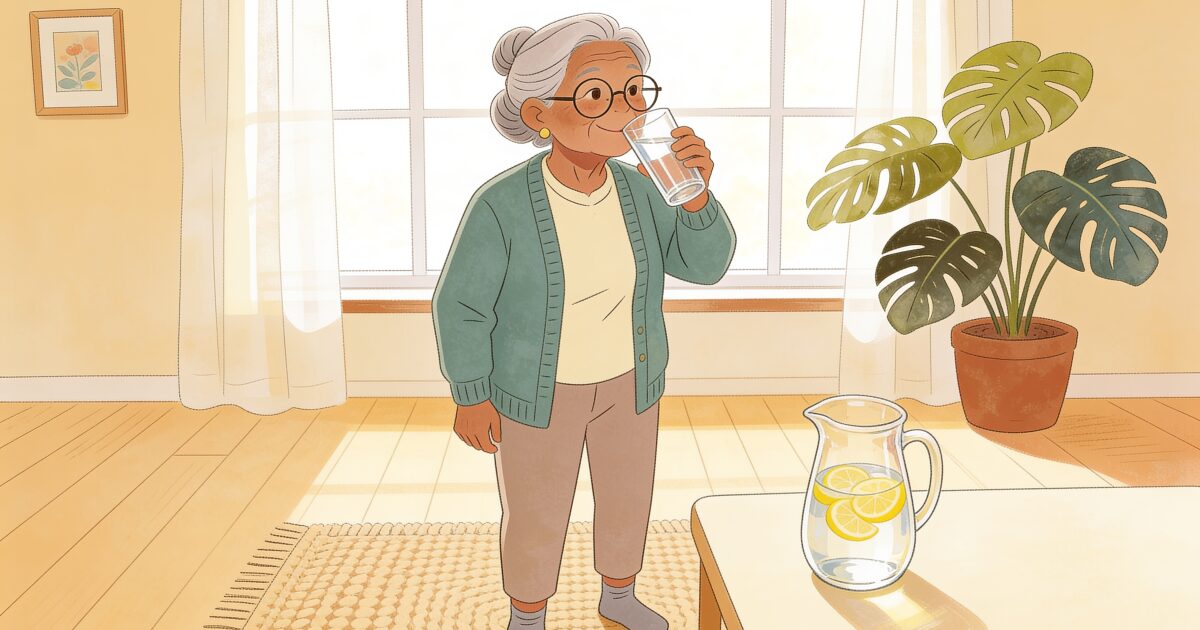
Staying hydrated sounds like the simplest thing in the world, yet dehydration is one of the most common and most overlooked health problems in older adults. It creeps up quietly, the early signs are easy to dismiss, and by the time it's obvious it can already be serious.
Don't let distance keep you from knowing they're safe. Daily check-ins, anywhere in the world.
Try free for 3 daysThe reason it matters so much is that older bodies handle fluid differently, and the warning signs can look like other things entirely. Knowing what to watch for makes all the difference. A quick and honest note first.
This article is general information, not medical advice. If you're worried about your own hydration or someone else's, especially if there are heart or kidney conditions or a lot of medications involved, please speak to your doctor or pharmacist for guidance tailored to the situation.
Why older adults are more at risk
Several changes come together with age to make dehydration more likely.
- Reduced sense of thirst. The signal that tells you to drink weakens as we get older, so you may simply not feel thirsty even when your body needs fluid.
- Medications. Diuretics (water tablets), some blood pressure drugs, and laxatives all increase fluid loss.
- Kidney changes. Ageing kidneys are less efficient at conserving water, so more is lost.
- Drinking less on purpose. Some people cut back on fluids to avoid trips to the toilet or because of mobility or continence worries.
- Illness. A fever, vomiting, or diarrhoea can tip someone into dehydration fast.
The warning signs to watch for
Some signs are the ones you'd expect. Others are surprising, and it's the surprising ones that catch people out.
Early and common signs:
- Dry mouth and lips
- Dark, strong-smelling urine, or passing less than usual
- Tiredness and low energy
- Headache
- Dizziness or feeling lightheaded, especially when standing
The sign that's easy to miss:
- Sudden confusion or a change in behaviour. In older adults, dehydration can show up as new confusion, disorientation, or agitation. This is important, because it's often mistaken for a urinary tract infection or the onset of dementia. If someone seems suddenly muddled or "not themselves," dehydration is well worth considering as a cause, and it's often quickly reversible.
More serious signs, which need prompt attention, include sunken eyes, a rapid or weak pulse, very low blood pressure, and fainting.
How much fluid to aim for
A common general guide is around six to eight glasses a day, roughly 1.5 to 2 litres, but the right amount varies with the weather, activity, health, and medication. Hot days and illness increase what you need.
3-day free trial • Cancel anytime
Daily check-ins that save lives
Join thousands who never worry about being alone
Importantly, it doesn't all have to be water. These all count towards your fluid intake:
- Water, still or sparkling
- Milk and milk drinks
- Diluted fruit juice or squash
- Tea and coffee (in moderation)
- Soups, and foods with high water content like fruit and jelly
One caution: anyone with a heart or kidney condition may have been given specific fluid limits by their doctor, and that advice should always take priority over any general figure.
Practical ways to drink more
For someone who rarely feels thirsty, the trick is to make drinking a habit rather than waiting for the urge.
- Drink to a routine, not to thirst: a glass with each meal, each medication, and each TV programme.
- Keep a drink in sight. A full glass or bottle where you sit is a constant gentle prompt.
- Make it appealing. Add a slice of lemon, try herbal teas, or keep a favourite squash to hand.
- Eat your fluids. Soups, stews, yoghurt, and juicy fruits all add up.
- Watch the weather. Deliberately drink more on hot days and during any illness.
- Address the real barrier. If someone is drinking less to avoid the toilet, tackling that worry directly often solves the hydration problem too.
Good hydration goes hand in hand with good nutrition. Our guide to the best vitamins for seniors covers the nutrients that matter most in later life, and if you live on your own our safety tips for seniors living alone pull together the wider picture of staying well and safe.
When dehydration is an emergency
Most dehydration can be put right at home by drinking more. But severe dehydration can become dangerous quickly in older adults. Seek urgent medical help if there is:
- Severe confusion or unresponsiveness
- A rapid or weak pulse, or fainting
- Little or no urine over many hours
- An inability to keep fluids down
In these cases someone may need fluids given in hospital, so don't wait to see if it passes.
Spotting the "not themselves today" signal when you live alone
Here's the difficulty with dehydration: the person affected often can't tell it's happening, especially once confusion sets in. A sudden change like new muddled thinking is exactly the kind of "not themselves today" signal that needs someone to notice, and that's hardest of all when you live on your own.
A daily check-in is a quiet way to catch those changes early. Each day you confirm you're okay, often with a simple tap or by answering a short automated call, and if you don't respond, someone you trust is alerted with your last-known status. It won't measure your hydration, but it gives someone a reliable prompt to check on you on the day something isn't right. See how a daily check-in works.
Drinking enough keeps you well. A check-in makes sure that if you ever aren't yourself, someone finds out in time.
Get the free Living Alone Safety Checklist
The home setup, daily habits, and emergency info that keep people living alone safe, in one email you can act on this week.
Please complete the verification above.
Check your inbox
Your safety checklist is on the way to .
Frequently asked questions
TRUSTED BY THOUSANDS OF FAMILIES
Never Wonder "Are They Okay?" Again
Daily check-ins with automatic alerts to your loved ones if you ever need help.
"I was skeptical at first, but after my neighbor was found 3 days after a fall, I signed up immediately. Now my daughter knows I'm okay every single day."
— Margaret R., 72, living independently
Related Articles
Transportation for Seniors: Every Option When Driving Gets Harder (Rides, Paratransit, Volunteers, and More)
When driving stops being the answer, the question becomes how a parent gets to the doctor, the shops...
Exercises for Seniors: The Complete Guide by Goal (Balance, Strength, Heart, Flexibility)
The best exercise for an older adult depends on what you want from it. This guide sorts our exercise...
Walking for Seniors: How Far, How Often, and How to Stay Safe Walking Alone
Walking is the exercise most older adults actually keep doing. Here is how to start, how far and how...
Hearing Aids for Seniors: OTC vs Prescription, Real Costs, and How to Choose
Over-the-counter or prescription? Behind the ear or nearly invisible? Here is a plain guide to heari...