Safety Tips for Seniors Living Alone: A Room-by-Room Checklist
Published July 5, 2026
Living alone in later life can be one of life's quiet pleasures: your own space, your own routine, your own front door. With a few sensible precautions, it can also be perfectly safe. The aim isn't to fill your days with worry, but to remove the avoidable risks so you can enjoy your independence with confidence.
Peace of mind for under /month. Automatic alerts if you ever need help.
Try free for 3 daysHere's a practical, room-by-room walk through your home, plus the wider habits that keep you safe and connected.
The whole home: prevent falls
Falls are the single biggest risk for older adults living alone, so start here. Alongside these home changes, regular balance exercises and gentle low-impact activity directly lower your risk of falling in the first place.
- Remove or firmly tape down loose rugs and mats.
- Clear walkways of cables, clutter, and anything you could trip on.
- Improve lighting everywhere, especially stairs and hallways. Keep a lamp or torch within reach of the bed.
- Fit handrails on both sides of the stairs.
- Wear supportive, non-slip footwear indoors rather than loose slippers or socks.
The bathroom
Wet surfaces make this the highest-risk room in the house.
3-day free trial • Cancel anytime
Daily check-ins that save lives
Join thousands who never worry about being alone
- Fit grab rails by the toilet and in the shower or bath.
- Use a non-slip mat inside and outside the bath or shower.
- Consider a shower seat and a handheld showerhead.
- Set the water temperature so it can't scald.
- Never lock the door if you live alone; if you fell, it would delay help.
The kitchen
- Keep everyday items at waist height to avoid reaching up high or bending low.
- Never leave cooking unattended, and set a timer as a reminder.
- Keep tea towels and sleeves clear of the hob.
- Check that you can read use-by dates clearly; good lighting and a magnifier help.
The bedroom
- Keep a phone within arm's reach of the bed, charged overnight.
- Have a lamp or torch you can reach without getting up.
- Keep a clear, unobstructed path to the bathroom for night-time trips.
Fire and emergencies
- Test smoke alarms monthly and fit a carbon-monoxide alarm near fuel-burning appliances.
- Plan and mentally rehearse an escape route.
- Keep a list of emergency numbers somewhere visible, and saved in your phone.
Medication
- Use a weekly pill organiser so you can see at a glance whether you've taken your doses.
- Keep an up-to-date list of your medications and dosages, and share a copy with a trusted person.
- Set phone reminders for medication times.
Security
- Fit a door viewer or chain and never feel obliged to open the door to strangers.
- Keep doors and windows locked, especially at night.
- Be alert to phone and doorstep scams, which often target people living alone. When in doubt, hang up and call back on a number you trust.
Stay connected
Isolation is its own risk to health and safety, so connection belongs on any safety checklist.
- Keep a regular routine of contact with family or friends.
- Get to know your neighbours and share your daily rhythm so they notice if something seems off.
- Join a club, class, or community group to keep life full and people around you.
If you're reading this for a parent rather than yourself, our guide to caring for elderly parents who live alone is written with you in mind.
The safety net that ties it all together
You can make your home as safe as possible and still face the one problem that worries every person living alone: what happens if something goes wrong and no one knows? A fall in the night, a sudden illness, a slip in the bathroom. The real danger is often not the event itself but the hours that pass before anyone realises.
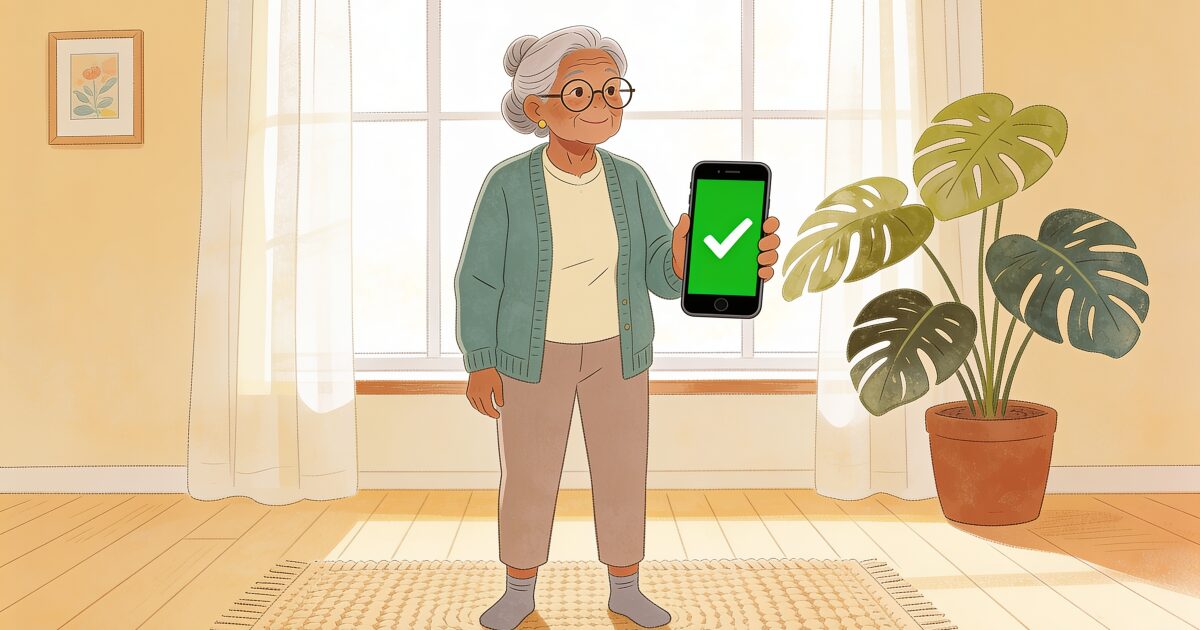
A daily check-in is the simplest answer. Each day you confirm you're okay with a single tap, or by answering a quick automated phone call that works even on a landline. If you ever don't respond, the people you've chosen are alerted automatically, with your last-known status, so help comes in minutes rather than days. See how a daily check-in works and how it lets you live independently without leaving your family to wonder.
Independence and safety aren't opposites. With a safe home, good habits, and a reliable safety net, living alone can be exactly what it should be: freeing.
Get the free Living Alone Safety Checklist
The home setup, daily habits, and emergency info that keep people living alone safe, in one email you can act on this week.
Please complete the verification above.
Check your inbox
Your safety checklist is on the way to .
Frequently asked questions
TRUSTED BY THOUSANDS OF FAMILIES
Never Wonder "Are They Okay?" Again
Daily check-ins with automatic alerts to your loved ones if you ever need help.
"I was skeptical at first, but after my neighbor was found 3 days after a fall, I signed up immediately. Now my daughter knows I'm okay every single day."
— Margaret R., 72, living independently
Related Articles
Living Alone: The Complete Guide to Doing It Well (Safety, Loneliness, Money, and Joy)
Millions of people live alone, and almost nobody teaches you how. Here is the honest version: the fi...
Solo Aging: What It Means and How to Plan for Growing Older on Your Own
Growing older without a partner or nearby children to fall back on is more common than the brochures...
The State of Living Alone in America: 2026 Report
38.3 million Americans now live alone, the most in history. This report compiles the latest Census d...
Panic Buttons for Seniors: Types, Trade-Offs, and the Gap Nobody Mentions
Pendant, wristband, smartwatch SOS, or a panic button app on the phone? Here's how the options compa...