Empty Nest Syndrome: Coping When the Children Leave Home
Published July 29, 2026
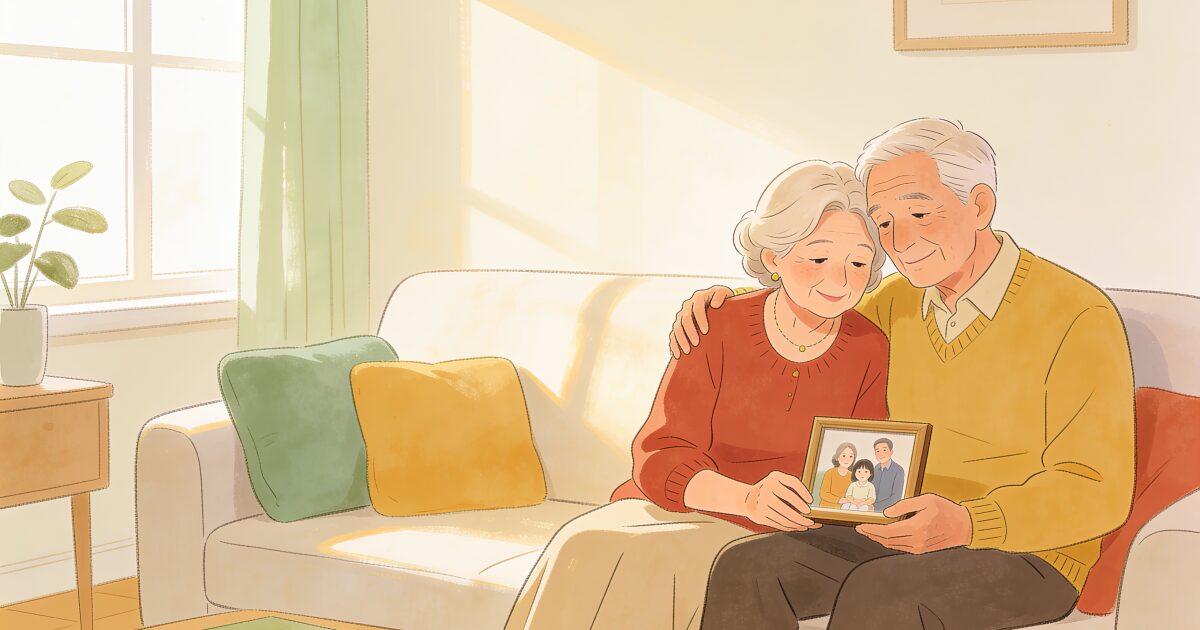
The last box goes in the car, you wave until they turn the corner, and then you walk back into a house that suddenly sounds different. The quiet you sometimes longed for is here, and it doesn't feel the way you imagined. If you've found yourself standing in a doorway of a bedroom that's too tidy, you're in very good company.
Worried about someone living alone? Daily check-ins with automatic alerts.
Try free for 3 daysEmpty nest syndrome isn't a medical diagnosis. There's no test for it and no prescription. But it is a real, common, grief-adjacent adjustment that catches a great many parents off guard, and pretending it's nothing tends to make it last longer, not shorter.
This is a look at why the empty nest hits as hard as it does, how to tell an ordinary adjustment from something that needs more help, and what genuinely makes the next chapter feel like a chapter rather than an ending.
Why the empty nest hits so hard
On paper, a child leaving home is good news. It's what the whole project was for. So why can it feel like the floor has moved?
- Your identity was built around the role. For two decades or more, "parent" organised your time, your decisions, and often your sense of worth. When the daily version of that role ends, it can feel less like free time and more like unemployment from a job you loved.
- The house itself changes. Meals for two (or one), no thundering on the stairs, no lifts to arrange. The silence is the thing most empty nesters mention first.
- Your marriage gets renegotiated. Couples who spent years as co-managers of family logistics suddenly face each other across the table with no agenda. That can be a gift or a shock, and often it's both.
- The timing piles on. The nest usually empties in midlife, right when careers plateau, bodies change, and menopause or retirement questions arrive. It rarely gets the courtesy of happening on its own.
- Many empty nesters are also carers. Just as the children leave, your own parents may be starting to need you more. You're grieving one role while quietly taking on another.
None of this means you love your children any less for feeling relieved, or that you're weak for feeling bereft. Most people feel a confusing blend of both, sometimes within the same hour.
When it's more than an adjustment
For most parents, the sharp edge softens within weeks or a few months as new routines take hold. But sometimes the empty nest tips into something heavier.
Take it seriously and speak to your GP if you notice:
- Persistent low mood that doesn't lift, most days, for more than a couple of weeks
- Losing interest in things you'd normally enjoy, including seeing people
- Sleep or appetite changes that go on and on
- Feeling worthless or hopeless, or drinking more to cope
These are signs of depression rather than simple adjustment, and depression responds to treatment. There's nothing indulgent about asking for help with it.
What actually helps
There's no trick that skips the adjustment, but there are things that reliably shorten it.
Let yourself grieve properly
Something real has ended: the daily, hands-on version of parenting. Grief is the appropriate response to an ending, so let it come. Cry if you need to, talk about it, and resist the urge to fill every silence immediately. Feelings you acknowledge tend to move through; feelings you suppress tend to move in.
3-day free trial • Cancel anytime
Daily check-ins that save lives
Join thousands who never worry about being alone
Turn towards your partner, not away
If you're in a couple, this is the moment to date each other again, deliberately. Plan things that are yours, not leftovers from family life: a weekly walk, a cookery course, the trip you postponed for fifteen years. If conversations feel stilted at first, that's normal. You're relearning a duet after years of playing in an orchestra.
If you're navigating the empty nest alone, the same principle applies to friendship. Ring the people you kept meaning to see. Loneliness shrinks fastest when contact is regular rather than occasional, so aim for standing arrangements over vague plans.
Rediscover what you shelved
Somewhere in you is a list of things that lost out to parenting: the instrument, the allotment, the half-written book, the sport. Pick one and put it in the diary as a fixed commitment, not a vague intention. Structure is what the empty nest removes, so structure is what you rebuild. If you want ideas, our roundup of fun activities for seniors is written for a slightly older crowd but full of starting points at any age.
Find a new source of purpose
Purpose doesn't have to be grand. Volunteering a morning a week, mentoring someone junior in your field, studying something purely because it interests you, or taking on part-time work all do the same job: they make you needed somewhere again. Plenty of people treat this stage as a career reinvention, and there are more options than you might think, as our guide to jobs for seniors over 60 shows.
Staying close without clinging
The hardest balance of the empty nest is staying connected to your adult children without hovering. A few principles help:
- Agree rhythms, not rules. A regular Sunday call beats daily "just checking in" messages. Predictable contact feels like love; unpredictable contact can feel like surveillance.
- Let them come to you. Answer questions when asked, and sit on advice when it isn't. The fastest way to more calls is to make the calls easy.
- Visit their life, not just your memories. Meet their friends, see their flat, learn their world. You're building an adult relationship now, and it can be genuinely better than the one it replaces.
The other side of the sandwich
Here's the part of the empty nest that gets talked about least: many people who wave off their children turn round and find their own parents needing more from them. The bedroom empties upstairs while the phone calls from Mum get more frequent.
If that's you, be gentle with yourself, because you're carrying two transitions at once. Our guide to caring for elderly parents who live alone covers the practical side, and if you're doing it from another city, long-distance caregiving has its own playbook. The skills are strangely similar in both directions: regular rhythms, respect for independence, and a safety net that works quietly in the background.
A light thread in both directions
Whether you're staying connected to a newly independent twenty-something or a fiercely independent eighty-something, the problem is the same: you want to know they're okay without making every conversation about whether they're okay.
A daily check-in app solves that neatly. The person confirms they're fine each day with a single tap, and nothing happens unless a check-in is missed, at which point a trusted contact is alerted. No hovering, no interrogations, just quiet reassurance running underneath the ordinary calls and visits.
It works up the generations as well as down: peace of mind about your parents, and one less reason to bombard your children with messages. See how a daily check-in works and how light-touch it can be.
Get the free Living Alone Safety Checklist
The home setup, daily habits, and emergency info that keep people living alone safe, in one email you can act on this week.
Please complete the verification above.
Check your inbox
Your safety checklist is on the way to .
Frequently asked questions
RATED 5.0 ON THE APP STORE
Never Wonder "Are They Okay?" Again
Daily check-ins with automatic alerts to your loved ones if you ever need help.
"I was skeptical at first, but after my neighbor was found 3 days after a fall, I signed up immediately. Now my daughter knows I'm okay every single day."
— Margaret R., 72, living independently
Related Articles
The Best Daily Check-In Apps for People Living Alone and Seniors (2026)
Daily check-in apps alert your family if you do not confirm you are okay. We compared the main optio...
Living Alone With Dementia: When It Is Still Safe, and What Changes That
A dementia diagnosis is not by itself a reason to move a parent out of their home. Here is how famil...
Solo Aging: What It Means and How to Plan for Growing Older on Your Own
Growing older without a partner or nearby children to fall back on is more common than the brochures...
Living Alone: The Complete Guide to Doing It Well (Safety, Loneliness, Money, and Joy)
Millions of people live alone, and almost nobody teaches you how. Here is the honest version: the fi...