Solo Aging: What It Means and How to Plan for Growing Older on Your Own
Published September 21, 2026
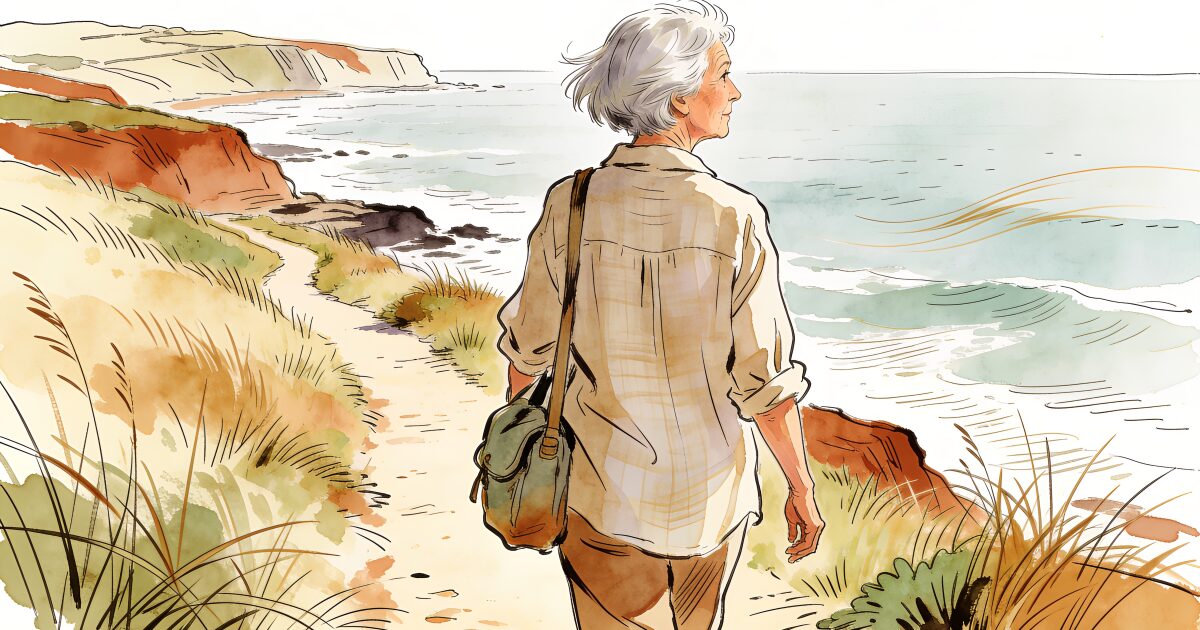
There is a particular moment that tends to bring people to this topic. A form asks for a "next of kin" or an "emergency contact", and you pause. Not because you have nobody, but because the person who would once have gone in that box is gone, or far away, or was never there.
Don't let distance keep you from knowing they're safe. Daily check-ins, anywhere in the world.
Try free for 3 daysGrowing older without a spouse or adult children to fall back on has a name now: solo aging. It is more common than the retirement brochures suggest, and it is entirely possible to do well. But it rewards planning in a way that ageing inside a family does not, because there is no one to improvise for you.
This guide covers what solo aging means, the paperwork to have in place while you are well, how to build a bench of people to lean on, housing and money in plain terms, the daily habit that keeps a solo ager safe, and the emotional side that everyone thinks about and nobody likes to discuss.
What "solo aging" actually means
A solo ager is an older adult who does not have a spouse or partner, or adult children nearby (or at all), to rely on for support as they age. That is the working definition, and it covers a wider range of people than you might expect:
- People who never had children, by choice or otherwise.
- People who have outlived a partner, and often siblings and friends too.
- People who are estranged from family, or whose family are not safe or reliable to lean on.
- People whose children live abroad or across the country, with jobs and families of their own, and cannot realistically be the daily backup.
You will also see the phrase "elder orphan" in research and journalism. It means roughly the same thing. Many people find it unkind, because it describes a grown adult with a full life in terms of what they lack. We use "solo ager" here, because it describes the situation without deciding how you should feel about it.
Whatever you call it, smaller families, longer lives, and more people never marrying all point to more people aging solo. If that is you, you are not an outlier. You are early.
Why planning matters more without a default helper
Here is the uncomfortable truth about ageing within a family: most of the "plan" is not a plan at all. It is the assumption that a spouse or a daughter will step in, drive you to the hospital, talk to the doctor when you cannot, and sort out the bills for a month. Nobody writes that down. It just happens.
Solo agers do not have a default. That is a disadvantage on the day something goes wrong, and an advantage in every year before it, because you are forced to face questions that families avoid until a crisis settles them. Who speaks for you? Where do you live when stairs become a problem? Who would notice if you had a stroke on a Tuesday morning?
A solo ager with a written plan is often better placed than a married person who assumed their spouse would handle everything and then outlived them. The plan does not have to be elaborate. It has to exist, and it has to be made while you are well enough to make it.
The paperwork: who speaks for you if you cannot
Start here, because it is the part that cannot be done later.
The two documents that matter most, in general terms, are a healthcare proxy (called a health care power of attorney, a lasting power of attorney for health and welfare, or similar depending on where you live) and a financial power of attorney. The first names a person who can make medical decisions if you cannot; the second names someone who can pay your bills and manage your money if you are incapacitated. Alongside them sit a will and an advance directive setting out what treatment you do and do not want.
The names and rules differ by country and by state, so use a local lawyer rather than anything generic. The principle is the same everywhere: these documents only work if they are signed while you have capacity. After a stroke or a dementia diagnosis it may be too late, and the alternative is a court process that is slow, expensive, and puts a stranger in charge.
The hard question for a solo ager is who to name when there is no obvious family member. This table sets out the roles that need a name and the kinds of people who commonly hold them:
| Planning area | The question to answer | Who could hold the role |
|---|---|---|
| Medical decisions | Who decides if I cannot speak for myself? | A trusted friend, a niece or nephew, a younger cousin, a professional fiduciary |
| Money and bills | Who pays my bills and manages accounts if I am incapacitated? | A friend with good judgement, a professional fiduciary, a solicitor or attorney |
| Daily oversight | Who would notice if something were wrong today? | A neighbour, a daily check-in service, a paid companion or aide |
| Care coordination | Who organises doctors, carers, and services when it gets complicated? | A geriatric care manager, a social worker |
| Housing decisions | Who helps me decide when and where to move? | A trusted friend plus a care manager, a housing counsellor |
| After death | Who handles my estate and my wishes? | An executor: a friend, a relative, or a professional |
Two pieces of advice about choosing. First, pick for judgement and availability, not for closeness. A calm, organised friend ten years younger may serve you better than a beloved sibling who is your age and lives abroad. Second, ask properly. Explain what the role involves and give them the chance to say no. A proxy who did not really agree is not a proxy.
If there genuinely is nobody, professional fiduciaries and elder law attorneys exist for exactly this reason.
Building a bench, not a single substitute
Families are a bench. When one person cannot help, another can. A solo ager's mistake is often to look for a single replacement, one friend who will do everything, and then feel stuck when that friend moves away or falls ill. Build a bench instead. It does not need to be large. It needs to be varied:
- Friends, especially younger ones. Your contemporaries will age alongside you; someone fifteen years younger will still be driving when you are not.
- Neighbours. The people physically closest to you are your most useful emergency contacts. Know their names, swap numbers, and give one of them a key.
- A community you turn up to. A faith community, a choir, a volunteering shift, a walking group. Regular attendance means regular people who notice when you are not there.
- Paid help, chosen early. A cleaner, a gardener, a handyman you trust. Later, perhaps a companion or home aide. Hired before you urgently need them, these become relationships rather than emergency hires.
- A geriatric care manager. In the US these are often called aging life care professionals: nurses or social workers you hire privately to assess your needs, coordinate services, and act as a knowledgeable advocate. For a solo ager, they can fill the role an organised adult child would otherwise play. Fees vary widely, so ask about hourly rates.
Nobody wants to meet their support network for the first time in a hospital corridor.
3-day free trial • Cancel anytime
A daily check-in that does not need a family
AssureOkay asks once a day whether you are okay, by app, text, or a short phone call. If you do not respond, the people you have chosen are alerted automatically. It turns someone-would-notice from a hope into a system.
Where will you live?
Housing is the biggest decision a solo ager makes, and the temptation is to postpone it until a fall or a diagnosis makes it for you. There are three broad routes.
Staying put, with adaptations. Most people want this, and for many it is right. It works best when the home is on one level or can be, is near shops, transport and people, and can take grab rails, better lighting, and a walk-in shower. Our aging in place checklist walks through what to change and when. The honest caveat: a large family house can become a lonely, expensive maintenance job for one person.
Moving somewhere smaller and better connected. A flat or bungalow in a walkable area, near friends or your community, often does more for a solo ager's later years than any gadget. Doing it at 68 on your own terms is a very different experience from doing it at 82 after a hospital stay.
Co-housing and retirement communities. Co-housing (shared houses, or clusters of private homes with shared spaces) suits people who want daily company without giving up independence. Retirement communities range from independent-living apartments to continuing-care communities that add assisted living and nursing care on the same site as needs change. The latter suit solo agers precisely because the escalation is built in, though entry costs can be substantial and contracts need careful reading.
There is no right answer, only the right answer for you, and it is easier to find while you are well enough to visit places, ask questions, and change your mind.
Money and long-term care, in general terms
Solo agers carry one financial risk more heavily than others: the cost of care that a family member would otherwise have provided for free. Someone with a spouse or a nearby daughter gets thousands of hours of informal care. A solo ager pays for it, or goes without. That is not a reason to panic, but it is a reason to look at a few things clearly.
- What care would cost where you live. Home care by the hour, assisted living and nursing care by the month. Ask locally; figures vary enormously by region and change every year.
- Long-term care insurance. Policies that pay towards care costs exist in many countries, and they are generally cheaper and easier to qualify for in your fifties and early sixties than later. Some people find them worthwhile; others prefer to self-insure through savings or home equity. Speak to an independent adviser rather than a salesperson.
- The house as an asset. Downsizing, equity release, or selling to fund a move into a community are all common, and each has trade-offs worth understanding before you need the money.
- Public support. Medicaid in the US, local authority care assessments in the UK, and their equivalents elsewhere all have rules about who qualifies and what counts. Knowing the rules early is part of the plan.
Whatever the numbers, write them down and share the outline with whoever holds your financial power of attorney. A plan nobody else can find is not a plan.
A daily "someone would notice" system
This is the single most important safety idea for a solo ager, and it is almost never on the official planning lists.
When you live with someone, you have a built-in daily check. They see you at breakfast. If you did not come down, they would go and look. A solo ager has to build that check deliberately, because the danger of aging alone is rarely the event itself. It is the hours or days between the event and anyone realising.
A "someone would notice" system can be low-tech: a neighbour who expects to see your blinds up by nine, a friend you text every morning, a regular daily phone call. All of these work, and all share the same weakness. They rely on a person remembering, being available, and acting on a silence rather than assuming you are just busy.
A daily check-in service takes the remembering out of it. You confirm you are okay once a day, and if you do not, the people you chose (a friend, a neighbour, your proxy) are alerted automatically. A missed check-in is treated as a signal rather than a shrug. Pair it with a phone kept on your person and a key with someone nearby, so that whoever is alerted can actually get in.
The emotional side
Two feelings sit under most conversations about solo aging, and both deserve to be said out loud.
The first is a fierce attachment to autonomy. Many solo agers have run their own lives for decades and have no intention of handing the controls to anyone, least of all a well-meaning stranger. That is not stubbornness. It is the entire point of planning: every document you sign and every person you choose while you are well is a decision you made, rather than one made for you.
The second is the fear of dying alone, or of not being found. It is common, rarely spoken about, and exactly what a "someone would notice" system is for. Planning does not make the fear vanish, but it reduces the thing you are actually afraid of, which is not so much being alone at the end as being unnoticed. We wrote about this carefully in our piece on what happens if you die alone, and the message is the same: the risk is real, and it is very much reducible.
Solo aging also has genuine upsides that the planning conversation tends to skip. Your time, money, and attention are your own, and many solo agers describe their seventies as the freest decade of their lives. The wider craft of doing life on your own well is the subject of our complete guide to living alone, and most of it applies at any age.
A safety net that does not depend on anyone remembering
A solo ager can do everything right (the documents signed, the bench built, the home adapted, the money planned) and still face the one gap that no paperwork closes: on an ordinary morning, if something went wrong, how long before anyone knew?
A daily check-in is the simplest answer, and it fits the solo ager precisely because it does not need a family. Each day you confirm you are okay with a single tap, a text reply, or by answering a quick automated phone call that works on any phone, including a landline. If you ever miss it, the people you have chosen are alerted automatically, with your last shared location if you allow it.
It takes seconds, needs no hardware, and turns "someone would notice" from a hope into a system. You can see how the check-in app for people living alone works and decide whether it belongs in your plan.
Get the free Living Alone Safety Checklist
The home setup, daily habits, and emergency info that keep people living alone safe, in one email you can act on this week.
Please complete the verification above.
Check your inbox
Your safety checklist is on the way to .
Frequently asked questions
TRUSTED BY THOUSANDS OF FAMILIES
A daily check-in that does not need a family
AssureOkay asks once a day whether you are okay, by app, text, or a short phone call. If you do not respond, the people you have chosen are alerted automatically. It turns someone-would-notice from a hope into a system.
"I was skeptical at first, but after my neighbor was found 3 days after a fall, I signed up immediately. Now my daughter knows I'm okay every single day."
— Margaret R., 72, living independently
Related Articles
The Best Daily Check-In Apps for People Living Alone and Seniors (2026)
Daily check-in apps alert your family if you do not confirm you are okay. We compared the main optio...
Living Alone With Dementia: When It Is Still Safe, and What Changes That
A dementia diagnosis is not by itself a reason to move a parent out of their home. Here is how famil...
Living Alone: The Complete Guide to Doing It Well (Safety, Loneliness, Money, and Joy)
Millions of people live alone, and almost nobody teaches you how. Here is the honest version: the fi...
Life Alert in Canada: Costs, Options, and Cheaper Alternatives (2026)
Searching for Life Alert in Canada? The famous American brand is built around the US, so Canadians u...