Caring for Elderly Parents Who Live Alone: A Practical Guide
Published July 5, 2026
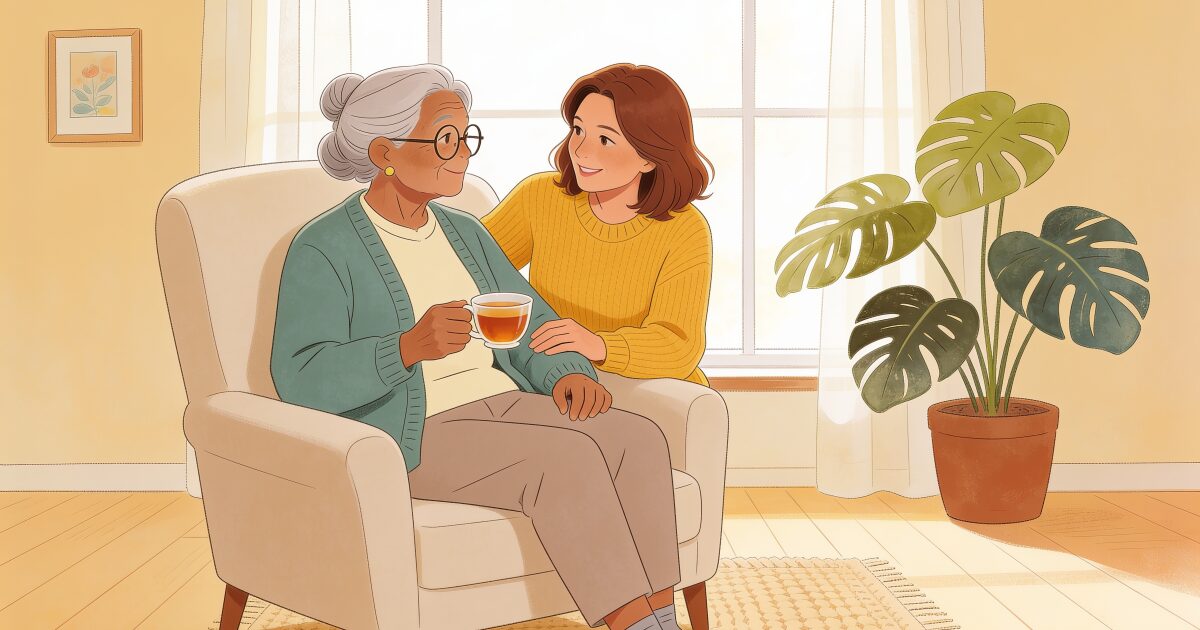
When a parent lives alone, a particular kind of worry takes up residence in the back of your mind. Did they remember to eat? Have they fallen? Why didn't they answer the phone this morning? You want to respect their fierce independence, the very thing that has carried them this far, while also knowing they're safe. Holding both at once is the quiet, constant work of caring for an aging parent.
Living alone doesn't mean being unprotected. Simple daily check-ins that save lives.
Try free for 3 daysThis guide won't remove that worry entirely, but it will give you practical ways to channel it: what to watch for, how to help without taking over, and how to look after yourself in the process.
Notice the early signs
Decline rarely announces itself. It shows up in small details, which is why regular visits matter so much. Each time you're there, gently take stock:
- Around the home: Is it reasonably clean and safe? Any scorched pans, unopened post, or unpaid bills piling up?
- Food and drink: Is the fridge stocked with fresh food? Are they eating and drinking enough?
- Health and medication: Are pills being taken correctly? Any new bruises, weight loss, or unsteadiness?
- Mood and memory: Are they more withdrawn, forgetful, or confused than before?
None of these alone is cause for alarm, but a cluster of changes is worth a conversation with them and, if needed, their doctor.
Make the home safer
Most accidents at home are preventable with small changes, and our room-by-room safety tips for seniors living alone cover them in detail. Walk through each room together looking for risks:
- Remove or secure loose rugs and trailing cables, the most common trip hazards.
- Improve lighting, especially on stairs and the route to the bathroom at night.
- Fit grab rails by the toilet, in the shower, and on stairs.
- Keep everyday items within easy reach to avoid stretching and climbing.
- Check that smoke and carbon-monoxide alarms work.
Framing this as making a beloved home easier to live in, rather than as evidence they're struggling, makes it far easier to accept.
Have the hard conversations kindly
Talking about driving, finances, or extra help can feel fraught. A few principles help:
3-day free trial • Cancel anytime
Daily check-ins that save lives
Join thousands who never worry about being alone
- Start early, before a crisis forces a rushed decision.
- Lead with independence: "I want you to be able to stay here as long as possible, so let's sort this now."
- Offer choices, not ultimatums. People accept change they helped design.
- Listen first. Often the fear underneath is of being a burden or losing control. Naming that gently goes a long way.
Practical paperwork matters too. While your parent is well, make sure someone trusted understands their wishes and can act if needed, including arrangements like a lasting power of attorney for health and finances. It's a kindness to sort it calmly rather than in an emergency.
Build a safety net for the everyday
You can't be there every hour, and you shouldn't have to be. The aim is a web of support that catches problems quickly:
- A local network: neighbours, friends, or nearby relatives who can pop in and who have your number.
- Practical services: meal deliveries, a cleaner, a gardener, or a regular befriender to reduce both risk and isolation.
- Shared information: a single list of medications, doctors, and emergency contacts that everyone involved can access.
- A daily check-in: the simplest way to guarantee that no day passes without someone knowing your parent is okay.
That last point is worth dwelling on, because it addresses the exact fear that keeps adult children awake: the gap between something going wrong and anyone finding out.
How a daily check-in closes the gap
The danger for someone who lives alone is rarely just an accident itself; it's lying there afterwards, unable to reach the phone, with no one expecting to hear from them. Hours can pass. Sometimes days. When you genuinely can't reach someone and can't get to them, a welfare check is the fallback, but by its nature it's a response to a silence that has already stretched on too long.
A daily check-in service closes that gap. Your parent confirms they're okay each day with a single tap or by answering a quick automated phone call, one that works even on a basic landline. If they ever miss it, you and other chosen contacts are alerted automatically, with their last-known status, so you can act within minutes rather than discovering a problem far too late. See how a daily check-in works and how it can quietly take some of the weight off your shoulders.
It doesn't replace your calls and visits. It simply means that on the days you can't get through, you're not left imagining the worst.
Don't forget to care for yourself
Caregiver burnout is real, and running yourself into the ground helps no one. Accept help when it's offered, share the load with siblings or services rather than carrying it alone, and protect some time that is just for you. Look out for your own warning signs, constant exhaustion, resentment, trouble sleeping, and treat them as seriously as you would your parent's. You are allowed to need support too.
Caring for a parent who lives alone is one of love's harder chapters. Do it with structure, kindness, and a good safety net, and you can give them the independence they cherish while giving yourself a little more peace of mind.
Get the free Living Alone Safety Checklist
The home setup, daily habits, and emergency info that keep people living alone safe, in one email you can act on this week.
Please complete the verification above.
Check your inbox
Your safety checklist is on the way to .
Frequently asked questions
TRUSTED BY THOUSANDS OF FAMILIES
Never Wonder "Are They Okay?" Again
Daily check-ins with automatic alerts to your loved ones if you ever need help.
"I was skeptical at first, but after my neighbor was found 3 days after a fall, I signed up immediately. Now my daughter knows I'm okay every single day."
— Margaret R., 72, living independently
Related Articles
Long Distance Caregiving: How to Care for Elderly Parents From Afar
Caring for a parent from another city or country is its own kind of caregiving: heavy on worry, ligh...
Gifts for Elderly Parents: 20 Thoughtful Ideas They'll Actually Use
When a parent has everything they need, a good gift is a thoughtful one. Here are 20 ideas that brin...
Aging in Place Checklist: A Room-by-Room Guide to Staying Home Safely
Most people want to grow older in their own home. This room-by-room aging in place checklist covers...
Non-Emergency Medical Transportation: How Seniors Can Get Rides to Appointments
When driving is no longer an option, missed appointments follow fast. Here's how non-emergency medic...