Non-Emergency Medical Transportation: How Seniors Can Get Rides to Appointments
Published August 13, 2026
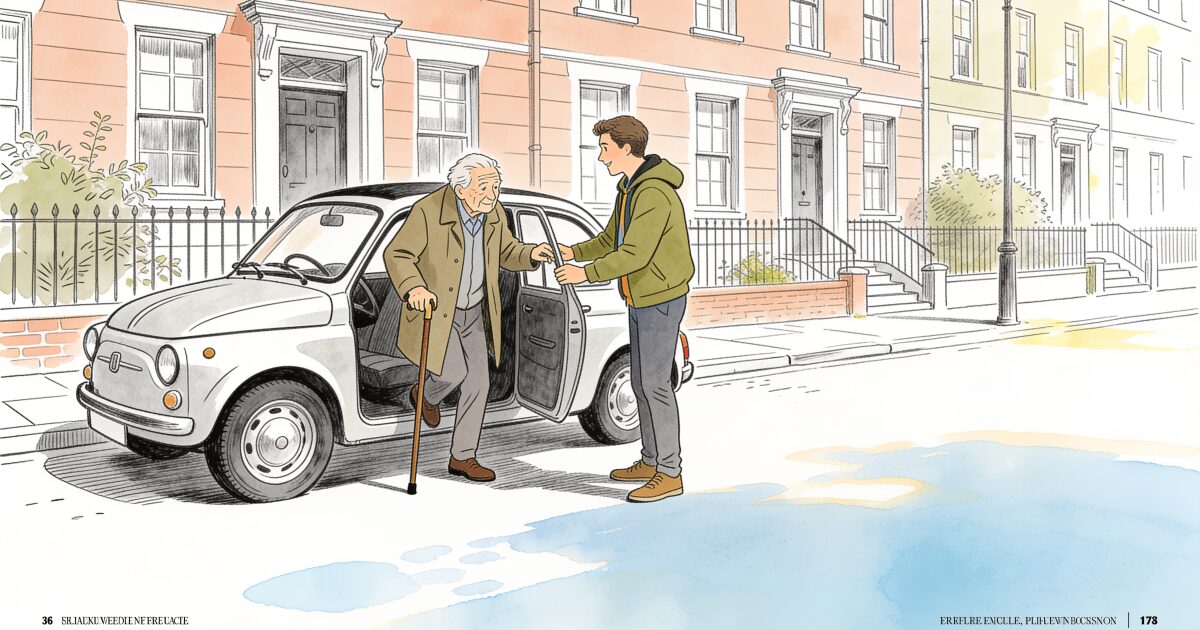
When a parent stops driving, the practical problem arrives before anyone has named it: how do they get to the cardiologist on Tuesday? Missed appointments pile up quickly, and with them missed medications, unmanaged conditions, and a shrinking world.
Don't let distance keep you from knowing they're safe. Daily check-ins, anywhere in the world.
Try free for 3 daysThe good news is that the United States has a whole patchwork of services built for exactly this, called non-emergency medical transportation, or NEMT. The less good news is that nobody hands you a map of it. Coverage depends on insurance, state, county, and sometimes which church is around the corner.
This guide lays the map out: what NEMT is, who qualifies, how the Medicaid and Medicare pieces work, and the community options that fill the gaps.
What non-emergency medical transportation is
NEMT is pre-arranged transport to and from healthcare, for people who cannot drive themselves or easily use ordinary transport. It is not an ambulance: no sirens, and booked days ahead rather than called in a crisis.
It covers the routine journeys that keep someone healthy: doctor and dentist visits, dialysis, physical therapy, mental health appointments, and pharmacy trips. Vehicles range from ordinary cars to wheelchair-accessible vans and, for some medical needs, stretcher vans with trained attendants.
Who is it for? Anyone whose health or mobility makes regular travel hard: older adults who no longer drive, wheelchair users, people recovering from surgery, and those for whom public transport is unrealistic.
The Medicaid NEMT benefit
If your parent has Medicaid, start here, because rides to covered medical care are a required benefit in every state for people with no other means of transport.
The catch is that every state runs it differently. Most use a transportation broker: a company that takes bookings, checks eligibility, and assigns a driver. Some rural counties instead reimburse mileage for a friend or neighbour who drives.
How to use it in practice:
- Call the member services number on the Medicaid card and ask for the transportation or NEMT line. They will give you the broker's number and the rules.
- Book ahead. Most brokers want two to five business days' notice, though urgent bookings such as hospital discharges are usually handled faster.
- Have the details ready: the Medicaid ID, appointment time and address, the provider's name, and any mobility needs such as a wheelchair-accessible vehicle.
- Confirm the return trip. Some brokers schedule it, others use a "will call" system where you phone when the appointment ends. Ask which, every time.
Medicare, and the Medicare Advantage difference
Original Medicare (Parts A and B) generally does not pay for rides to routine appointments. It covers ambulance transport only in limited medical circumstances. This surprises many families, so it is worth saying plainly.
Medicare Advantage is a different story. A large share of Advantage plans now offer a transportation benefit, typically a set number of one-way rides per year to doctors, pharmacies, and other approved health locations, arranged through the plan's transport partner.
If your parent has an Advantage plan, call the plan and ask three questions: how many rides per year, to which destinations, and how are they booked? Families are often sitting on an unused benefit they never knew existed, and transportation is worth weighing when comparing plans at annual enrolment.
PACE programmes
For older adults who qualify for nursing-home-level care but want to stay at home, PACE (Programs of All-Inclusive Care for the Elderly) bundles medical care, day centres, meals, and transport into one programme, routinely picking participants up for appointments and day centre visits.
3-day free trial • Cancel anytime
Daily check-ins that save lives
Join thousands who never worry about being alone
PACE is only available in some areas and has eligibility rules, but where it exists it can transform life for someone ageing in place with significant needs. Your state's Medicaid office or local Area Agency on Aging can tell you if there is a programme nearby.
Area Agencies on Aging and the Eldercare Locator
If you learn one phone habit from this article, make it this one. Every county in the US is served by an Area Agency on Aging, and these agencies either run senior transportation programmes or know every option in the area, including ones with no web presence at all.
To find yours, use the Eldercare Locator at eldercare.acl.gov or call 1-800-677-1116 on weekdays. It is a free national service that connects you to local agencies by ZIP code, and one call often surfaces ride programmes and voucher schemes you would never find online.
Local councils on aging and senior centres are the same story at town level: many run their own vans or keep the list of who does.
Volunteer drivers, non-profits, and faith communities
Some of the most reliable rides come from neighbours.
- Volunteer driver programmes, often run through senior centres or charities, match older adults with vetted volunteers who drive their own cars. Rides are usually free or by donation, though booking a week ahead is common.
- ITN America is a long-running non-profit network offering arm-through-arm, door-through-door rides for older adults in the communities it serves, using membership and per-ride fees.
- Faith communities frequently run informal ride ministries, so if your parent belongs to a church, synagogue, or mosque, it is always worth asking. These rides come with conversation included, which matters more than it sounds.
Rideshare, made senior-friendly
Uber and Lyft have quietly become part of the medical transport picture, with two routes in for people who do not use smartphones:
- GoGoGrandparent lets older adults book rideshare cars by ordinary phone call, no app needed, with operators who monitor the ride and can update family.
- Uber Health and similar services work through healthcare providers: clinics and health plans book rides for patients directly, so ask the doctor's office whether they use one. Adult children can also simply book a standard rideshare for a parent from their own phone in another city.
Rideshare suits people who can walk to the kerb and travel unassisted. It is not the answer for wheelchair users in most areas, though accessible options are slowly growing.
Wheelchair-accessible transport and cost questions
If your parent uses a wheelchair or cannot transfer into a car seat, say so at every booking, because it changes the vehicle required. Medicaid brokers must provide an appropriate vehicle; outside Medicaid, private wheelchair van services exist in most areas but charge real money, so get the full price first.
Wherever you book, a few cost questions prevent surprises:
- Is there any charge to the rider, and is it per trip or per mile?
- Does the quote cover the return trip and any waiting time?
- Is an escort or family member allowed to ride along, and do they pay?
- What is the cancellation policy if the appointment moves?
Booking tips that save the day
- Book the moment the appointment is made. Notice periods of two to five days are standard, and popular slots go first.
- Confirm the return trip explicitly. The ride home is the leg most often dropped. Know whether it is scheduled or "will call".
- Build in buffer. Shared-ride services pick up other passengers, so a 10am appointment may mean an 8:45 pickup.
- Reconfirm the day before, especially with volunteer programmes.
- Keep a one-page ride sheet by the parent's phone: broker numbers, membership IDs, and booking steps, so anyone helping can pick it up.
For more on supporting a parent's independence day to day, see our guide on caring for elderly parents who live alone.
Knowing the trip went okay
If you are arranging all this from another city, you will recognise the last worry on the list. The ride is booked, the appointment is done, and then: did Mum get home alright? A shared-ride van running late, a phone on silent, and suddenly you are watching the clock. It is one of the quiet stresses of long-distance caregiving.
A daily check-in app closes that loop gently. AssureOkay confirms your parent is okay through a quick daily check-in by app, text, or a friendly automated call, and alerts you automatically if they do not respond. On appointment days, that simple confirmation lands differently.
It does not organise the rides. It just makes sure that after every trip, someone who loves them knows they are home and okay. See how a daily check-in works and whether it would take a worry off your list.
Get the free Living Alone Safety Checklist
The home setup, daily habits, and emergency info that keep people living alone safe, in one email you can act on this week.
Please complete the verification above.
Check your inbox
Your safety checklist is on the way to .
Frequently asked questions
TRUSTED BY THOUSANDS OF FAMILIES
Never Wonder "Are They Okay?" Again
Daily check-ins with automatic alerts to your loved ones if you ever need help.
"I was skeptical at first, but after my neighbor was found 3 days after a fall, I signed up immediately. Now my daughter knows I'm okay every single day."
— Margaret R., 72, living independently
Related Articles
Long Distance Caregiving: How to Care for Elderly Parents From Afar
Caring for a parent from another city or country is its own kind of caregiving: heavy on worry, ligh...
Aging in Place Checklist: A Room-by-Room Guide to Staying Home Safely
Most people want to grow older in their own home. This room-by-room aging in place checklist covers...
Caregiver Burnout: Signs, Causes, and How to Recover
Caregiver burnout is more than being tired. It's exhaustion, detachment, and guilt braided together....
Gifts for Elderly Parents: 20 Thoughtful Ideas They'll Actually Use
When a parent has everything they need, a good gift is a thoughtful one. Here are 20 ideas that brin...