Best Vitamins for Seniors: The Key Nutrients That Matter With Age
Published July 20, 2026
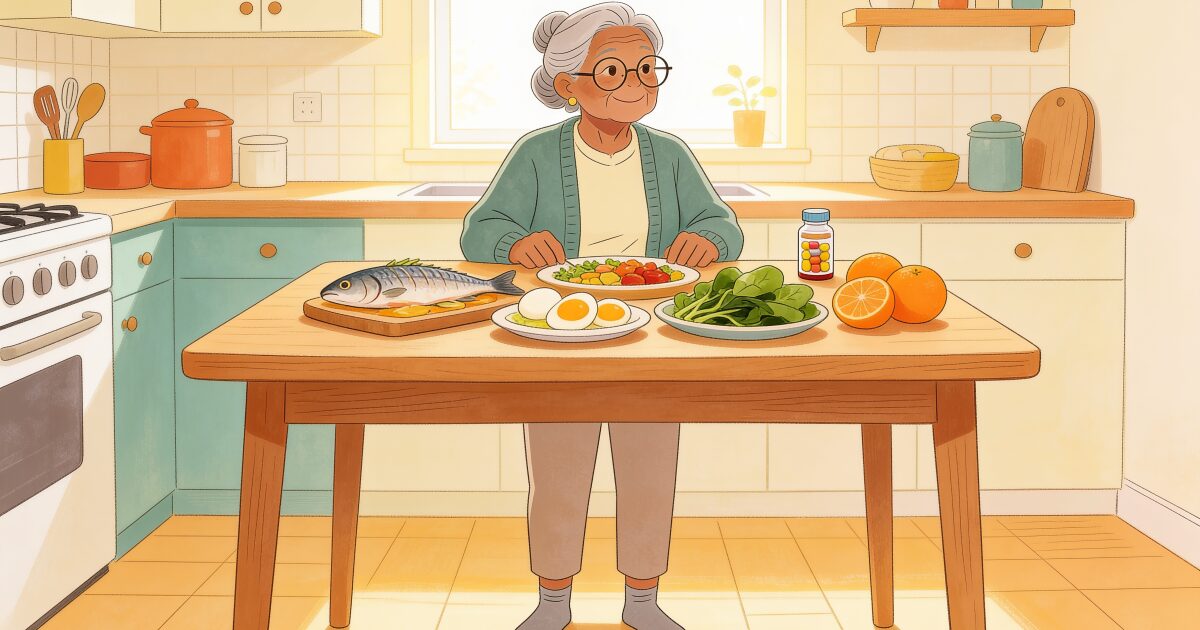
Eating well matters at every age, but our nutritional needs quietly shift as we get older. Appetite can shrink, the body absorbs some nutrients less efficiently, and certain medications interfere with how vitamins are used. The result is that a few specific vitamins and minerals become more important in later life, even when your diet hasn't changed.
Worried about someone living alone? Daily check-ins with automatic alerts.
Try free for 3 daysBelow are the key ones to know about: why each matters, where to find it in food, and some general guidance. First, a quick and honest note.
This article is general information, not medical advice. Vitamin needs vary from person to person, some supplements interact with medications, and a few can be harmful in large doses. Before starting any supplement, please speak to your doctor or pharmacist, who can advise based on your own health and, where useful, a simple blood test.
Vitamin D
Vitamin D helps your body absorb calcium and keeps bones and muscles strong, which directly affects your risk of falls and fractures. It's the one nutrient most older adults genuinely struggle to get enough of, because the skin makes less of it from sunlight as we age, and few foods contain much.
- Why it matters more with age: weaker bones, higher fall risk, and less efficient production in the skin.
- Food sources: oily fish (salmon, mackerel, sardines), egg yolks, and fortified foods like some cereals and spreads.
- Guidance: because sunlight and food often aren't enough, many older adults are advised to take a daily vitamin D supplement, especially through the darker months. This is a good one to raise with your doctor.
Vitamin B12
Vitamin B12 keeps your nerves and blood cells healthy and supports memory and energy. This is where vitamin B12 for seniors becomes a real talking point: as we age, the stomach produces less acid, and acid is what releases B12 from food so the body can absorb it. So even with a good diet, levels can fall. Some common medications, including certain diabetes and acid-reducing drugs, lower it further.
- Why it matters more with age: reduced absorption and the risk of tiredness, memory problems, or nerve symptoms if levels drop.
- Food sources: meat, fish, eggs, dairy, and fortified foods. Those eating little or no animal produce are at higher risk.
- Guidance: doctors often check B12 in older adults. If yours is low, a supplement or injections may be recommended.
Calcium
Calcium works alongside vitamin D to keep bones strong. Bone density naturally declines with age, and low calcium contributes to osteoporosis and fractures.
- Why it matters more with age: protects against thinning bones and breaks.
- Food sources: dairy products, fortified plant milks, tinned fish with soft bones like sardines, and leafy greens.
- Guidance: food first is usually best. Supplements are sometimes advised, but too much calcium has its own risks, so this is one to take only on advice.
Omega-3
Omega-3 fatty acids support heart and brain health and have anti-inflammatory benefits that may help joints. They're not a vitamin, but they belong on any list of nutrients that matter in later life.
3-day free trial • Cancel anytime
Daily check-ins that save lives
Join thousands who never worry about being alone
- Why it matters more with age: heart health, brain function, and joint comfort.
- Food sources: oily fish two or so times a week, plus walnuts, flaxseed, and rapeseed oil.
- Guidance: fish oil supplements exist for those who don't eat fish, but check first if you take blood-thinning medication.
Vitamin B6
Vitamin B6 helps the body use energy from food, supports the immune system, and plays a role in brain function. Requirements actually rise slightly with age.
- Why it matters more with age: immune support and healthy nerve and brain function.
- Food sources: poultry, fish, potatoes, bananas, and fortified cereals.
- Guidance: most people get enough from a varied diet. High-dose supplements can cause harm, so more is not better here.
Magnesium
Magnesium supports muscles, nerves, bones, and blood sugar control. Intake often falls short in older adults, and some medications deplete it.
- Why it matters more with age: muscle and nerve function, bone health, and sleep quality.
- Food sources: nuts, seeds, wholegrains, leafy greens, and beans.
- Guidance: a diet rich in wholefoods usually covers it. Ask before supplementing, particularly if you have kidney problems.
A note on multivitamins
A single daily multivitamin can be a sensible safety net if your appetite is small or your diet is limited, and it takes the guesswork out of covering the basics. But it isn't a replacement for real food, and it isn't right for everyone. Some ingredients interact with medications, and fat-soluble vitamins can build up if overdone. As with everything here, a quick word with your doctor or pharmacist is the safest way to decide.
Good nutrition works hand in hand with staying hydrated, which is easy to overlook in later life. Our guide to dehydration in the elderly covers the warning signs and how to drink enough, and if you live on your own our safety tips for seniors living alone round out the wider picture.
Eating well when you live alone
Getting the right nutrients is harder when you're cooking for one, and appetite and routine can slip without anyone noticing. A drop in eating or a change in how you feel is often an early sign that something's not quite right.
A daily check-in offers a quiet way for someone to keep an eye on your wellbeing without hovering. Each day you confirm you're okay, and if you ever don't respond, someone you trust is alerted. See how a daily check-in works as a gentle safety net alongside eating well and staying active.
Good nutrition keeps you strong from the inside. A check-in makes sure that if you're ever not yourself, someone knows.
Get the free Living Alone Safety Checklist
The home setup, daily habits, and emergency info that keep people living alone safe, in one email you can act on this week.
Please complete the verification above.
Check your inbox
Your safety checklist is on the way to .
Frequently asked questions
TRUSTED BY THOUSANDS OF FAMILIES
Never Wonder "Are They Okay?" Again
Daily check-ins with automatic alerts to your loved ones if you ever need help.
"I was skeptical at first, but after my neighbor was found 3 days after a fall, I signed up immediately. Now my daughter knows I'm okay every single day."
— Margaret R., 72, living independently
Related Articles
Best Walkers for Seniors in 2026: Rollators, Standard Walkers, Upright Walkers, and How to Choose
A walker that fits the person and the way they move keeps them walking for years longer. Here is a p...
Transportation for Seniors: Every Option When Driving Gets Harder (Rides, Paratransit, Volunteers, and More)
When driving stops being the answer, the question becomes how a parent gets to the doctor, the shops...
Exercises for Seniors: The Complete Guide by Goal (Balance, Strength, Heart, Flexibility)
The best exercise for an older adult depends on what you want from it. This guide sorts our exercise...
Walking for Seniors: How Far, How Often, and How to Stay Safe Walking Alone
Walking is the exercise most older adults actually keep doing. Here is how to start, how far and how...