Memory Games for Seniors: Enjoyable Ways to Exercise Your Recall
Published August 3, 2026
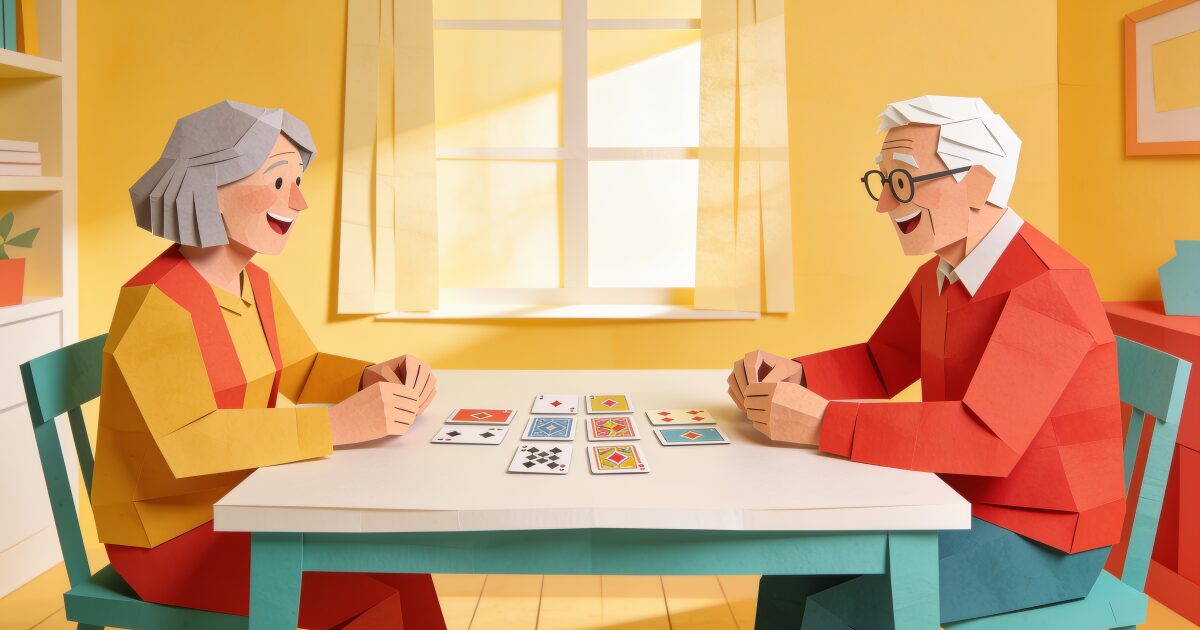
Memory is like most things: it appreciates being used. Games that ask you to hold, sort, and retrieve information give your recall a regular workout, and unlike most workouts, they're genuinely good fun. You can play them alone with a pack of cards, over the phone with a grandchild, or around a table with friends.
The call that never comes is the scariest. AssureOkay ensures someone always knows.
Try free for 3 daysBefore we get to the games, it's worth being honest about what they can and can't do, because plenty of advertising overpromises. Then we'll cover the best memory games by type, digital options, games for two, and the moment when memory changes deserve a doctor's opinion rather than another puzzle.
What memory games can and can't do
Here's the fair picture. Memory games reliably make you better at the game you're playing, and they provide something valuable in itself: enjoyable mental stimulation, a sense of progress, and confidence that your mind still rises to a challenge.
What the research doesn't show is that any game prevents dementia or dramatically slows decline on its own. The evidence there is mixed. What does hold up strongly is the bigger lifestyle picture: regular physical activity, social contact, decent sleep, and managing blood pressure all matter at least as much as any puzzle. In fact, aerobic exercise has some of the best evidence of anything for supporting brain health as we age.
So play memory games because they're enjoyable and keep your mind engaged, ideally with other people. Treat them as one healthy ingredient, not a cure.
Matching and pairs games
The classic memory game, and still one of the best.
- Pairs (also called Concentration) uses any deck of cards laid face down. Turn over two at a time and try to find matches. Start with 12 cards and work up to a full deck as you improve.
- Picture-matching sets with larger, clearer images are widely available and kinder on the eyes than small playing cards.
- Solo pairs works fine too: time yourself clearing the grid and try to beat your own record.
Pairs exercises visual memory and concentration together, and the difficulty adjusts itself naturally: more cards, harder game.
Recall games
These ask you to hold a scene or list in mind, then reproduce it.
- Kim's game is the old scouting favourite. Put 10 to 15 small objects on a tray, study them for a minute, cover them, then write down as many as you can. Playing with someone else, one of you can remove an object and ask what's missing.
- Evening recall is a quiet solo habit: at the end of the day, walk back through it in as much detail as you can. What did you eat, who did you speak to, what was on the radio?
- Shopping list practice: memorise your list before you shop, and only check the paper at the end.
Name and story association
Names are the thing most of us struggle with first, and association is the classic technique for holding onto them.
When you meet someone new, attach their name to a vivid image or a little story. Rose becomes a rose tucked behind her ear; Mr Baker is pulling bread from an oven. The sillier the image, the better it sticks. You can practise deliberately with photos of famous people or family snaps, giving each face its story and testing yourself a day later.
This is one of the few memory techniques with a long track record, and it turns a frustration into a game.
3-day free trial • Cancel anytime
Daily check-ins that save lives
Join thousands who never worry about being alone
Card games that tax working memory
Ordinary card games are secretly excellent memory training, because winning depends on tracking what's been played.
- Rummy and gin rummy reward remembering which cards your opponent picked up and discarded.
- Bridge and whist ask you to count suits and recall every trick, which is why bridge players tend to be so sharp.
- Cribbage mixes memory with quick arithmetic.
These have a big advantage over drills: they come with company and conversation, which is protective in its own right. Our guide to brain games for seniors goes deeper on why social games punch above their weight.
List games
Cumulative list games are pure working-memory exercise dressed up as a party game.
- "I went to market": each player repeats the full list of purchases so far and adds one more. Simple, funny, and surprisingly demanding by round ten.
- Alphabet categories: name an animal, town, or food for every letter, taking turns.
- The alphabet version of I went to market (an apple, some bread, a cabbage...) adds structure that helps and hinders in equal measure.
These need no equipment at all, which makes them perfect for car journeys, waiting rooms, and phone calls.
Digital memory games
Apps and websites offer endless matching, sequence, and recall games, and many are free. A tablet's large screen suits pairs games particularly well. Two honest notes: free apps fund themselves with adverts, so turn off in-app purchases in your device settings to avoid accidental spending, and paid "brain training" subscriptions haven't been shown to beat ordinary puzzles and games. Our roundup of free games for seniors points to good options that cost nothing.
Memory games for two
Some of the best memory play happens between two people.
- Carer and parent: pairs with large picture cards, Kim's game with familiar household objects, or gentle reminiscence prompts ("tell me about your first job") that exercise long-term memory and often unlock wonderful stories.
- Grandchildren: pairs is one of the few games where a six-year-old can beat a grandparent fairly, which they love. "I went to market" works brilliantly over a video call.
- Couples and friends: a running score across weeks turns any of these into a friendly rivalry.
The point isn't just the memory workout. It's the contact, the laughter, and the routine of playing regularly.
When to see a GP rather than reach for more games
A gentle but important note. Everyone forgets names, misplaces keys, and walks into rooms wondering why. That's normal at every age and no cause for worry.
It's different when memory changes start interfering with daily life: getting lost on familiar routes, asking the same question repeatedly in one conversation, trouble following a favourite programme, or struggling with tasks that used to be automatic. If you notice that pattern in yourself or someone you love, book a GP appointment rather than buying more puzzles. Many causes of memory trouble (thyroid issues, vitamin deficiencies, medication side effects, low mood) are treatable, and if it is something more, early support makes a real difference. Checking is a kindness, not an alarm.
Keeping your mind busy is one half of living well alone
Memory games, card afternoons, and daily puzzles keep your mind engaged and your week sociable, and both of those matter enormously if you live on your own.
The other half is quieter: knowing someone would notice if one day you weren't okay. A daily check-in app like AssureOkay handles that gently. You get a simple prompt each day, tap once to confirm you're fine, and if you don't respond, someone you trust is alerted.
No fuss, no intrusion, just a small safety net under an active life. If that sounds useful, see how a daily check-in works.
Get the free Living Alone Safety Checklist
The home setup, daily habits, and emergency info that keep people living alone safe, in one email you can act on this week.
Please complete the verification above.
Check your inbox
Your safety checklist is on the way to .
Frequently asked questions
TRUSTED BY THOUSANDS OF FAMILIES
Never Wonder "Are They Okay?" Again
Daily check-ins with automatic alerts to your loved ones if you ever need help.
"I was skeptical at first, but after my neighbor was found 3 days after a fall, I signed up immediately. Now my daughter knows I'm okay every single day."
— Margaret R., 72, living independently
Related Articles
Chair Yoga for Seniors: 10 Seated Poses for Flexibility, Balance, and Calm
You do not need to get down to the floor to enjoy yoga. These 10 seated poses bring the stretch, ste...
Vitamin B12 for Seniors: Why It Matters and How to Get Enough
B12 keeps your nerves, blood, and memory working well, yet older adults often absorb it poorly. Here...
Free Games for Seniors: Genuinely Free Ways to Play Every Day
You don't need a subscription to keep your mind busy and your afternoons fun. Here are genuinely fre...
Brain Games for Seniors: Fun Ways to Keep Your Mind Sharp
Your brain stays sharper the more you use it. These enjoyable games and mental workouts help older a...