Brain Games for Seniors: Fun Ways to Keep Your Mind Sharp
Published July 5, 2026
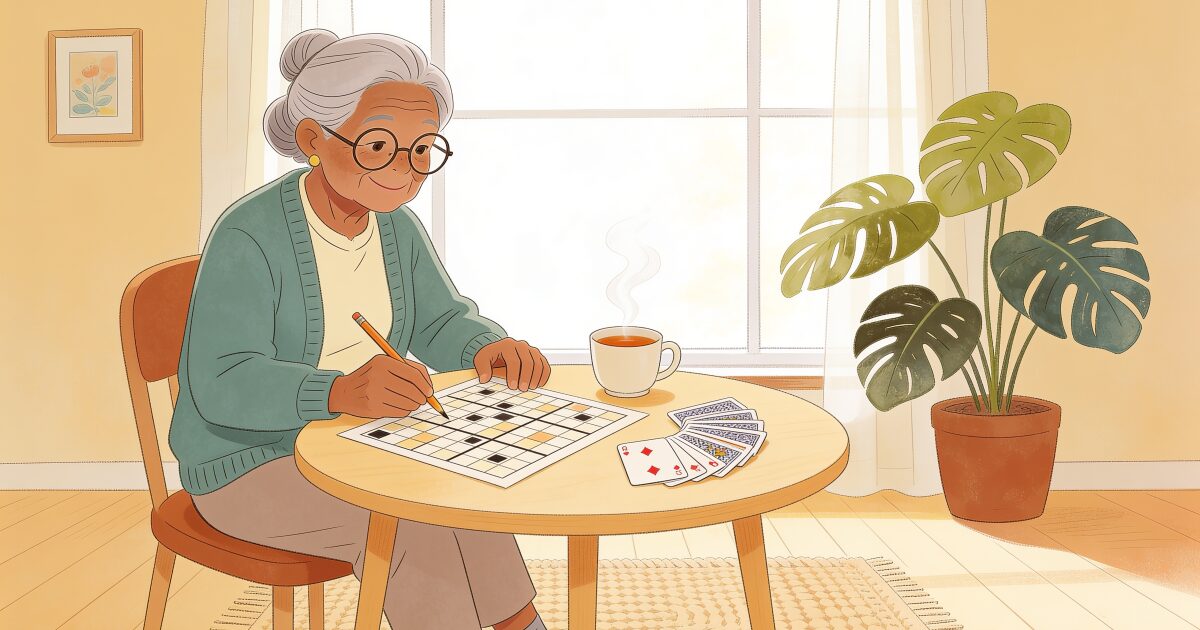
We exercise our bodies to keep them strong, and our minds work much the same way. The brain thrives on challenge and novelty. Give it interesting problems to chew on and it stays nimble; let it coast on routine and it can grow sluggish. The encouraging news is that keeping mentally sharp doesn't mean dull drills. The best brain training is genuinely enjoyable.
The call that never comes is the scariest. AssureOkay ensures someone always knows.
Try free for 3 daysHere are some of the most effective and pleasurable ways to keep your mind in good shape.
Classic puzzles
There's a reason puzzles have endured for generations.
- Crosswords stretch your vocabulary and memory as you reach for half-remembered words.
- Sudoku and number puzzles work logic and concentration, no maths skill required.
- Jigsaw puzzles engage visual and spatial thinking, and they're wonderfully absorbing on a quiet afternoon.
- Word searches and anagrams are gentler options that still keep the mind ticking.
Mix them up rather than doing the same one every day. Novelty is what gives the brain its workout.
Card and board games
These add a social spark to the mental challenge.
- Card games like bridge, rummy, cribbage, and even solitaire combine memory, strategy, and a little arithmetic.
- Board games such as Scrabble, chess, draughts, and backgammon are rich in strategy and conversation.
- Dominoes and mahjong are sociable, pattern-based, and easy to learn.
Played with others, these deliver a double benefit: the puzzle itself plus the connection of good company.
3-day free trial • Cancel anytime
Daily check-ins that save lives
Join thousands who never worry about being alone
Learn something genuinely new
Nothing challenges the brain quite like unfamiliar territory.
- Pick up a language with a free app or a local class.
- Learn an instrument, or return to one you played years ago.
- Try a new craft like knitting, painting, or woodwork.
- Cook an unfamiliar recipe from a cuisine you've never tried.
Learning forces the brain to build new connections, which is exactly the kind of exercise that keeps it resilient.
Everyday memory workouts
You don't always need a game. Small habits add up:
- Try to recall your shopping list before checking it.
- Memorise a short poem or a phone number.
- Take a different route on your walk and notice the details.
- Tell a story from your past in vivid detail; recollection is great exercise.
Keep it social, keep it physical
The single best thing you can do for your brain is rarely a game at all. Regular physical activity improves blood flow to the brain, good sleep consolidates memory, and an active social life protects mood and thinking more powerfully than any puzzle book. So invite a friend round for cards, join a club, or do the crossword over coffee with someone. The combination of mental, physical, and social activity is what really keeps the mind bright. For the physical side, our gentle low-impact exercises for seniors are an easy place to begin.
A note on staying connected when you live alone
Staying mentally and socially active is one of the great protectors of wellbeing in later life, and it matters even more for those who live by themselves, where quiet days can stretch long and lonely.
If you live alone, a daily check-in offers a small but meaningful point of connection: a simple moment each day to confirm you're okay, with someone you trust alerted if you ever don't respond. See how a daily check-in works so that the people who care about you always know you're well, even on the quietest day.
A sharp mind keeps life rich. A daily check-in makes sure you're never out of reach of the people who love you.
Get the free Living Alone Safety Checklist
The home setup, daily habits, and emergency info that keep people living alone safe, in one email you can act on this week.
Please complete the verification above.
Check your inbox
Your safety checklist is on the way to .
Frequently asked questions
TRUSTED BY THOUSANDS OF FAMILIES
Never Wonder "Are They Okay?" Again
Daily check-ins with automatic alerts to your loved ones if you ever need help.
"I was skeptical at first, but after my neighbor was found 3 days after a fall, I signed up immediately. Now my daughter knows I'm okay every single day."
— Margaret R., 72, living independently
Related Articles
Exercises for Seniors: The Complete Guide by Goal (Balance, Strength, Heart, Flexibility)
The best exercise for an older adult depends on what you want from it. This guide sorts our exercise...
Walking for Seniors: How Far, How Often, and How to Stay Safe Walking Alone
Walking is the exercise most older adults actually keep doing. Here is how to start, how far and how...
Hearing Aids for Seniors: OTC vs Prescription, Real Costs, and How to Choose
Over-the-counter or prescription? Behind the ear or nearly invisible? Here is a plain guide to heari...
Best Walkers for Seniors in 2026: Rollators, Standard Walkers, Upright Walkers, and How to Choose
A walker that fits the person and the way they move keeps them walking for years longer. Here is a p...