Careline Alarm Alternatives: Cheaper Ways to Keep a Relative Safe
Published August 29, 2026
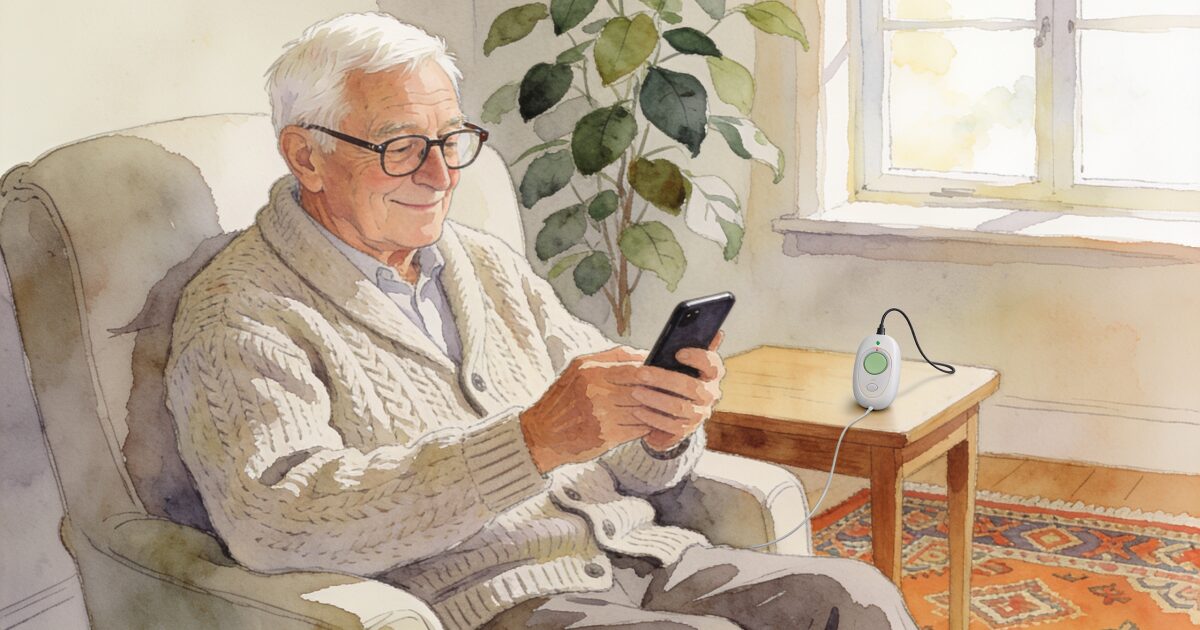
If you have been looking into a personal alarm for an elderly parent or relative, you have almost certainly come across Careline. The name is used so widely that many people treat it as shorthand for any monitored alarm: press a button, speak to a 24-hour call centre, and help is arranged. It is a well-established, genuinely useful service.
Living alone doesn't mean being unprotected. Simple daily check-ins that save lives.
Try free for 3 daysBut it is not the only option, and for a lot of families it is not the best-value one. This guide looks honestly at the alternatives to a Careline alarm, from other monitored providers to a simpler and cheaper daily check-in, so you can match the choice to the person rather than the marketing.
What a Careline alarm actually is
"Careline" is often used as a generic term, but it usually describes a monitored personal alarm. The person wears a pendant or wristband linked to a base unit in the home. Press the button and it connects to a 24-hour monitoring centre, where trained staff speak to them, work out what is wrong, and arrange the right help: a nominated relative, a neighbour with a key, or the emergency services.
The reassurance of a real human voice at any hour is the main appeal, and it is why councils and charities often recommend this style of service. Pricing typically combines a one-off setup fee of around £40 with a monthly monitoring charge, from roughly £10 a month on an annual plan up to £20 or more paid month by month, with fall-detection models costing more.
The honest limitation is the one every pendant shares: it only helps if it is worn, charged, and within range, and if the person is conscious and able to press it. Many people take a pendant off at night or in the shower, which are two of the riskiest times.
The main alternatives to a Careline alarm
Other monitored alarm providers
Careline365 is one provider among several. Companies such as Age UK, LifeConnect24, Taking Care, and various regional telecare schemes offer very similar monitored services, sometimes at lower prices or with different equipment. If you like the monitored model but want a better deal, it is worth getting two or three quotes and comparing the monthly fee, the setup cost, the contract length, and what happens if you cancel.
Always check with your local council's adult social services first. Many run telecare schemes and can supply equipment at a subsidised rate, or occasionally free after an assessment.
Fall-detection alarms
If the main worry is falls, a fall-detection alarm adds a sensor that raises the alert automatically when it detects a sudden drop, even if the button is not pressed. This is the most valuable upgrade for anyone at high risk of a fall or of being knocked unconscious by one. Fall detection has improved a great deal but is not flawless: it can miss a slow slump and occasionally trigger a false alarm, so treat it as a strong extra layer rather than a guarantee.
3-day free trial • Cancel anytime
Daily check-ins that save lives
Join thousands who never worry about being alone
GPS alarms for going out
Most monitored alarms only work inside the home and garden. A GPS alarm is a mobile device, often the size of a small fob or a smartwatch, that works anywhere with a mobile signal and can share the wearer's location. It suits an active older person who still walks, gardens, or goes to the shops and wants cover away from home.
A daily check-in service
This is the option most families do not know exists. Instead of waiting for an emergency and a button press, a daily check-in quietly confirms the person is okay each day, on the phone they already own. There is nothing to wear and nothing to charge. If a check-in is missed, a trusted contact is alerted automatically, so a quiet day never turns into a silent one.
How the costs compare
It helps to add up the true cost over a few years, not just the headline monthly fee.
- Monitored Careline-style alarm: roughly £40 setup plus £10 to £20+ a month, so about £400 to £900 over three years, more with fall detection.
- Fall-detection alarm: as above, at the higher end of the monthly range.
- GPS alarm: similar monthly fee plus a more expensive device.
- Daily check-in service: no equipment to buy, and a monthly fee that is typically a fraction of a monitored alarm, because there is no hardware and no call centre to fund.
Cheaper is not automatically better. The right question is what the person actually needs, not which option costs least.
How to choose
There is no single best alarm, only the best fit for the person. A few questions cut through the noise:
- What is the main risk? Frequent falls point towards fall detection. Wandering or getting lost points towards GPS. General peace of mind points towards a daily check-in.
- Where do they spend their time? Mostly at home suits a base-unit monitored service. Out and about needs a mobile GPS device.
- Will they actually wear it? Be honest. A pendant left in a drawer protects no one, whereas a phone tends to travel everywhere with its owner.
- What is the total cost over a few years, not just the headline monthly fee?
- Have you checked with the council first? A free or subsidised scheme may already be available.
For a fuller breakdown of the alarm market, see our guide to personal alarms for the elderly. If you are supporting a parent from a distance, our guide on caring for elderly parents who live alone is a good next read.
When a daily check-in is the better fit
Here is the honest bit. A monitored Careline-style alarm is genuinely the right choice for some people, especially anyone at high risk of a serious fall who may be unable to press a button. If that describes your relative, a fall-detection alarm earns its monthly fee and you should not talk yourself out of it to save a few pounds.
But many older people are steadier on their feet than that, reliably carry a phone, and simply want reassurance without hardware to wear, charge, or remember. For them, a monitored pendant can be overkill, and it ends up unused in a drawer while the monthly fee keeps going out.
A daily check-in works the other way around. Rather than waiting for a crisis and a button press, it notices the silence when a normal day does not happen, and alerts the people who care before worry turns into panic. See how a daily check-in works and whether it fits your family. A pendant reacts to an emergency; a daily check-in catches the ones where no one could press a button. For a lot of people living alone, that is exactly the reassurance they were looking for, at a fraction of the cost.
Get the free Living Alone Safety Checklist
The home setup, daily habits, and emergency info that keep people living alone safe, in one email you can act on this week.
Please complete the verification above.
Check your inbox
Your safety checklist is on the way to .
Frequently asked questions
TRUSTED BY THOUSANDS OF FAMILIES
Never Wonder "Are They Okay?" Again
Daily check-ins with automatic alerts to your loved ones if you ever need help.
"I was skeptical at first, but after my neighbor was found 3 days after a fall, I signed up immediately. Now my daughter knows I'm okay every single day."
— Margaret R., 72, living independently
Related Articles
Living Alone With Dementia: When It Is Still Safe, and What Changes That
A dementia diagnosis is not by itself a reason to move a parent out of their home. Here is how famil...
Solo Aging: What It Means and How to Plan for Growing Older on Your Own
Growing older without a partner or nearby children to fall back on is more common than the brochures...
Life Alert in Canada: Costs, Options, and Cheaper Alternatives (2026)
Searching for Life Alert in Canada? The famous American brand is built around the US, so Canadians u...
Living Alone: The Complete Guide to Doing It Well (Safety, Loneliness, Money, and Joy)
Millions of people live alone, and almost nobody teaches you how. Here is the honest version: the fi...