How to Use a Cane Correctly: Height, Hand, and Walking Pattern
Published July 13, 2026
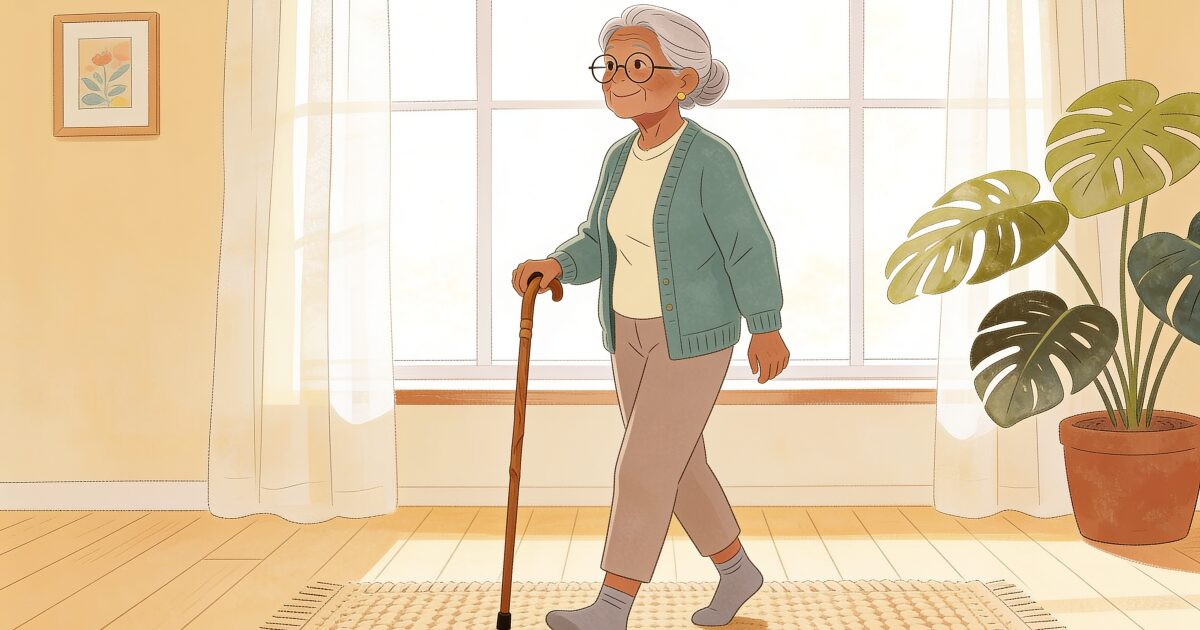
A cane is one of the simplest and most useful mobility aids there is. Used well, it takes weight off a sore hip or knee, widens your base of support, and gives you the confidence to keep moving. Used badly, it can actually make you less steady and even cause the falls it's meant to prevent.
One missed check-in. Immediate family alert. That's the AssureOkay promise.
Try free for 3 daysThe good news is that using a cane correctly comes down to a handful of clear rules. Once you have them, it becomes second nature. Here's everything you need to know.
Getting the height right
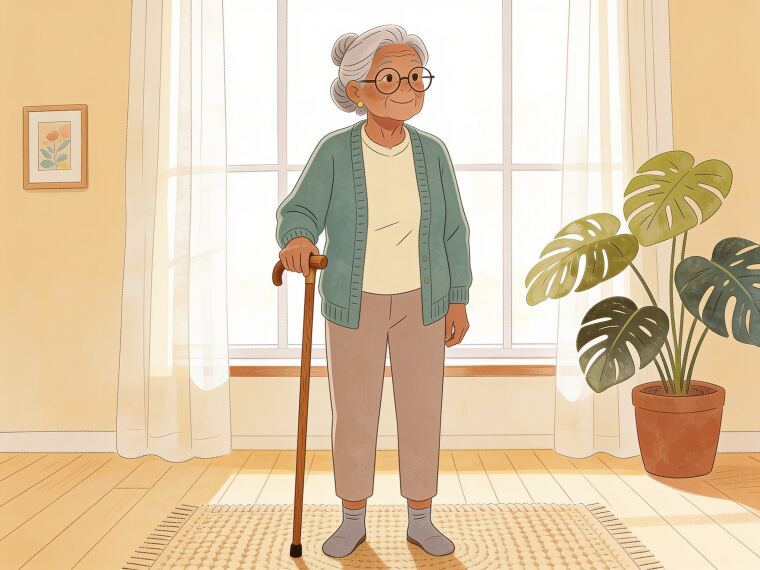
A cane that's the wrong height is one of the most common problems, and it quietly undermines everything else.
To check yours:
- Stand up tall in the shoes you normally wear, arms relaxed at your sides.
- Have someone look at where the top of the handle reaches. It should line up with the crease of your wrist.
- When you hold the handle, your elbow should be slightly bent, at roughly a 15 to 20 degree angle.
If the cane is too tall, you'll hunch and lose stability. If it's too short, you'll lean forward and put strain on your back. Most modern canes are adjustable with a push-button, so this is an easy fix. It's worth double-checking whenever you change footwear.
Which hand holds the cane
This one surprises people. Instinct tells us to hold the cane on the same side as the sore leg, but that's the opposite of what you should do.
Hold the cane in the hand opposite your weaker or injured leg. If your right knee is the problem, the cane goes in your left hand.
The reason is simple. When you walk, your opposite arm and leg naturally move together. Holding the cane on the strong side lets the cane and the weak leg work as a pair, sharing the load and keeping you balanced, just as your arms would do without a cane.
The correct walking pattern
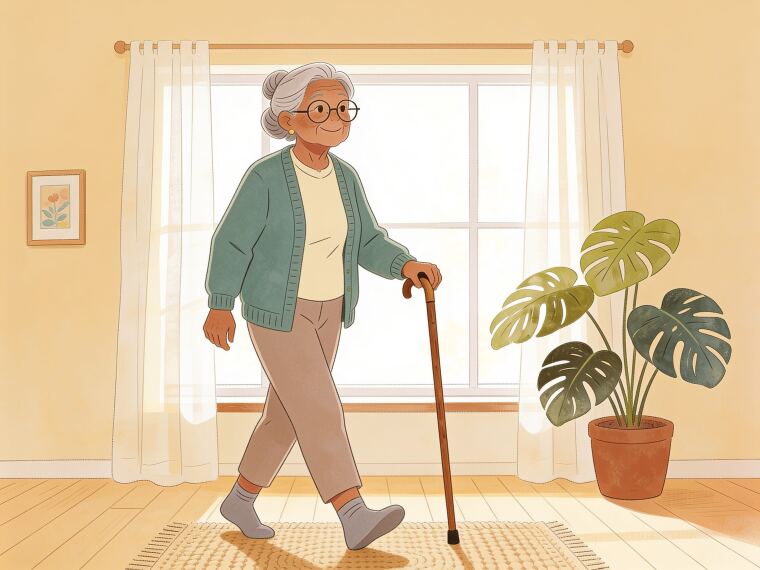
Once the cane is in the right hand at the right height, the walking pattern follows naturally.
- Move the cane and your weaker leg forward together, at the same time.
- Then step through with your stronger leg.
- Keep the cane fairly close to your body, not way out to the side.
Take your time and keep your steps even. The cane should feel like a steady partner, not something you're hauling along or leaning your whole weight onto. Think of it as sharing perhaps a quarter of your weight, mostly for balance and light support.
Going up and down stairs
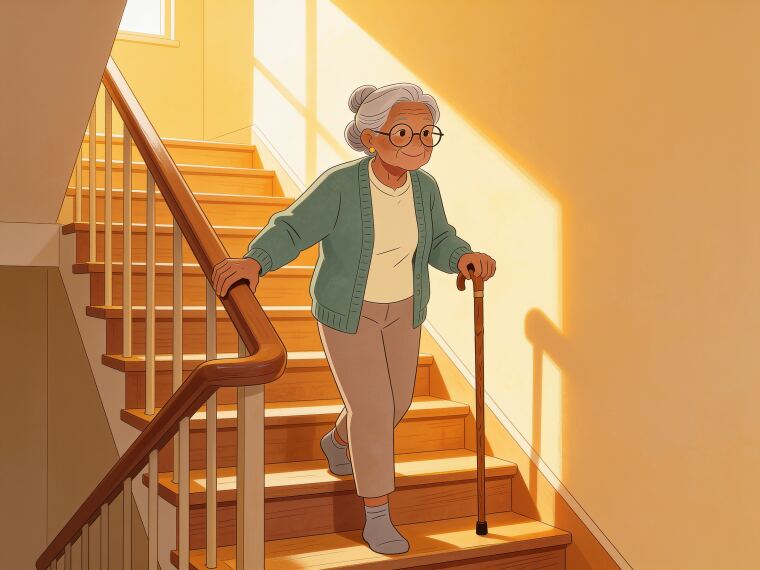
Stairs are where many people feel least confident, but a short phrase makes it easy to remember: up with the good, down with the bad.
3-day free trial • Cancel anytime
Daily check-ins that save lives
Join thousands who never worry about being alone
Going up the stairs:
- Step up first with your stronger (good) leg.
- Then bring your weaker leg and the cane up to the same step.
Going down the stairs:
- Lead with the cane and your weaker (bad) leg, placing them on the lower step.
- Then bring your stronger leg down to join them.
Always use the handrail if there is one. If a rail is available on one side, hold it and carry the cane in your other hand, or in the same hand as the rail if needed. Take one step at a time and never rush.
Sitting down and standing up
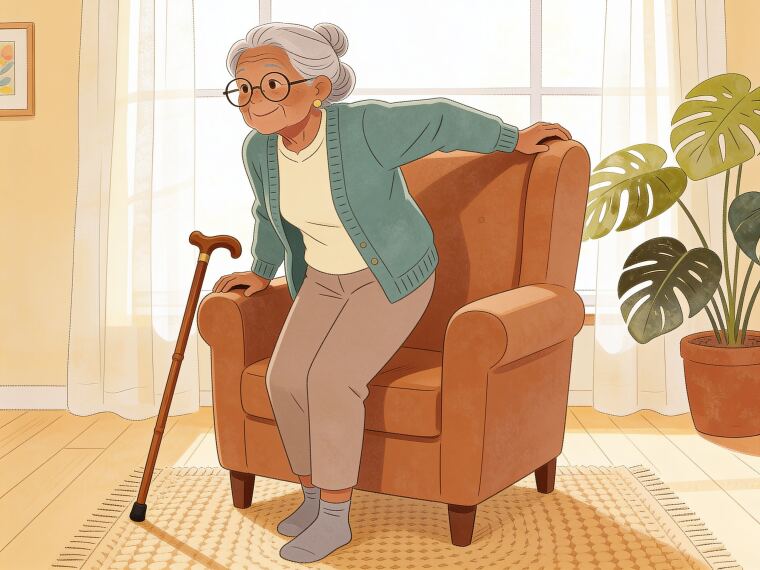
Transferring in and out of a chair is another moment where a cane helps, as long as you don't rely on it for support at the wrong time.
To sit down: back up until you feel the chair against your legs, reach back for the armrests with your free hand, and lower yourself using the chair, not the cane. A cane can slip out from under you if you push down hard on it.
To stand up: shuffle to the front of the seat, push up using the chair's armrests, and only take hold of the cane once you're steady on your feet.
Cane tips and maintenance
The rubber tip at the bottom (the ferrule) is what grips the floor, and it wears down with use.
- Check the tip regularly. If the tread is worn smooth or the rubber is cracked, replace it. Spare tips are cheap and easy to fit.
- In icy weather, an ice-grip attachment can add traction outdoors.
- Keep the cane clean and, if it's adjustable, make sure the locking button is fully engaged before each use.
- Store it somewhere it won't fall over and become a trip hazard itself.
Common mistakes to avoid
- Wrong hand. The single most frequent error. Cane goes opposite the weak leg.
- Wrong height, which throws off your posture and balance.
- Worn tips that slip on smooth floors.
- Leaning too heavily, which reduces your own muscle work and can tip the cane.
- Steps too big or too fast. Small, even steps are safer.
A cane supports your mobility, but keeping your legs and core strong is what keeps you steady in the first place. Gentle balance exercises for seniors work hand in hand with a cane, and if you live on your own it's worth reading our wider safety tips for seniors living alone too.
Staying safe on your feet when you live alone
A cane lowers your risk of a fall, but it can't remove it entirely, and a fall is far more serious when there's no one nearby to notice. If you live on your own, it makes sense to pair good mobility habits with a simple safety net.
A daily check-in quietly confirms you're okay each day and alerts someone you trust if you ever don't respond. See how a daily check-in works so that if you ever do have a fall, someone knows within minutes rather than hours.
Used correctly, a cane keeps you moving with confidence. A check-in makes sure you're never truly alone if a step goes wrong.
Get the free Living Alone Safety Checklist
The home setup, daily habits, and emergency info that keep people living alone safe, in one email you can act on this week.
Please complete the verification above.
Check your inbox
Your safety checklist is on the way to .
Frequently asked questions
TRUSTED BY THOUSANDS OF FAMILIES
Never Wonder "Are They Okay?" Again
Daily check-ins with automatic alerts to your loved ones if you ever need help.
"I was skeptical at first, but after my neighbor was found 3 days after a fall, I signed up immediately. Now my daughter knows I'm okay every single day."
— Margaret R., 72, living independently
Related Articles
Walking for Seniors: How Far, How Often, and How to Stay Safe Walking Alone
Walking is the exercise most older adults actually keep doing. Here is how to start, how far and how...
Transportation for Seniors: Every Option When Driving Gets Harder (Rides, Paratransit, Volunteers, and More)
When driving stops being the answer, the question becomes how a parent gets to the doctor, the shops...
Exercises for Seniors: The Complete Guide by Goal (Balance, Strength, Heart, Flexibility)
The best exercise for an older adult depends on what you want from it. This guide sorts our exercise...
Hearing Aids for Seniors: OTC vs Prescription, Real Costs, and How to Choose
Over-the-counter or prescription? Behind the ear or nearly invisible? Here is a plain guide to heari...