How to Request a Welfare Check in the UK
Published July 16, 2026
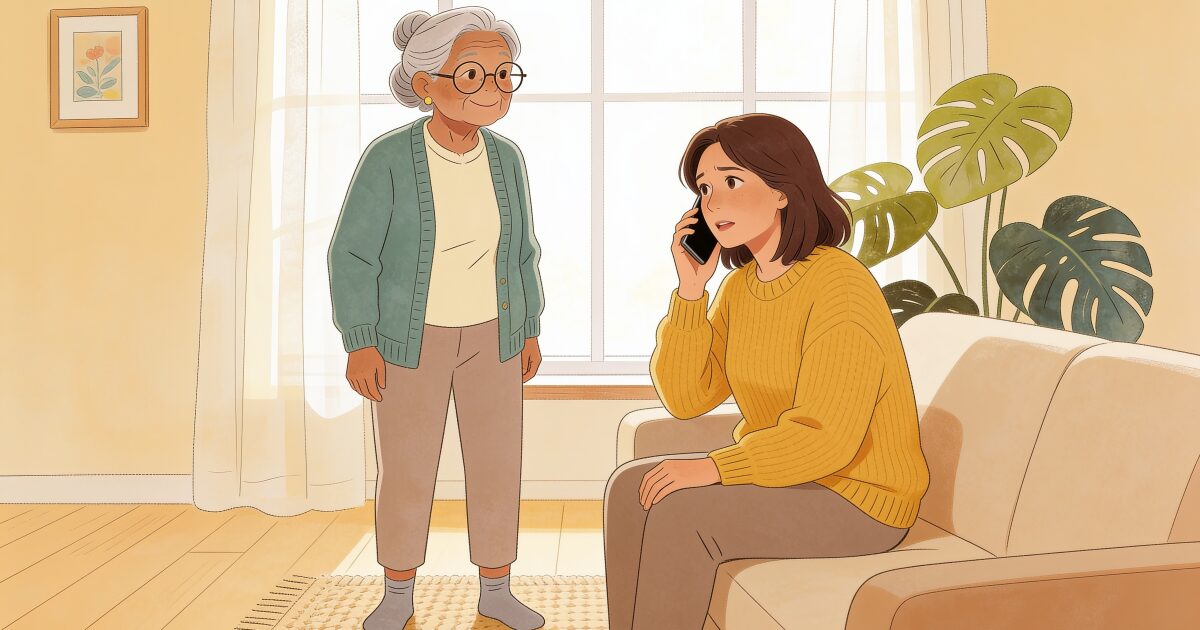
When someone you love goes quiet and stops answering their phone, the worry can be hard to bear. If you cannot reach them and cannot get to them yourself, a welfare check is often the fastest way to find out whether they are safe. In the UK this is a normal, well-established part of what the police do.
Your family worries about you. Let them know you're okay every day.
Try free for 3 daysThis guide explains what a welfare check is, when to request one, exactly how to do it, and what happens next. Just as importantly, it covers the steps you can take before calling the police, and how to reduce the chance of ever reaching this point.
What a welfare check is in the UK
A welfare check, often called a "safe and well check", is a visit made to confirm that a person is safe when someone is worried about them and cannot make contact. It is usually carried out by police officers, though in some areas ambulance services or adult social services may be involved too.
People request them for all sorts of reasons:
- An elderly parent who lives alone has stopped answering calls.
- A neighbour's curtains have not moved and post is piling up.
- A friend with a health condition has not been seen for days.
- Someone has sent worrying messages and then gone silent.
The check itself is brief. The aim is simply to see the person and make sure nothing is wrong. If something is wrong, the officer can call for medical help, contact family, or stay until things are safe.
When to request one
You do not need to be a family member to ask for a welfare check. If your concern is genuine, that is enough. The key decision is how urgent it is, because that decides which number you call.
How to request a welfare check: step by step
1. Decide how urgent it is
If you believe someone is in immediate danger, for example you have heard them fall or collapse, or they have talked about harming themselves, call 999 straight away. This is a genuine emergency and the police will treat it as one.
If it is a non-urgent "I am worried because I cannot reach them", call the police non-emergency line on 101. This is the right route for most welfare-check requests.
2. Call the police for the right area
Welfare checks are handled by the police force that covers the person's address, not yours. If they live in a different town or county, calling 101 will still route you correctly, but be clear about their full address so the right force attends.
3. Give the call handler what they need
Have this ready before you call:
- The person's full name, address, and a brief description.
- Your relationship to them and why you are worried.
- When you last had contact, and how.
- Any medical conditions, mobility issues, or mental-health concerns.
- Whether anyone else, or a pet, may be in the home.
- Whether a neighbour or relative holds a key.
The more specific you are, the better the police can prioritise and prepare. If you would prefer not to be named, say so, though giving your details helps officers follow up with you afterwards.
3-day free trial • Cancel anytime
Never Be Left Wondering If They're Okay
Set up gentle daily check-ins for the person you worry about. If they miss one, you're alerted the same day, long before it comes to calling 101. You can set it up for them in minutes, and it works on any UK phone, even a landline.
What the police will do
An officer goes to the address and tries to make contact, usually by knocking and calling out. If the person answers and is fine, that is the end of it: the officer confirms they are well and leaves.
If no one answers, officers look for other signs, lights, movement, a car on the drive, and may speak to neighbours. If there is reason to believe someone inside is hurt or at risk, the police are allowed to force entry to help, even if that means breaking a door. Where needed, they can call an ambulance on your behalf.
Afterwards, whoever asked for the check is usually told the outcome, though what can be shared depends on privacy rules.
The role of adult social services
The police handle the immediate check, but if an older or vulnerable person is found to be struggling to cope, that is where adult social services come in. Each local council has an adult social care team that can arrange an assessment, support at home, or a care package.
If your concern is less "is something wrong right now" and more "this person is not managing on their own", you can contact the person's local council adult social services directly and ask for a welfare or needs assessment. The police may also refer them on after a check.
Alternatives to try before calling the police
A welfare check is the right call when you are genuinely worried, but it is worth a few quick steps first, as they often resolve the situation faster:
- Call and text again, and try other numbers such as a landline.
- Contact a neighbour who might knock on the door or has a key.
- Ring another relative or friend who may have heard from them.
- Call their GP surgery if there is a known health concern; for non-urgent medical advice you can also use 111.
- Check for a simple explanation, such as a flat phone battery, a hospital appointment, or a trip away.
If none of these settle your worry, do not hesitate. Call 101, or 999 if you fear immediate danger.
For a fuller picture of what these visits involve, see what a welfare check is, and if you would rather look in on someone yourself first, our guide on how to do a welfare check on someone walks you through it.
The better outcome: never needing one
Here is the hard truth about welfare checks. By the time you are calling 101, you have already spent hours, sometimes days, not knowing. A welfare check is a reaction to silence, and it would be far better never to reach that silence at all.
That is the whole idea behind a daily check-in. Instead of waiting for someone to notice you have gone quiet, the person confirms they are okay each day, on the phone they already own. There is no pendant to wear or charge. If a daily check-in is ever missed, a trusted contact is alerted automatically, long before anyone has to call the police. See how a daily check-in works and whether it suits your family.
A welfare check is the safety net of last resort. A daily check-in is the one that catches the silence first, so that worried call to 101 never has to happen.
Get the free Living Alone Safety Checklist
The home setup, daily habits, and emergency info that keep people living alone safe, in one email you can act on this week.
Please complete the verification above.
Check your inbox
Your safety checklist is on the way to .
Frequently asked questions
Need to request a welfare check?
Our free guide finds the right police non-emergency number for the person's area and builds a ready-to-read script for the dispatcher.
Open the welfare check guideTRUSTED BY THOUSANDS OF FAMILIES
Never Be Left Wondering If They're Okay
Set up gentle daily check-ins for the person you worry about. If they miss one, you're alerted the same day, long before it comes to calling 101. You can set it up for them in minutes, and it works on any UK phone, even a landline.
"I was skeptical at first, but after my neighbor was found 3 days after a fall, I signed up immediately. Now my daughter knows I'm okay every single day."
— Margaret R., 72, living independently
Related Articles
How to Do a Welfare Check on Someone (Step by Step)
When someone you care about goes quiet, a few calm steps can confirm they're safe. Here's exactly wh...
What Is a Welfare Check? How to Request One (and How to Avoid Needing the Police)
A welfare check is a knock on the door to confirm someone is okay when they've gone quiet. Here's ho...
Police Welfare Check vs a Wellness Call: What's the Difference?
The terms get used interchangeably, but the response can differ. Here's what a police welfare check...
Can You Refuse a Welfare Check?
If officers arrive for a welfare check, can you turn them away? Usually yes, but there are limits. H...